Pasta boxes, jar ounces, sauce style, add-ins, servings, and pasta water planner
Sauce Jars Per Pasta Box Calculator
Estimate how many jars of sauce you need for boxed pasta by dry ounces, jar size, sauce style, sauciness level, add-ins, serving count, and reserved pasta water.
📌Sauce And Pasta Presets
Start with a common pasta night, then change the box size, jar ounces, sauce style, sauciness, add-ins, servings, reserve water, and rounding preference.
⚖Pasta Boxes, Jar Size, Sauce Style, And Serving Inputs
Sauce jar plan
Enter pasta and jar amounts to calculate the sauce plan.
Sauce Calculation
Pasta And Serving Check
Kitchen Plan
🧾Quick Sauce-To-Pasta Cards
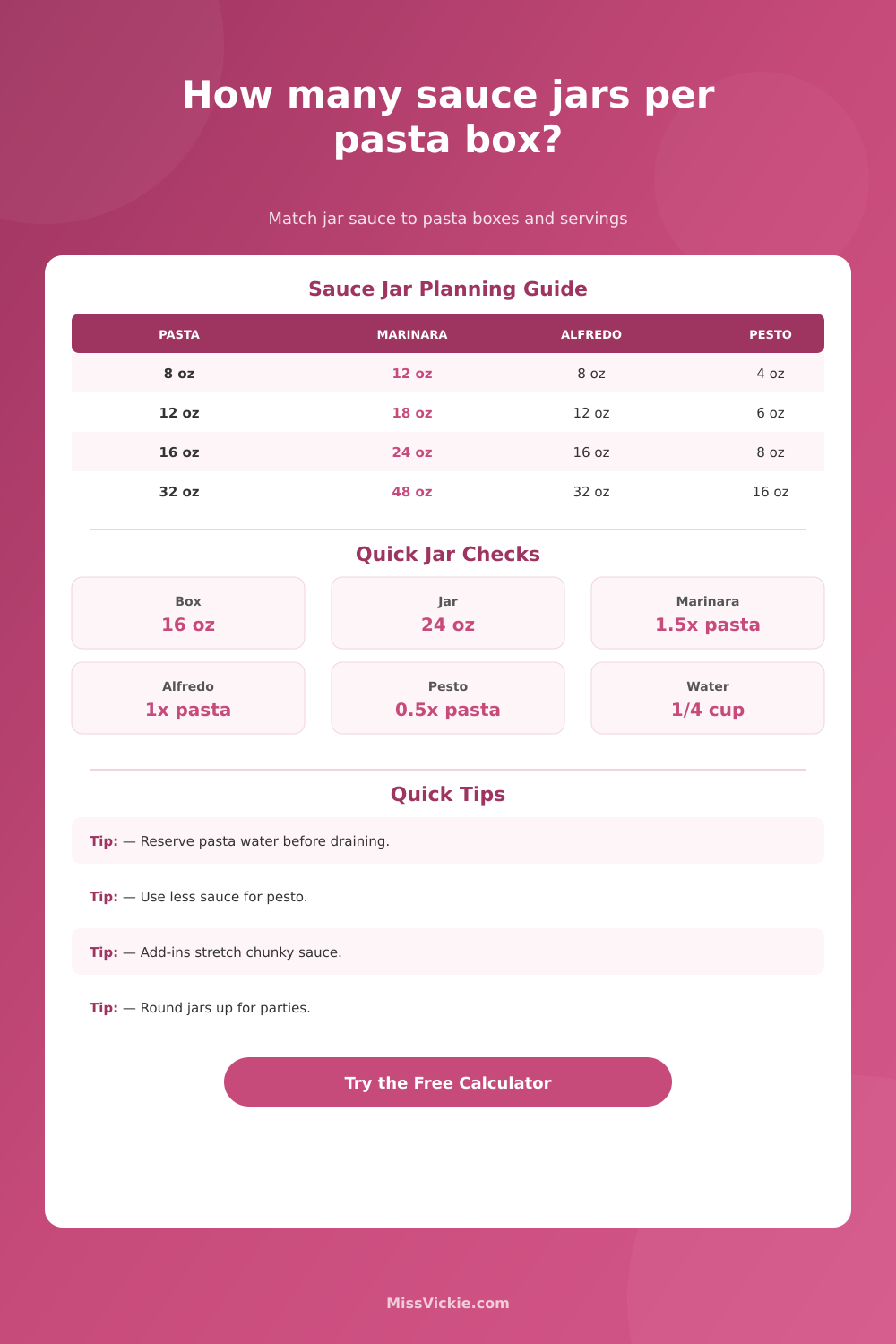
A 24 oz jar is a standard match for 16 oz dry pasta when you want an everyday tomato coating.
Cream sauces coat richly, so one 15 to 16 oz jar usually covers one 16 oz box.
Pesto is concentrated, so a small jar or about one cup can coat a full pound of pasta.
Reserved starchy water loosens jar sauce and helps it cling to drained pasta.
📊Sauce-To-Pasta Tables
Jar Sauce Per Dry Pasta Weight
| Dry pasta | Marinara | Meat sauce | Alfredo | Pesto |
|---|---|---|---|---|
| 8 oz dry pasta | 12 oz sauce | 14 oz sauce | 8 oz sauce | 4 oz sauce |
| 12 oz dry pasta | 18 oz sauce | 21 oz sauce | 12 oz sauce | 6 oz sauce |
| 16 oz dry pasta | 24 oz sauce | 28 oz sauce | 16 oz sauce | 8 oz sauce |
| 24 oz dry pasta | 36 oz sauce | 42 oz sauce | 24 oz sauce | 12 oz sauce |
| 32 oz dry pasta | 48 oz sauce | 56 oz sauce | 32 oz sauce | 16 oz sauce |
Common Jar And Box Matches
| Jar size | Best pasta match | Light sauce | Extra saucy | Use case |
|---|---|---|---|---|
| 15 oz Alfredo jar | 14 to 16 oz pasta | 16 oz pasta | 12 oz pasta | Cream sauce dinner |
| 24 oz marinara jar | 16 oz pasta | 20 oz pasta | 12 to 14 oz pasta | Everyday spaghetti |
| 25 oz tomato jar | 16 oz pasta | 20 oz pasta | 14 oz pasta | Jarred red sauce |
| 32 oz family jar | 20 to 24 oz pasta | 28 oz pasta | 18 oz pasta | Large pot or leftovers |
| 45 oz club jar | 28 to 32 oz pasta | 36 oz pasta | 24 oz pasta | Party tray or meal prep |
Sauciness And Add-In Adjustments
| Adjustment | Multiplier | Effect | Best for | Watch point |
|---|---|---|---|---|
| Lightly coated | 0.82 | Uses less sauce | Oil sauces, kids portions | Reserve water helps coating |
| Standard saucy | 1.00 | Baseline jar match | Weeknight pasta | Toss sauce and pasta together |
| Extra saucy | 1.18 | More spoonable sauce | Garlic bread, seconds | May need another jar |
| Very saucy | 1.35 | Leftover friendly | Baked pasta, buffet pans | Drain pasta well first |
| Vegetable add-ins | Minus 1 oz/cup | Stretches sauce | Mushrooms, peppers | Cook off water first |
Servings, Boxes, And Cooked Yield
| Dry pasta | Servings | Cooked yield | Marinara jars | Reserve water |
|---|---|---|---|---|
| 8 oz | 4 light | About 4 cups | 0.5 of 24 oz jar | 1/4 cup |
| 16 oz | 6 to 8 | About 8 cups | 1 of 24 oz jar | 1/2 cup |
| 24 oz | 10 to 12 | About 12 cups | 1.5 jars | 3/4 cup |
| 32 oz | 14 to 16 | About 16 cups | 2 jars | 1 cup |
| 48 oz | 22 to 24 | About 24 cups | 3 jars | 1 1/2 cups |
🍝Serving And Jar Reference
💡Jar Sauce Planning Notes
These estimates use common culinary ratios: about 24 oz tomato sauce, 16 oz cream sauce, or 8 oz pesto for each 16 oz box of dry pasta, then adjust for taste and texture.
There’s a certain kind of stress that hits on a Tuesday at six thirty. You’ve got the pasta in the box, boiled some water, now what? You’re hungry, but you don’t have anything in the pantry ready to eat. Your jar of marinara seem insufficient for a pound of spaghetti. That’s when arithmetic take hold, when instinct give way, and the calculator does its thing.
After you enter the weight of your jar (and maybe even your box), it figures out the math. And then you don’t find yourself with five minutes remaining and not enough sauce.
How to Get the Right Amount of Sauce for Pasta
Because this isn’t simply a matter of counting jars. There’s a ratio to be grasped here: the right amount of liquid to starch so there’s neither a soupy mess nor a dry pot. Most folks think of all pasta sauce as equivalent: One glass jar = one box of dried pasta. But this mindset make for bad meals.
Thicker sauces (e.g., cream sauces like Alfredo) stick heavily to the noodles, so you’ll want much less volume to cover the same quantity of pasta compared to a thin sauce such as tomato basil. Even thinner pastes (e.g., Pesto) tend to be very concentrated. Because they spread well in an oil base, you can get away with just a quarter cup per serving. If you serve a pound of penne with a jar’s worth of pesto, you’re going to be sorely disappointed.
Your jar was meant to do what a jar of marinara would, coat that much pasta. With thicker sauces, it’s too late by the time you realize how little there is left. The tool accounts for variations in viscosity automaticly.
The calculator also allows you to express how saucy (subjective) your taste is. Do you like a light coating on your pasta, where you can see some red from the noodle? Do you want a pool of sauce on the bottom of the plate? Are you cooking for a crowd? This will determine the appropriate amount and may vary by up to 40% in extreme examples.
If you’re cooking for others, lean towards the “extra saucy” end of the spectrum. As pasta sits on the plate it absorbs more liquid. What appears perfectly prepared when served will become a cardboard-like brick within twenty minutes if you didn’t had enough sauce to start with.
Reserve a half cup of starchy cooking water before draining your noodles. This is the secret weapon of all competent cooks. This water will stretch a jar of sauce a long way. That water’s job: It helps the oil and tomato parts stick to the starch in the pasta. Without that water, the sauce just slides around. It is a little thing but it makes a big difference in texture.
The calculator includes the reserve. If you know you’re going to toss the cooked pasta with a splash of cooking water, then you don’t have to open so many jars. It is the cheapest form of insurance.
But there’s more to the equation. Add-ins make it more complicated. Ground meat and/or sauteed mushrooms absorbs sauce. And they occupy physical space in the pot. So you aren’t just coating noodles; you’re also adding solids that compete for the liquid.
High-water-content veggies such as spinach or zucchini can thin out a previously-thick sauce. That might sound like a plus, but generally means a watery, unappealing texture. The way around this is to cook those veggies down first so you remove their excess moisture. The jar sauce will then retain its integrity.
One other factor casual cooks frequently overlook is planning for leftovers. If freezing half, be more heavy-handed with the sauce; otherwise, frozen pasta will quickly dry out if not protected by a thick enough blanket of liquid. A buffer percentage is built into the tool. This is smart for meal prep. It guarantees that Tuesday night’s version of your dinner is every bit as good as Sunday night’s.
It’s all about ratios with cooking pasta. It’s not like a precise recipe, it’s throwing together dry starch, liquidy sauce, and whatever other solid ingredents go on there to make something that tastes good. Figuring out how many jars to get right means you don’t have to do as much math in your head during the process. More time eating!
Each bite should of have the appropriate amount of sauce on the plate. Too little? No thanks. Too much? I’m still thinking about my next bite. It’s a tiny win, but it adds up so the entire meal feels intentional instead of accidental.