
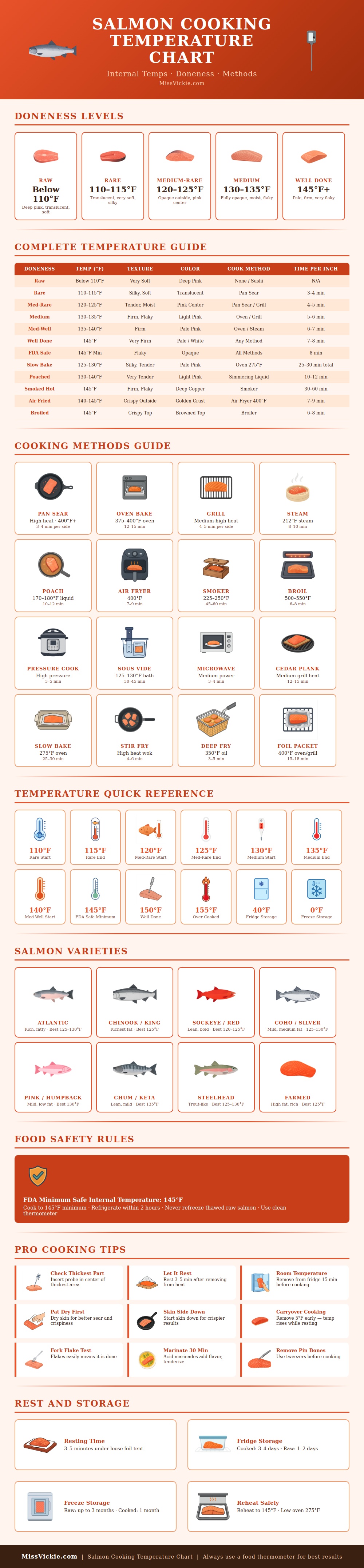
Salmon is a fish that can be dificult to cook because salmon have a narrow margin between being moist and being dry. When you cook salmon, the proteins in the salmon begins to tighten and the tightening proteins squeeze moisture out of the salmon. Because the tightening proteins squeeze moisture out of the salmon, the texture of the salmon can become dry if the salmon is cooked for too long.
Many people observe a white substance called albumin seeping out of the salmon during the cooking process, but the presence of albumin doesnt always mean the salmon are overcooked. Instead, the presence of albumin often means that the heat applied to the salmon are high. Because visual cues can be deceptive, you should not rely on your eyes to determine if the salmon is done, and you should use a thermometer to measure the internal temperature of the salmon.
How to Cook Salmon So It Stays Moist
The level of doneness for salmon is a personal choice, but the texture of the salmon change as the temperature of the salmon increases. If you prefer a texture that is soft and translucent, you should aim for a rare or medium-rare level of doneness. If you prefer a texture that is more flaked and opaque, you should aim for a medium level of doneness.
Many people find that medium-doneness salmon is a good choice because medium-doneness salmon offer a balance of tenderness and structural integrity. Many people overcook salmon because they are afraid of undercooking the salmon, but overcooking the salmon results in a pale and dry texture. To avoid overcooking salmon, you must understand the concept of carryover cooking.
Carryover cooking occur when the internal temperature of the salmon continues to rise after you have removed the salmon from the heat source. Because the heat from the outside of the salmon moves toward the center of the salmon, the salmon will continue to cook on the plate. Therefore, you should remove the salmon from the heat when the thermometer show a temperature that is a few degree lower than your final target temperature.
If you wait until the salmon reaches the final target temperature before you remove the salmon from the heat, the carryover cooking will cause the salmon to become overcooked. Different types of salmon require different approach to heat because the fat content in the salmon affects how the salmon reacts to heat. Fatty salmon, such as Chinook salmon or Atlantic salmon, can handle more heat because the internal oils in the fatty salmon help to keep the salmon moist.
Leaner salmon, such as Sockeye salmon or Pink salmon, are more difficult to cook because leaner salmon has less fat to protect the moisture in the salmon. Because leaner salmon have less fat, leaner salmon can become dry very quick. Thus, you must be more vigilant when you are cooking leaner salmon.
The method you use to cook the salmon will also affect how you manage the heat. A high heat pan sear can create crispy skin, but a high-heat pan sear requires you to manage the temperature of the pan so that the exterior of the salmon does not burn before the interior of the salmon is warm. A slow bake at a low temperature is a more forgiving method because a slow bake allow the heat to penetrate the salmon evenly.
Additionally, the sous vide method uses a water bath to maintain a constant temperature, and the sous vide method remove the possibility of error when cooking salmon. Safety is an important factor when you are cooking salmon for other people. While many people enjoy salmon that is medium-rare, food safety guidelines suggests that you should reach a specific minimum temperature to neutralize bacteria.
If you are cooking salmon for children or for a large group of people, you should cook the salmon until it is more opaque to ensure the salmon is safe to eat. Finally, you should allow the salmon to rest after you have finished cooking the salmon. You should let the salmon sit for a few minutes so that the juices can redistribute throughout the muscle fibers of the salmon.
If you cut the salmon immediately after cooking, the moisture will run out of the salmon and the salmon will be dry. If you let the salmon rest, the moisture will stay inside the salmon, and the salmon will be more moistly when you eat the salmon.