Salad Dressing Per Person Calculator
Estimate dressing for tossed salads, side-cup service, buffet bowls, meal prep jars, pasta salads, grain salads, and creamy or vinaigrette styles using guests, greens ounces, ratios, density, reserve, and cup size.
🥗Salad dressing presets
Pick a serving situation, then adjust guests, salad type, greens ounces, toss style, appetite level, dressing style, oil-vinegar ratio, density, waste reserve, and portion cup size.
⚖Units
🥣Guests, greens, and salad style
🧄Dressing style, ratio, density, and reserve
Salad dressing amount
Dressing breakdown
-
📏Serving size guide
Good starting point for 2 to 3 oz greens per person.
Typical amount poured into a 2 oz cup at 70% to 80% fill.
Generous side salad with romaine, spinach, or mixed leaves.
Minimum extra for casual meals; buffets often need 15% or more.
🫙Dressing service reference
| Salad service | Best starting amount | How to adjust | Practical note |
|---|---|---|---|
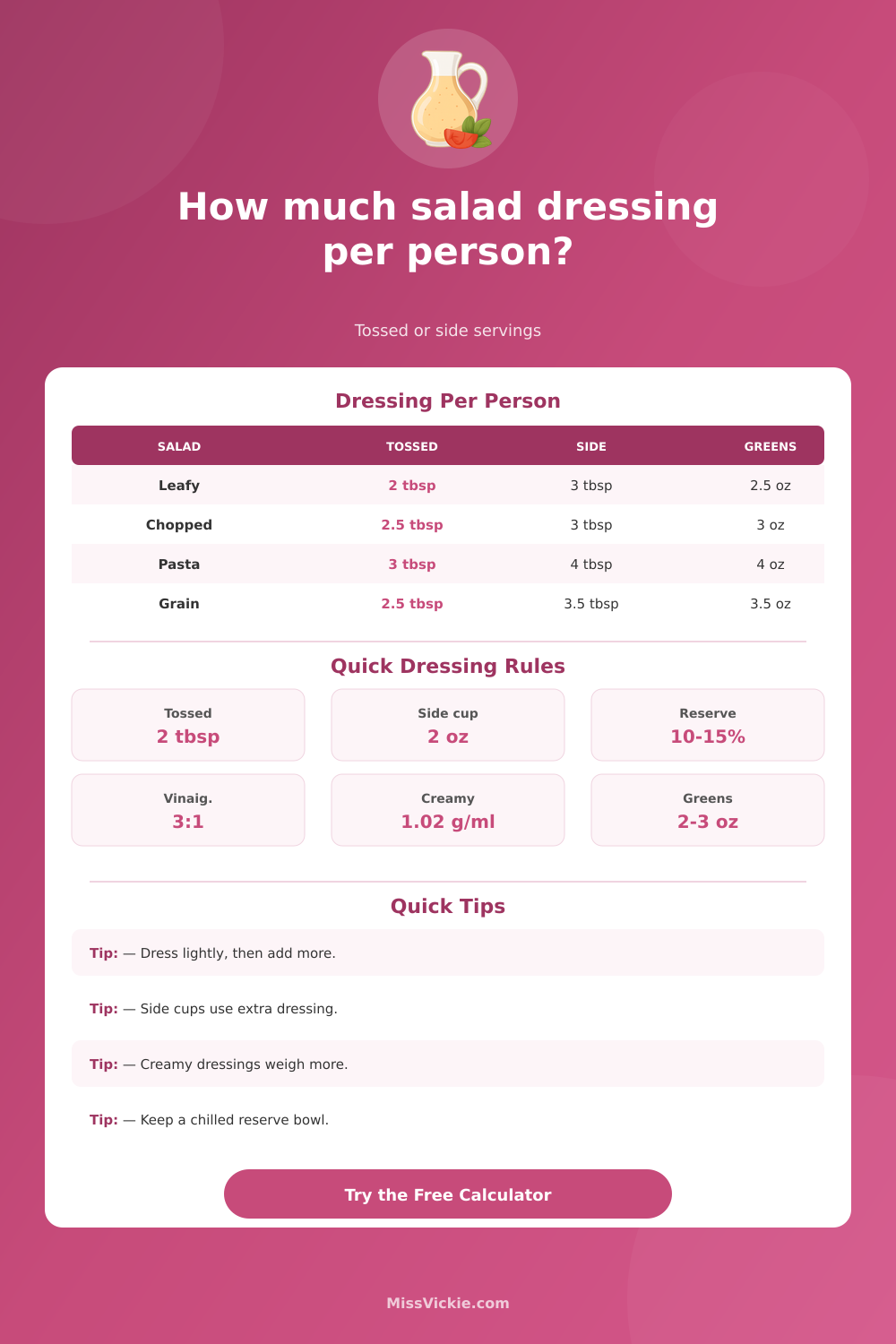
| Lightly tossed leafy salad | 1.5 to 2 tbsp per person | Add dressing in two passes so leaves stay crisp. | Best for delicate greens and vinaigrettes. |
| Fully tossed dinner salad | 2 to 2.5 tbsp per person | Increase for romaine, chopped vegetables, or sturdy greens. | Reserve a few tablespoons for refreshing the bowl. |
| Individual side cups | 1.4 to 2.4 oz per guest | Use the cup fill setting to avoid overfilled ramekins. | Side cups need more dressing than a tossed bowl. |
| Pasta, grain, bean, or slaw salad | 3 to 4 tbsp per person | Chill and recheck because starches absorb dressing. | Hold back part of the dressing for a final toss. |
🥄Common group quantities
| Guest count | Light tossed salad | Standard side cups | Pasta or grain salad |
|---|---|---|---|
| 4 people | 1/2 cup | 3/4 cup | 1 cup |
| 12 people | 1 1/2 cups | 2 1/4 cups | 3 cups |
| 25 people | 3 to 3 1/2 cups | 4 1/2 to 5 cups | 6 to 7 cups |
| 50 people | 6 to 7 cups | 9 to 10 cups | 12 to 14 cups |
🧪Ratio and density reference
| Dressing style | Typical ratio | Approx density | Use it for |
|---|---|---|---|
| Classic vinaigrette | 3 parts oil to 1 part acid | 0.94 g/ml | Mixed greens, spinach, chopped salads. |
| Bright citrus vinaigrette | 2 parts oil to 1 part acid | 0.96 g/ml | Fruit salads, seafood salads, tender leaves. |
| Creamy ranch or Caesar | Creamy base, acid to taste | 1.02 g/ml | Romaine, wedges, crudite plates, side cups. |
| Sesame ginger | Low oil with soy and acid | 1.04 g/ml | Slaw, noodle salad, grain bowls. |
💡Salad dressing tips
Tossed salads need less dressing. Start with about two-thirds of the calculated tossed amount, mix thoroughly, then add just enough for shine so leaves do not collapse.
Side cups change the math. A 2 oz cup usually looks right at 1.5 to 1.7 oz filled, but every guest receives their own portion.
Starchy salads absorb dressing. Pasta, grains, beans, and cabbage often need a held-back reserve for a final toss after chilling.
Density matters for prep lists. Vinaigrette cups and creamy dressing cups look similar, but creamy dressings usually weigh more per milliliter.
How do you plan salad dressing for a crowd? That depends on a few thing. It depends on whether the greens are tossed with other ingredients or plated separately and whether the salad has tender leaves like lettuce or sturdier items like pasta. You also need to consider how many people may want seconds. The answer to these questions tells the calculator what to calculate.
It asks how many people there is. It asks if the dressing will be served on the side or tossed in. It asks for approximate weight of the greens. It also asks how dressed the dish will be. Knowing which factors affect the end result can help make the calculator more accurate.
How to Plan Salad Dressing for a Crowd
A tender-leaf salad serving 12 people uses less dressing than other items like pasta salads or grain bowls that serve same number of people. A salad’s cling factor keeps the dressing-to-greens ratio small: Leafy greens can’t take much more without wilting and collapsing. When they soak up dressing over time, such as on pasta and grains, how much they holds onto it increases. Choose your salad style and the calculator add more dressing based off how much it sticks, so your salad isn’t dry two hours from now but is still nice and glossy.
Beyond the ingredients, the style of service are equally important. More individual cups means more total volume since each need to have its own space. Filling more bowls from a cruet or tossing everything together in one bowl covers more surface area with the same amount of dressing. This leave you with less extra dressing.
There’s a reason for that reserve. You’re going to need some dressing on your serving spoon and some diners will want extra. It never hurts to keep a cold back up jar in case you run out mid-meal.
That’s where density matters for your decision of creamy vs. Vinaigrette. Ranch and blue cheese weigh more per milliliter than a simple olive-oil/vinegar combo. That gap appears in the grand total if you’re measuring by weight different than volume. With this calculator, though, you can specify density explicitly to get the grams outputted to match the jar you’ll be filling.
The page also features a set of reference tables that gives you an idea of what to expect in various scenarios. These aren’t a substitute for the calculator itself but they are an easy way to know where you’re starting if your ingredients change slightly. For instance, a light toss of leaves may be in the two tablespoon-per-person range. Tossing the same amount of greens into side cups is usualy closer to three. The pasta salad need more still, as the starch will continue to soak up the water even after the initial mixing.
Learning when not to put all the dressing on something can be just as much a trick. A starchy salad should of get tossed one last time just before serving. And at a buffet, there will be spots where people have poured out too little or too much; they’ll want more. To avoid having to guess how much additional dressing to make, the calculator assume a reserve percentage.
It also helps once you’ve dialed in which percentages of your dressing come from each ingredient: oil, acid, whatever else. Then scaling up or down doesn’t throw off your flavor balance. If used this way, it’s no longer an ongoing kitchen stress point but a sure-fire place to start. Taste and tweak, yes, but at least now you’re starting with a quantity that matches what you actualy have in front of you.