
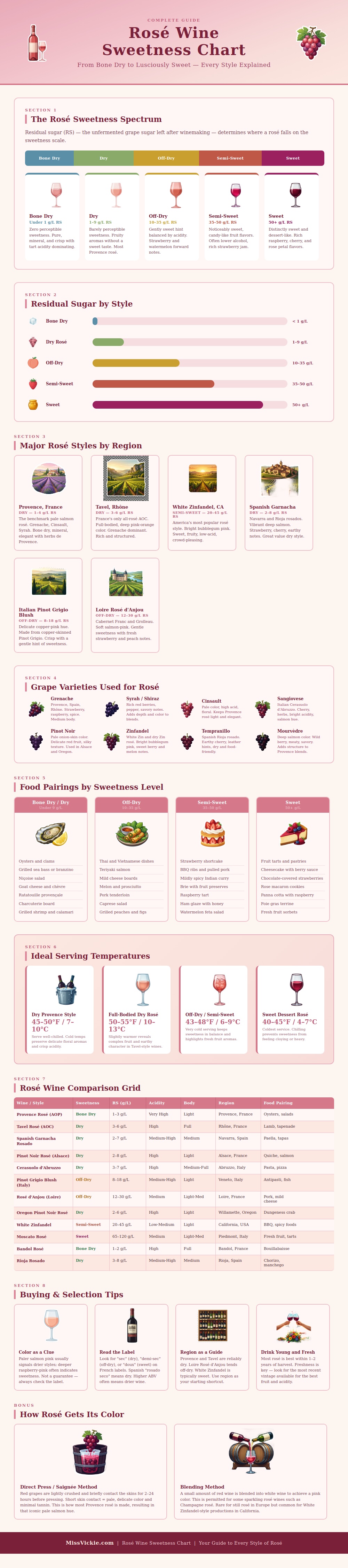
Have you ever been stuck in the whine aisle wondering which bottle to grab? Maybe you’ve seen some pink bottles that look casual and others in smooth, pale-salmon colored glass that look stylishly. In most people’s minds there are only two kinds of rosé: Sweet or Dry. That mental barrier keep us from picking out the proper bottle for our relaxing evening or dinners.
Here’s what we’re not telling you: It’s a lot more complex then that. Depending on how much leftover sugar remains after fermentation, rosé can be anywhere along a spectrum of sweetness levels. Knowing about it make your drinking decisions less of a guessing game and more of an intentional experience. To understand these terms better, know that RS stands for residual sugar, which is typically measured in grams per liter (from now on called “grams”). Don’t worry if you don’t remember exactly how many grams equals what level; just know the categories.
How Sweet Is Your Rosé?
Wines in the bone dry range will be nearly without any detectable sweetness. Here, you’ll taste the wine’s higher acidity along with mineral characteristics. Bone-dry is crisp and refreshing, making it ideal with sharp cheeses like goat or oysters.
As you enter into off-dry territory, you start noticing a slight fruitiness. This balance the acidity without overwhelming your palate. Most drinkers prefers this middle-ground category because it connects sweet and savory dishes. To pick a bottle, use the region as a shortcut: Pale, dry rosé from Provence taste of citrus and herbs. For something riper, try Tavel (from the Rhône Valley), which delivers a little more depth of flavor, structure, and color. It is dry, yet has some heft.
In the semi-sweet camp, there’s white Zinfandel from California (which pretty much owns this style). There’s nothing wrong with those wines; it’s just what the style was designed to deliver: something that most people like. Semi-sweet also makes wine great with smoky barbecue ribs or spicy Thai cuisine, sugar cuts through the smokiness and heat.
The right serving temperature is also key. A lot of folks drink all their white wines… And rosés, too (ice cold). And it’s fine if you’re drinking a light, dry style that gets by on zesty acidity. But if you want to show off a slightly sweeter or fuller-bodied rosé, over-chilling will hide some of that wine’s depth. Ideally, different rosé styles should of been served around 45 to 55 degrees Fahrenheit. Not so cold that it’ll numb your palate.
While grape variety takes a back seat, winemaking technique are king. Red fruit characters comes from grenache and syrah. Cinsault contributes some floral softness. Sangiovese makes a lively rosé with very high acidity, like those from Italy. Such wines pair nicely with tomato-based pasta sauces. Pale pinot noir make delicate wines that tend to be served in Oregon or Alsace.
You’ll often see color as a hint, although it isn’t always reliable. Deeper pink doesn’t necessarily indicate sweetness, nor does paleness mean dryness. If purchasing french wine, look at the bottle for words such as doux (sweet) or sec (dry).
How Does Rose Fit in? Rose is versatile. It pairs with most occasions. Drink it within one-two years from harvest for those fresh fruit notes. Don’t make it too complicated. When in doubt, go dry if your meal is acidic/salty; go semi-sweet/off dry if your meal tends towards spice/sweeter dishes. You’ll know what I mean when you start practicing. A chart can help show these connections.
Begin with a region that suits your mood. Adjust the bottle’s temperature based off the wine’s weight. Let residual sugar lead the way to your food choices. Now that you’re familiar with the sweetness spectrum, rose can be used for nearly any occasion. It’s not a passing fad. It’s a legit wine category worthy of recognition.