
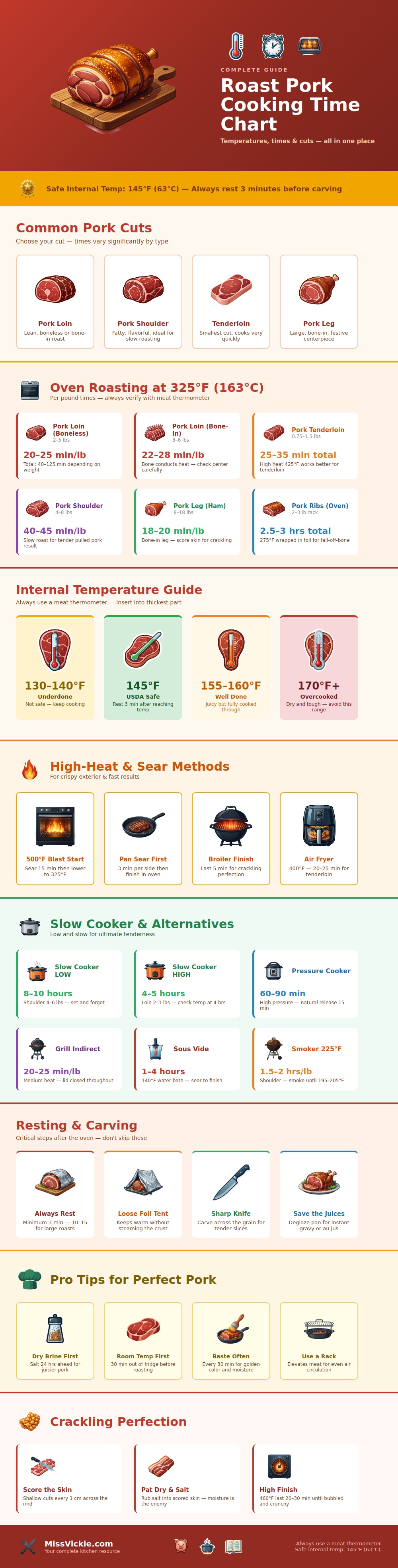
What if you have a pork roast in your refrigerator and wonder “how long should I cook this?” No more panicking! Look up at the clock; now look at the pork; still don’t know? No longer will you need to be a trained chef to figure it out. All you need is a thermometer and a solid place to reference the time.
The visual guide outline all of the most popular cuts and breaks down cooking times so you’ll never play another guessing game. But here’s the problem: Home cooks is chronically underestimating the cooking time, plus they’re using too high a temperature. The math are simple enough, though easily misunderstood.
How to Cook Pork Roast Perfectly
Because pork is a denser meat, a heavy shoulder cut will take longer in oven than a boneless loin. The difference between the two cuts could not be clearer on that chart. Roasting a three-hundred-twenty-five-degree, lean loin should takes about 20 minutes per pound. When you move up to a fatty shoulder, however, that timer jump significantly. Why? Insulation. Before a piece of meat can becomes tender and safe, it has to have its connective tissue broken down by heat. That requires more time (and it means that fat is your friend).
And what about safety? It’s simpler today than ever, though moddern standards are a bit friendlier than they used to be. Don’t worry: Pork doesn’t have to be a chalky, dull gray to be safe. For safety, it’s safest at 145 degrees Fahrenheit in the center, according to USDA.
One-hundred-forty-five is exact, but pull the roast out when it’s still several degrees shy. As it sits, resting on countertop, it cook just a bit more due to residual heat. Carving while it’s still hot won’t give your roast much longer on the timer so you’ll end up cooking it past perfect if you insist on waiting till the thermometer shows exactly 145 inside the oven.
Letting it rest for as little as three minutes will help redistribute juices without pouring them all on the cutting board, which is crucial for the best bite. Know your cut. Because some cuts is thinner than others, a tenderloin require close attention to prevent it from drying out. According to the infographic, smaller steak benefit from higher heat because they cook through relatively quickly.
On the flipside, a large Boston butt or bone-in leg will take longer to reach temperature and benefit from low and slow treatment. Throw a hunk of shoulder in slow cooker on low for eight hours, or smoke it gently at two hundred twenty-five degrees until it reaches almost two hundred degrees inside. Tougher cuts contain connective collagen that takes time to dissolve into the meat. Patience is the key ingredient… And rushing it yields chewy rubber.
Before heating it, there are some prep steps. First, let the roast come up to room temp for about 30 minutes, this aids even cooking. If possible, salt generous a day in advance. A dry brine penetrates deeply into muscle fibers, seasoning the meat from the inside out. It will also aid in retaining moisture as it cooks in oven. While you’re sleeping, chemistry’s on your side and the result? It results in better flavor.
When the timer rings, don’t rush to carve. Loosely tent it with foil and step away. In the meantime, quickly deglaze those drippings with some wine or broth to create a quick pan sauce. The browned bits on bottom of the pan add major flavor. Once back in business, simply slice against the grain and serve.
It’s really more about trusting the chart and your thermometer than complex technique; let the meat do the work. When you stick to the schedule, the result would of been good.