MissVickie leftover ribs planner
Ribs Reheating Time Calculator
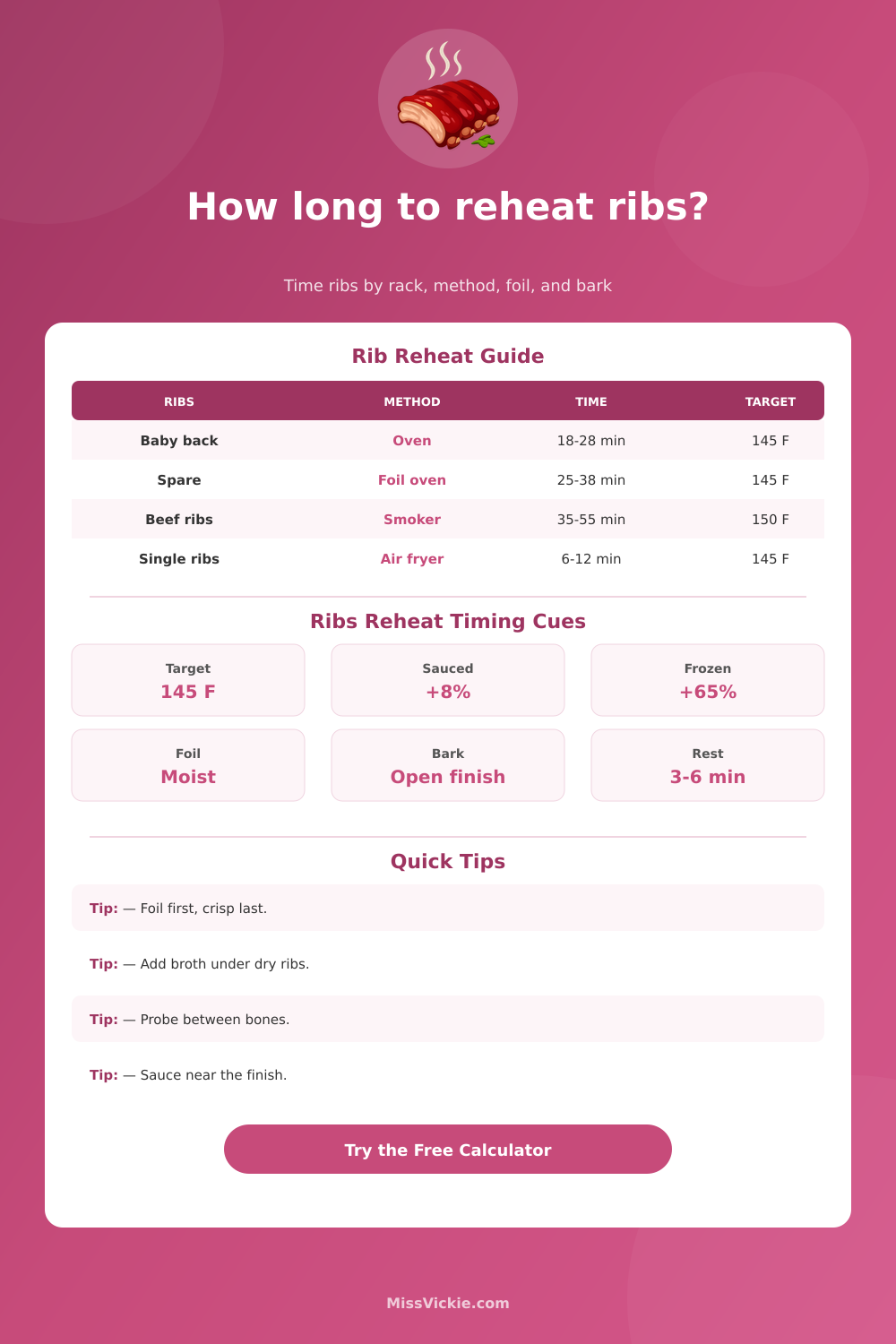
Estimate reheating time for cooked pork ribs, beef ribs, rib tips, or single bones using rack type, weight or count, method, foil, sauce, start temperature, target temperature, moisture, and bark preservation.
🍖 Rib Reheating Presets
Pick a leftover rib situation, then adjust the rack style, amount, reheating method, foil plan, sauce level, moisture, and bark goal. This calculator is for ribs that are already fully cooked.
🧮 Rack, Weight, Sauce, Foil, and Bark Inputs
Your Rib Reheating Plan
Calculated from rib type, amount, start temperature, method, moisture, and bark goal.
Input Breakdown
Reheating Sequence
📌 Rib Reheat Targets
Warm, juicy ribs without pushing the meat toward dry edges.
Use for mixed trays, cold spots, or leftovers needing a full hot reheat.
Enough broth, juice, or drippings for a rack without turning it soupy.
Resting lets sauce settle and makes the temperature reading even out.
📊 Method Comparison Grid
Gentle for half and full racks, especially with foil and a short uncovered finish.
Slowest option, but smoke warmth revives bark without making ribs taste reheated.
Fast for cut bones and rib tips; watch sugary sauce because it darkens quickly.
Excellent for sealed racks, then finish briefly under dry heat for bark.
📘 Rib Reheating Reference Tables
| Rib Type | Typical Cooked Amount | Density | Best Reheat Style |
|---|---|---|---|
| Baby back pork ribs | 1.5-2.25 lb per rack | Lean, curved bones | Foil oven at 250-300°F, then uncover briefly |
| St. Louis cut ribs | 2.25-3.25 lb per rack | Meatier flat rack | Loose foil with a little liquid, then glaze set |
| Full spare ribs | 3-4.5 lb per rack | Large bones and tips | Lower heat and longer covered phase |
| Country-style ribs | 5-8 oz per piece | Thick boneless or bone-in strips | Covered pan or oven with broth to avoid dry edges |
| Rib tips or chopped ribs | 3-5 oz per serving | Small uneven pieces | Skillet, air fryer, or covered pan with stirring |
| Beef plate short ribs | 0.75-1.25 lb per bone | Very dense and rich | Smoker, oven, or sealed bag with a long gentle warm-up |
| Method | Suggested Setting | Moisture Effect | Bark Effect |
|---|---|---|---|
| Oven or toaster oven | 250-300°F | Moderate if wrapped | Good with final uncovering |
| Smoker or pellet grill | 225-275°F | Gentle but can dry edges | Excellent for dry rub bark |
| Covered grill | Indirect medium-low | Needs a foil tray or spritz | Strong finish if watched closely |
| Air fryer | 300-350°F | Low; use for small batches | Crisps fast and can scorch sauce |
| Covered skillet | Low to medium-low | High with splash of liquid | Soft unless uncovered at the end |
| Sealed water bath | 145-155°F water | Very high | Needs dry-heat finish after bagging |
| Starting State | Typical Start Temp | Time Effect | Best Handling |
|---|---|---|---|
| Room-temp safe window | 65-75°F | Shorter by about 15-25% | Reheat soon; do not hold cooked ribs out for long |
| Refrigerated rack | 34-40°F | Baseline | Wrap with light moisture for the first phase |
| Very cold dense rack | 30-34°F | Add about 10-18% | Use lower heat to warm the center evenly |
| Partly frozen ribs | 20-30°F | Add about 35-50% | Keep wrapped until the center loosens |
| Frozen sealed ribs | 0-20°F | Add about 60-80% | Thaw first when possible or use sealed water bath |
| Sauce or Foil Choice | Time Change | Moisture Result | Finish Advice |
|---|---|---|---|
| Dry rub, uncovered | Fast surface heat | Lowest moisture protection | Use low heat and watch edges |
| Dry rub, foil wrapped | Adds a small buffer | High tenderness protection | Open for the last few minutes to restore bark |
| Light sauce, loose foil | Moderate increase | Balanced glaze and steam | Brush again near the end if needed |
| Sticky sauced, covered first | Moderate increase | Protects sugar from scorching | Uncover only long enough to set tacky sauce |
| Juicy wrap or braise | Slowest dry finish | Very moist, softer bark | Drain excess liquid before crisping |
| Vacuum bag or pouch | Even but slower | Maximum moisture retention | Pat dry before a hot finish |
Times are estimates because rib thickness, bone size, sauce sugar, and actual appliance heat vary. Always verify with a food thermometer.
💡 Rib Reheating Tips
The ribs left in your fridge always disappoint. They are a sorry-looking mess, the bark’s fallen flat. The fat has turned into sea of white blobs, and meat is stiff.
Heating up pork ribs isn’t so much about cooking as it is fighting against laws of physics: You’re trying to increase the internal temp while avoiding taking water from the lean bits of muscle fiber. Easy enough to say, but different things happens with thick, dense beef plate ribs versus slim baby backs. Plug in your starting conditions and rack type, and the calculator do the math for you. No more guesswork on if “just ten minutes” will do the trick or if that’ll be an hour too long.
How to Reheat Ribs Perfectly
You might not realize this, but not all cooking method are created equal. An air fryer will blast something with dry heat that, within a minute, can scorch sugary sauce while leaving inside cold. A smoker adds flavor but takes forever to warm things up if you aren’t careful. That’s where the tool comes in, allowing you to pick how you want to cook it and adjust the time appropriately. For example, if you selected an oven, it’ll assume you’re going for a gentler environment. If you select a skillet, it will expect more moisture retention since you probably has broth in there or used a lid.
Why does it matter? Because you don’t want it to overshoot to the point of being dry. So we aim for 145 degrees fahrenheit. Moisture is another key variable. Ribs are already low on moisture because they was previously cooked. Reheating them uncovered in dry conditions mean additional moisture loss. By wrapping ribs in foil (with broth or apple juice) and creating a mini-steam chamber around the meat, you’ll retain moisture. You can account for this moisture buffer with the calculator. Selecting a wrapped option will add some time to your estimate, as steam does not move heat better than hot air. It will also soften the initial bark. That is why you will often see second option for “open” finish output in the app. Wrap to warm, then unwrap to dry, doing a two-stage process that keeps leftovers tasting fresh instead of reheated.
It also accounts for starting temperature. Frigid ribs out of freezer are much colder than room-temperature ribs fresh from fridge (about 38 degrees F). To prevent the exterior from defrosting without letting the interior thaw out, you should of take things slow. Quickly heating up icy ribs would be a disaster: You’d end up ruining their texture before they’re even safe to eat. By prompting you for your initial temperature, the tool can account for this. It understands that slowly warming something cold won’t let the protein seize up. This is particularly helpful when dealing with bigger chunk of meat such as country-style ribs or spares, which have more mass for heat to move into.
But it gets even more complicated when we add sauce, which can burn at lower temperatures different than meat. Toss those glazed ribs into a hot oven unprotected, and you’ll get bitter black spots on their surface long before they’re warm. The calculator addresses that weakness of sauced ribs by extending the cooking time. It recommends keeping them covered until near end, then leaving them uncovered briefly as glaze sets. No need to worry about caramelizing turning into combustion.
In conclusion, the way to reheat ribs is to find a balance between texture and tenderness. You desire the bark to be flavorful, yet not soggy or burnt; the inside of meat to be juicy, yet not overheated and dried out. The key is understanding the details which vary depending off the cut and cooking method. The tables below break them down in order to give you an idea of how to make a decision on re-heating your ribs.
But no tool can substitute for a thermometer. These estimates are just a general guide based off average conditions. Your ribs may be larger/thicker than average and your oven hotter. By checking the internal temp at the thickest portion of the meat, you know you’re hitting the mark. With some practice, you’ll know when those leftover ribs is done just right. They’ll still have a bit of bite to the crust and be warmed through and tender. It’s worth getting it right!