Racks, coverage, salt, sugar, bark, binder, and blend math
Rib Rub Calculator
Calculate rib rub for baby back ribs, St. Louis ribs, spareribs, country ribs, and beef ribs from rack count, meat weight, rub coverage, salt percentage, sugar level, bark style, binder, and extra loss.
Choose a rib-cook scenario, then tune coverage, salt, sugar, bark, binder, humidity, and reserved extra rub for your smoker or oven plan.
Rub Batch Estimate
Rub amounts will appear after calculation.
Rib Rub Breakdown
| Blend Group | Percent | Weight | Volume | Use |
|---|
| Rib Type | Typical Raw Weight | Rub Coverage | Salt Comfort | Best Bark Direction |
|---|---|---|---|---|
| Baby back pork ribs | 2 to 2.75 lb per rack | 14 to 18 g per lb | 0.9% to 1.1% of meat | Medium sweet, lighter bark |
| St. Louis cut ribs | 2.75 to 3.5 lb per rack | 16 to 20 g per lb | 1.0% to 1.2% of meat | Balanced or sweet bark |
| Whole pork spareribs | 3.5 to 4.5 lb per rack | 17 to 21 g per lb | 0.9% to 1.15% of meat | Dark smoky bark |
| Country-style ribs | 0.4 to 0.7 lb per piece | 12 to 17 g per lb | 0.8% to 1.0% of meat | Moderate rub, more meat exposure |
| Beef back ribs | 3 to 4 lb per rack | 16 to 21 g per lb | 1.0% to 1.3% of meat | Pepper bark, low sugar |
| Beef plate ribs | 4.5 to 7 lb per rack | 18 to 24 g per lb | 1.1% to 1.4% of meat | Heavy pepper, no sweet finish |
| Blend Group | Backyard Sweet Rub | Memphis Savory Rub | Texas Beef Rib Rub | Role in Bark |
|---|---|---|---|---|
| Salt | 10% to 13% | 12% to 16% | 16% to 22% | Seasoning, moisture draw, meat flavor |
| Brown or white sugar | 24% to 40% | 10% to 22% | 0% to 6% | Browning, sweetness, shine, heat sensitivity |
| Paprika and chile base | 22% to 34% | 28% to 42% | 10% to 22% | Color, body, mild pepper flavor |
| Garlic and onion | 12% to 20% | 16% to 24% | 8% to 16% | Savory body and all-purpose BBQ aroma |
| Black pepper | 5% to 10% | 8% to 16% | 40% to 55% | Crust texture, sharpness, smoke-friendly bite |
| Herbs, mustard, cumin | 6% to 14% | 8% to 18% | 6% to 14% | Regional personality and deeper savory notes |
| Binder | Typical Amount | Best With | Rub Effect | Flavor Note |
|---|---|---|---|---|
| No binder | 0 tsp per lb | Dry ribs, overnight salt | Cleaner dry crust, less clumping | Pure rub flavor |
| Yellow mustard | 1 tsp per lb | Pork ribs and backyard rubs | Good rub cling, neutral after smoking | Light tang before cooking |
| Neutral oil | 0.75 tsp per lb | Hot cooks and low sugar rubs | Helps fat-soluble spices bloom | Mild, no acidity |
| Hot sauce | 0.75 tsp per lb | Peppery or low-sugar ribs | Thin cling with extra chile bite | Acidic heat |
| Worcestershire | 0.6 tsp per lb | Beef ribs and savory pork | Thin wet coat, dark savory bark | Umami and salt |
| Molasses or syrup | 0.5 tsp per lb | Sweet pork ribs, low heat | Sticky bark, higher scorch risk | Sweet and dark |
Works for beef ribs, hot grills, pepper bark, and sauce-free finishing.
Balanced pork rib bark with enough sweetness for color without turning candy-like.
Good for low smoker temperatures, wrap stages, and glossy sauced pork ribs.
Use less sugar, apply lighter rub, and watch dark edges before saucing.
So now you’ve got all the patience, the smoke, the ribs… but not enough of a sense of scale. Not enough to know that you shouldn’t use as much rub. That’s a mistake many people make with backyard barbecue. It’s not really about the flavor (it’s a mathematical problem).
Rub is a delivery vehicle for fat, sugar and salt. So, like any vehicle, it needs to be measured precisely. Use this calculator at bottom of the page. Plug in the rack weight and kind, and let it do its job. No more guessing for you!
Why You Should Measure Your Rub
Understanding why numbers matter help you cook better. Some rib cuts are naturaly irregular (spareribs) with much more area for the rub to grip; others (baby back ribs) are lean and curve, leaving less surface area for the rub. Some is thick (beef plate ribs), some heavy (same thing), and thus need more rub applied to achieve penetration into those dense muscle. Seasoning beef ribs as if they were pork ribs won’t do them justice.
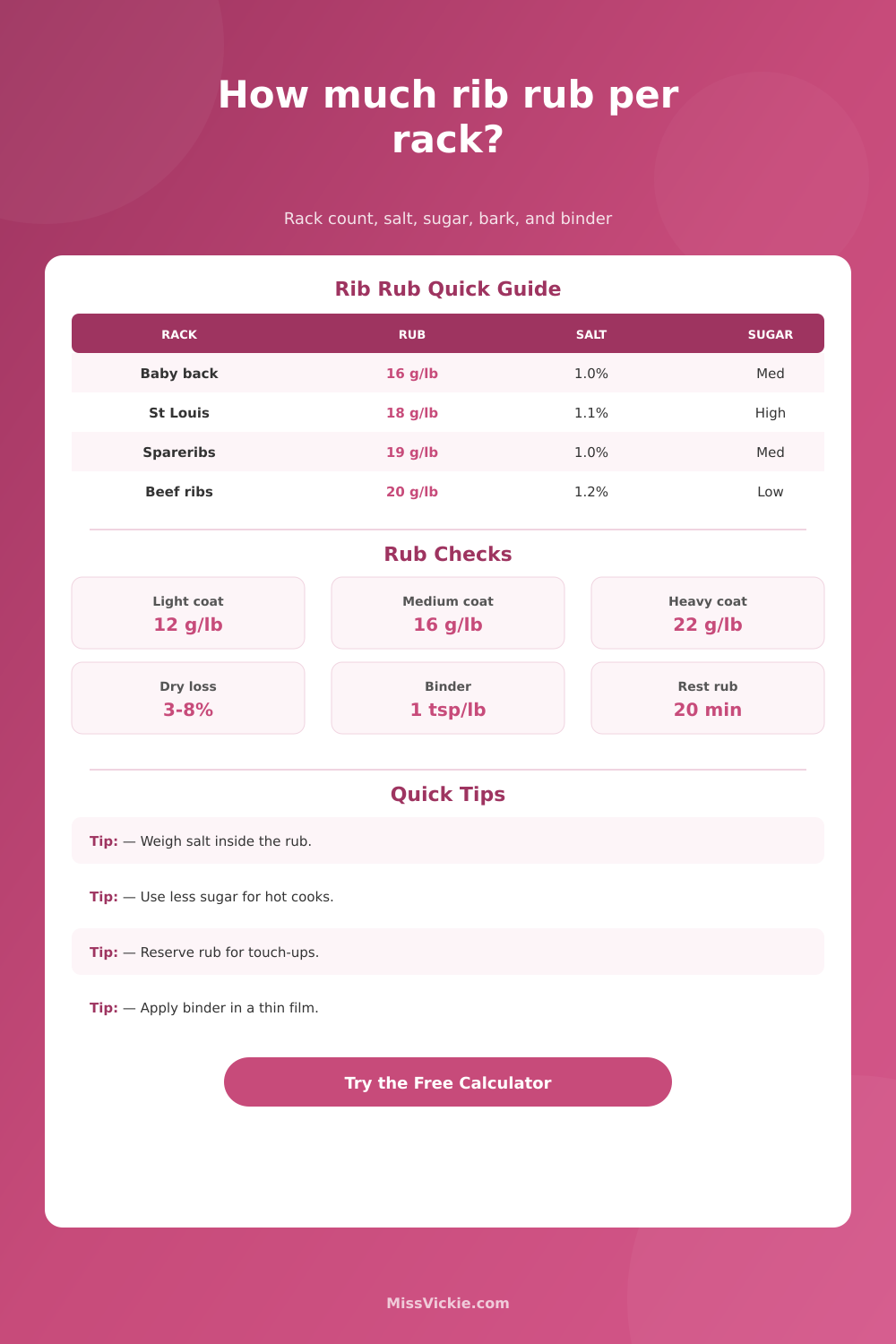
The table below show that spareribs get about twice the amount of coverage of baby backs. Sixteen grams per pound versus twenty or even higher on the beef. That’s because the goal isn’t just to dress up the exterior but also to cut through fat and muscle fiber, which take a heavier hand.
The single-most-important element is salt. Is it under-salted because too many folks is afraid of making their meat tough? It’s bland if not salty enough. Aim for about a one-percent salt by meat weight; that’s a good cook.
The tool allow you to set the percentage of salt you want in your blend, and it determines how much mass you’ll need to achieve this goal. Five percent salt in your mix? Add more to get up to par. Fifteen percent? Back off. Concentrate on getting right saltiness in the bite (not necessarily the color of the bark).
High sugar content is good for gloss and color, but bad for burn. High sugar content char when cooked above three hundred fifty degrees before the connective tissue starts to break down. The sugar calculator takes this into account and cautions against using high sugar profiles if you’re cooking over that heat. Pepper or low-sugar rubs is recommended instead. That’s smart logic that protects your food from being burned; then you can always toss on some sauce for extra sweetness. You can’t unburn sugar.
The binders holds the rub onto the meat. Mustard, molasses, oil, or hot sauce provide traction but little taste. If there is no binder, the rub just slides off the ribs and collects at bottom of the smoker pan. With binder, it’s all one cohesive crust.
Binder needs to be calculated separately from wet and dry ingredients because you don’t want the two mixed together, which make lumpy grinds that ruin its shelf life. Keep the rub in the cupboard and the binder on the meat.
Don’t expect all of it to make it onto your meat. Some will fall off while applying it, some will blow away in the breeze. And yes some will stick to your gloves. That’s why the calculator includes a reserve percentage to account for that fact. There should always be plenty of clean rub leftover so you can use it as a touch up either before serving or after wrapping. No one would of wanted to run out of seasoning three hours into their cook.
Don’t guess… Measure! Use salt in relation to weight of the meat. Sugar based off the heat you respect. A couple of extra grams are all that separate greatness from good cooking.