Rib Marinating Time Calculator
Estimate rib marinating time from rib type, rack count, weight, thickness, acid, salt, sugar, fridge temperature, cooking method, and tenderness goal.
🍖 Rib Marinade Presets
Pick a rib plan, then tune the rack size, marinade strength, fridge temperature, and cooking method.
⚖ Rib Marinating Inputs
Rib marinating plan
Your rib marinade timing, safe cap, marinade volume, and cooking notes will appear here.
Formula Breakdown
Rib Batch Details
Prep Timeline
- Mix marinade cold.
- Coat ribs evenly.
- Refrigerate safely.
- Pat dry before heat.
📊 Current Batch Snapshot
⏱ Rib Type Timing Table
| Rib Type | Good Window | Quality Cap | Best Marinade Style | Timing Note |
|---|---|---|---|---|
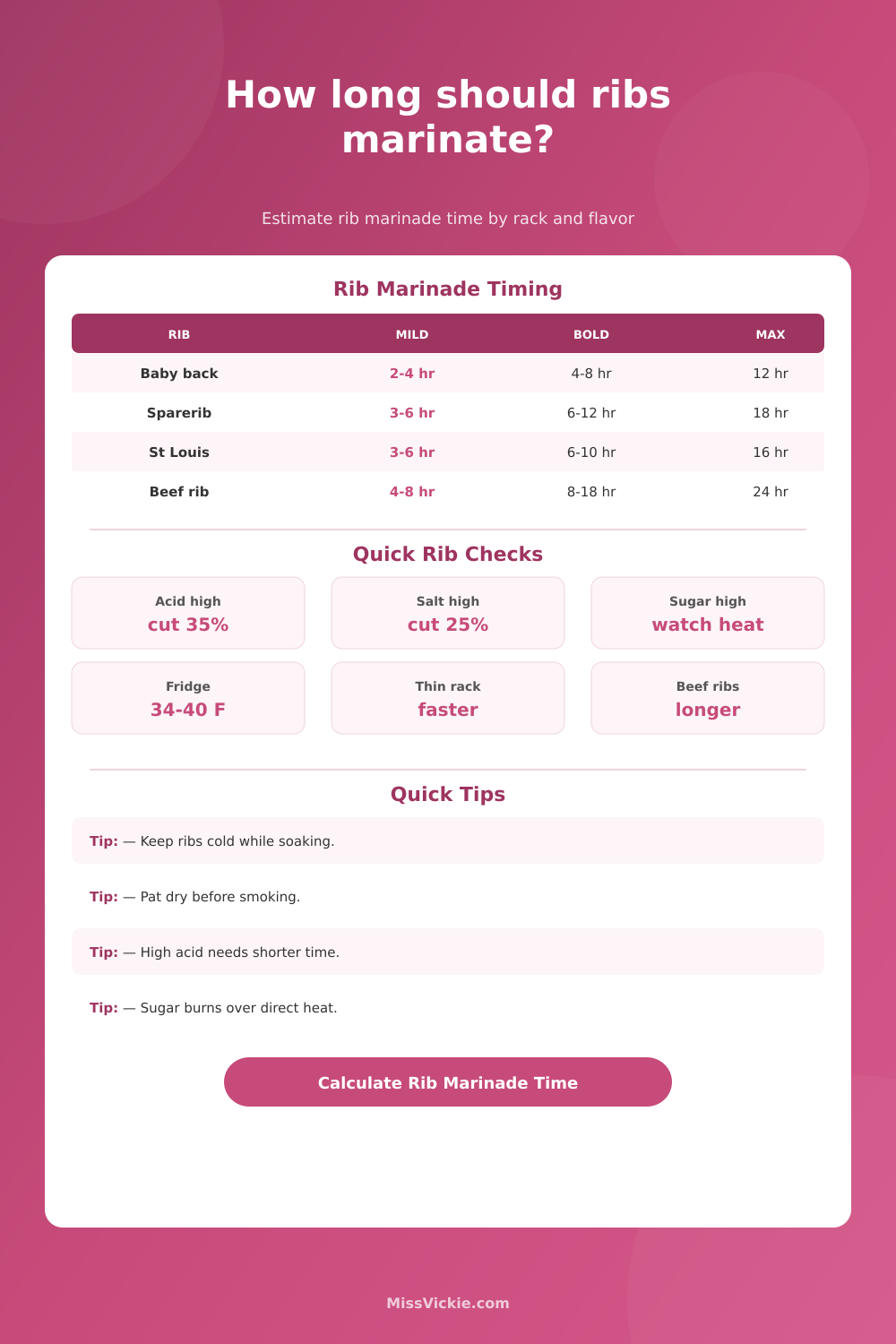
| Baby back pork ribs | 2 to 8 hours | 12 hours | Mild vinegar, apple juice, herbs | Lean and curved racks season quickly. |
| Full pork spareribs | 3 to 12 hours | 18 hours | Garlic, soy, chili, cider vinegar | More fat and cartilage support a longer soak. |
| St Louis cut ribs | 3 to 10 hours | 16 hours | Balanced BBQ marinade or dry-salt hybrid | Even shape makes timing reliable for smoking. |
| Country-style pork ribs | 2 to 10 hours | 14 hours | Buttermilk, mustard, or savory brine | Thick meaty pieces need salt more than acid. |
| Beef back ribs | 4 to 14 hours | 22 hours | Soy, pepper, garlic, Worcestershire | Bold beef can handle stronger seasoning. |
| Beef plate short ribs | 6 to 18 hours | 24 hours | Savory umami marinade with low sugar | Thick ribs gain most from salt and aromatics. |
| Lamb ribs or riblets | 2 to 8 hours | 12 hours | Yogurt, lemon, garlic, rosemary | Fatty lamb carries herb flavor well. |
| Thin flanken beef ribs | 30 minutes to 4 hours | 8 hours | Soy, sesame, pear, scallion | Thin cross-cut ribs season very fast. |
🧪 Marinade Strength Table
| Marinade Type | Timing Effect | Surface Texture | Salt Behavior | Use With Ribs |
|---|---|---|---|---|
| Low acid herb oil | Longest safe flavor window | Gentle surface | Salt drives most seasoning | Good for overnight pork or beef ribs. |
| Medium vinegar or citrus | Balanced timing | Slightly firmer surface | Works well with 1% to 1.8% salt | Best all-around BBQ rib marinade. |
| High acid citrus | Shorter window | Can turn chalky or soft | Salt tastes sharper | Use for fast ribs and bright flavor. |
| Enzyme fruit | Shortest window | Can become mushy | Penetration is uneven | Use carefully with thin ribs only. |
| Cultured dairy | Moderate window | Gentle tender surface | Salt tastes rounder | Useful for country-style ribs and lamb. |
🔥 Method And Sugar Table
| Cooking Method | Sugar Match | Pre-Cook Step | Surface Goal | Calculator Adjustment |
|---|---|---|---|---|
| Low smoker or pellet cooker | Low to medium sugar | Pat dry and add rub if needed | Tacky, not wet | Full timing because heat is gentle. |
| Indirect grill with hot finish | Low sugar until sauce stage | Wipe excess marinade before grill | Dry enough for browning | Raises burn watch with sweet marinades. |
| Covered oven bake | Medium sugar works well | Use a shallow pan or rack | Moist surface, sauce late | Standard timing with lower burn concern. |
| Pressure cook then broil | Low sugar in cooker | Add glaze only before broiling | Clean, not syrupy | Shortens target because pressure tenderizes. |
| Sous vide then sear | Low sugar for sear stage | Bag with measured marinade | Very dry before sear | Uses shorter marinade timing. |
| Braise or covered roast | Medium to high sugar is safer | Turn ribs midway if shallow | Glossy sauce finish | Allows a little longer seasoning time. |
🧊 Fridge Safety Table
| Fridge Temperature | Safety Read | Timing Adjustment | Handling Move | Rib Note |
|---|---|---|---|---|
| 32°F to 34°F | Very cold | Add up to 10% | Marinade moves slowly | Good for overnight beef ribs. |
| 35°F to 38°F | Ideal cold zone | Baseline | Keep covered and below ready food | Best planning zone for most rib marinades. |
| 39°F to 40°F | Upper safe zone | Trim timing by 8% | Use a thermometer | Still acceptable for same-day marinades. |
| 41°F to 45°F | Too warm for long soak | Short cap only | Move to colder storage | Do not run overnight in this range. |
Marinating raw ribs should happen in the refrigerator, covered, with raw meat juices kept away from ready-to-eat food.
📝 Marinade Style Comparison
Best for smoke bark because the rib surface dries faster before heat.
Balanced tang and seasoning for pork racks without harsh texture.
Good for beef ribs, spareribs, and savory grilled rib plates.
Fast flavor only; overdoing it can soften the surface too much.
💡 Rib Marinade Tips
It’s ribs: you purchase a rack of baby backs, remove the membrane and contemplate the marinade. It should of flavor but no mush. It is tender but not boring. How long do they marinate? It can make or break your ribs to let them sit in the sauce too long; more is not necessarily better. That’s where the overnight failure comes into play. When you plug in your rib type and marinade strength, calculator does the math for you. You won’t have to guess how quickly acid penetrates.
And here’s the kicker: most folks overlook the thickness variable, thinking it’s inconsequential, but that is where real magic happens. Thin cuts (flanken) of beef ribs absorbs flavors nearly immediately; they has a huge surface area to volume ratio. Conversely, a thick-cut beef plate short rib are a fortress. The dense muscle fibers resists penetration, forcing the aromatics and salt to work their way in over time. When treated using same timeline as thinner cut, one will be cooked beyond doneness through chemical reaction and other will resemble raw meat swaddled in paper.
How to Marinate Ribs Correctly
The problem is acidity. Vinegars and citrus juices denature proteins at lightning speed. Sounds great until it come out as a plate of mushy chalk on the grill. There’s a tight deadline for high-acid marination (typically less than four hours for thinner cuts). Selecting a bright citrus flavor shrinks the safe time to match. Again: it’s not just a matter of taste; it’s structural integrity. When the meat get soft and translucent before it even reaches the grill, there’s nothing that can be done to save it… No level of smoking will salvage the texture. For leaner meats, try using acid as a finishing gloss instead of an all-night bath.
The other one; the role of salt, is slightly different. Salt permeates slow (and will penetrate deep into muscle tissue over time). In fact, it is very gentle on the meat’s structure. It can sit on beef ribs for up to 18 hours or more, such as during dry brining or with a super-high-soy marination. Salt will draw water out, dissolve in the water, and get reabsorbed when the water gets drawn back in along with any flavor compounds. It is a slow process that enhances texture instead of eroding it.
More racks = heavier batches. The system accounts for higher mass by recognizing that bigger batches takes longer to cool and have less surface area per-volume. More important than many home cooks know: The refrigerator temp does matter. Because marinating is a process of chemically speeding up, higher temperatures speed up that process. At forty-five degree fridge temps, not only is the acid working overtime but you’re also basically marinating in the danger zone where bacteria can grow. Refrigerating around thirty-eight degrees will slow everything down enough to preserve both taste and texture without compromising safety. It sounds picky, but it’s the difference between controlled flavor infusion and biological hazard.
Lastly, there’s sugar. Specifically, I mean how you plan to cook your food. If you’ll be finishing your ribs in a hot smoker, or over direct flame, then marinating them in a high-sugar marinade is risky. Before that connective tissue can render down into gelatin, those sugars will burn. That’s where the calculator alerts you; use it as an opportunity to switch from a sweet glaze marinade to one on the savory side, if your heat source is going to be aggressive. Better to wait until the end of your cook to introduce sweetness then to go into it at the beginning and have your dinner turning to charcoal.
All in all, think of marinating as a balancing act, not a timer. Your goal is to add layers of flavor while also keeping the quality of meat when subjected to heat. Use your tool to find the right balance for your setup, and then let the process take over.
Before placing the ribs into the heat, pat them dry. A wet surface won’t sear, it’ll steam. And we don’t want steamed ribs. Let the meat have exactly what it needs and no more than what it needs. Then let smoke handle the rest.