Ingredients, servings, cooked yield, macros, fiber, sodium, and micronutrient score
Recipe Nutrition Calculator
Estimate full-batch and per-serving recipe nutrition from real ingredient weights, cooked yield, recipe type, added sodium, fiber, macros, and a practical micronutrient score.
Start from a common homemade recipe, then swap ingredients and weights to match the batch you cooked.
Recipe Nutrition Breakdown
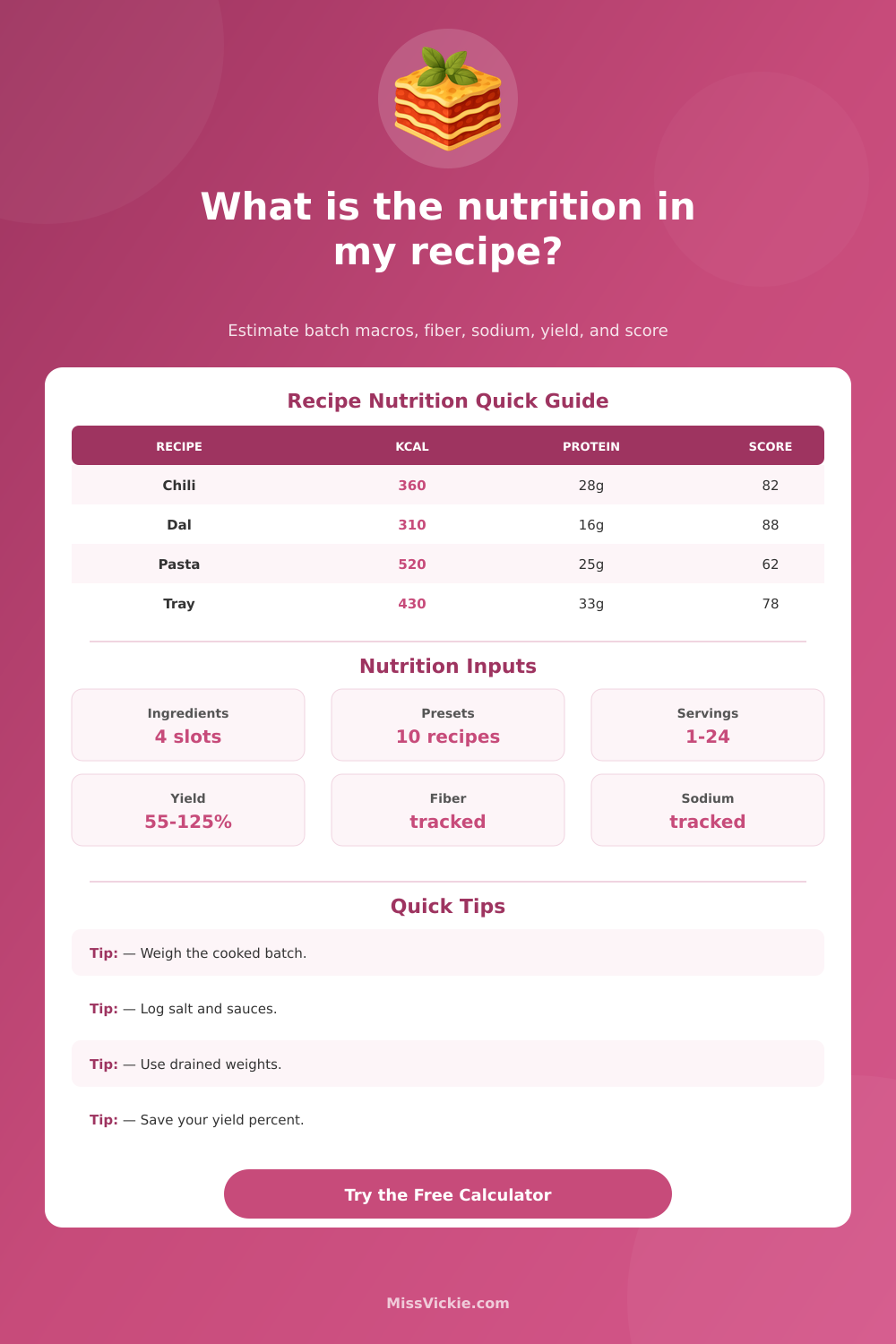
Often high in water and fiber; sodium depends on broth, salt, and canned ingredients.
Calories rise quickly from rice, pasta, dressing, cheese, nuts, and oil.
Usually strong on protein; score improves with vegetables and modest added salt.
Beans, lentils, tofu, and vegetables can bring fiber and micronutrient points.
| Ingredient | Calories / 100g | Protein | Carbs | Fat | Best Use |
|---|---|---|---|---|---|
| Chicken breast, cooked | 165 kcal | 31.0 g | 0.0 g | 3.6 g | Lean bakes, bowls, soups |
| Lean ground turkey | 170 kcal | 29.0 g | 0.0 g | 6.0 g | Chili, meat sauce, meal prep |
| Salmon | 206 kcal | 22.0 g | 0.0 g | 12.0 g | Sheet pans and bowls |
| Extra-firm tofu | 144 kcal | 17.0 g | 3.0 g | 8.0 g | Plant bowls and stir-fries |
| Cooked lentils | 116 kcal | 9.0 g | 20.0 g | 0.4 g | Dal, stew, salad bases |
| Cooked rice | 130 kcal | 2.7 g | 28.0 g | 0.3 g | Casseroles and bowls |
| Ingredient Group | Fiber / 100g | Sodium Watch | Micronutrient Role |
|---|---|---|---|
| Beans and lentils | 7.6 to 8.7 g | Canned beans add sodium unless rinsed | Iron, folate, magnesium, potassium |
| Leafy greens | 2.2 to 2.4 g | Usually low before seasoning | Vitamin K, vitamin A, folate |
| Broccoli and vegetables | 2.6 to 3.0 g | Seasoning blends can dominate | Vitamin C, potassium, folate |
| Cheese and sauces | Usually low | Often high per small serving | Calcium or tomato antioxidants |
| Seafood and eggs | 0 g | Moderate natural sodium | B12, selenium, choline, omega fats |
| Oats and potatoes | 1.8 to 1.7 g | Low before toppings | Manganese, potassium, B vitamins |
| Recipe Style | Typical Yield | Why It Changes | Portioning Note |
|---|---|---|---|
| Roasted tray meal | 70 to 85% | Water evaporates from meat and vegetables | Weigh after resting, before plating |
| Chili or stew | 82 to 100% | Simmering reduces liquid, broth adds weight | Stir before weighing portions |
| Pasta casserole | 95 to 115% | Pasta absorbs water and sauce | Cool slightly before cutting servings |
| Grain bowl batch | 90 to 110% | Cooked grains hold water | Portion grains and toppings evenly |
| Overnight oats | 105 to 125% | Oats and seeds absorb milk | Use jar weight after chilling |
| Per-Serving Signal | Lower Range | Middle Range | Higher Range | What It Means |
|---|---|---|---|---|
| Calories | 250 to 400 | 400 to 650 | 650+ | Depends on meal role, appetite, and sides |
| Protein | 10 to 20 g | 20 to 35 g | 35 g+ | Higher values usually come from meat, seafood, tofu, yogurt, or legumes |
| Fiber | 0 to 4 g | 4 to 8 g | 8 g+ | Beans, lentils, oats, vegetables, and fruit raise this quickly |
| Sodium | Under 400 mg | 400 to 700 mg | 700 mg+ | Added salt, broth, cheese, sauces, and cured foods drive the number |
| Cooked density | Under 100 kcal/100g | 100 to 200 | 200+ | Oil, cheese, nuts, pasta, and low yield increase density |
Recipe nutrition calculator are helpful for people who cook their meals at home because the nutritional information of homemade meals is not always the same than the packaged food. While the recipe may tell you the weight of the chickens that you place into a pot, for instance, it will not necessarily tell you how much water the chicken will have lost during the roasting process. Additionally, the recipe may not tell you how much salt is include in each of the bowl of the recipe, and the fiber from the beans may or may not counteract the sodium from the broth.
The recipe nutrition calculator will calculate these values after you enter the weight of the ingredients, the weight of the ingredients after they are cooked, and the amount of salt that you add to the recipe. Each of these value is important to understand. One of the factor that you may ignore when creating a recipe is the cooked yield of the ingredients.
How a Recipe Nutrition Calculator Helps Home Cooks
While it may seem that the cooked yield of ingredients like chicken or salmon does not necessarily matter, the weight of the ingredients may change when they are cooked. For instance, salmon and potatoes may weigh two kilogram when they are raw, but may weigh only one and a half kilograms after they have been roasted. Thus, the weight of the ingredients will change, which means that the amount of calories that are contained within the ingredients will have to be adjusted to make certain that the calculator reflect the true weight of the ingredients that are cooked.
Sodium work similarly to the cooked yield of ingredients. Recipes often contain sodium from several different source. The field for added sodium allow you to account for all of the sodium sources in the recipe in one place to make certain that the recipe nutrition calculator does not ask you to guess at the amount of sodium that is in the recipe.
Additionally, if you reduce the amount of liquids that are cooked in a recipe, the amount of sodium will be higher relative to the total weight of the food that is prepared. The fiber and micronutrient score can help you to understand what type of meal is being prepared. Beans, lentils, and vegetables contain fiber and vitamins and minerals that contribute to the meal.
The score that the recipe nutrition calculator provides indicate the amount of fiber and vitamins and minerals that are present in the recipe, as well as penalizing the recipe if the amount of sodium in the recipe is high or if the energy content of the recipe is high. The reference tables that are included in the recipe nutrition calculator can help you to understand how to adjust your recipe for specific outcome. These tables list the fiber content of various ingredients, as well as the sodium content of various food group.
If the micronutrient score of your recipe begins to drop, for instance, the reference tables will allow you to determine if you should add more vegetables or lower the sodium in the broth that is used in the recipe. After making these changes to the recipe, you can enter the new figure into the recipe nutrition calculator. You may never find the same measurement of ingredients from your recipe as the initial numbers that were entered into the recipe nutrition calculator.
For instance, the weights of the ingredients may change from pot to pot due to the way in which they are cooked. Additionally, the amount of salt that you add to the chili may vary from time to time to taste the recipe differently. Thus, the ability of the recipe nutrition calculator to make adjustments to the recipe will save you time, and allow you to have a record of the performance of each of your recipe.
These adjustments will become more helpful over a few weeks to track your recipes and your cooking habit. Another feature of the recipe nutrition calculator is the ability to alter the portion size of the recipe. While the recipe may indicate that it serve six people, it may not contain enough food to serve four people who are very active.
You can alter the portion size after entering the recipe data, which will be helpful if you are trying to determine how many meal to prepare to share with your friends, or how many people to invite to dinner. The calorie and macronutrient count will adjust automatically when you change the portion size. Another reason that the recipe nutrition calculator is helpful is that it can be used to modify recipes for specific diet.
For instance, someone looking to reduce the amount of carbohydrate in a recipe could replace rice with broccoli and lentils. Another person who wants to watch their blood pressure could remove cheese from the recipe and add more tomato and herb. The recipe nutrition calculator can determine if these changes increase the fiber, reduce the sodium, alter the micronutrient score, or change the amount of carbohydrates, protein, and fat that is contained in the recipe.
Small change to a recipe can have large effect on the nutrition of the meal. For instance, if you use canned beans that have been drained of their liquid, if you weigh the prepared beans, and if you note the amount of salt that you add to the recipe, you can remove the guesswork from the cooking process. The recipe nutrition calculator allows you to prepare the recipe with these ingredients noted, so that you can have a better understanding of the true nutrition of the recipe.
The recipe nutrition calculator can help you to prepare recipes that you would not of otherwise consider, and to make changes to recipes that you cook at home. Eventually, you will be able to remember the sodium content in many recipes that you prepare, as well as the portions of ingredients that contain fiber and micronutrients. For instance, you may remember that roasted vegetable tend to lose more of their weight during the cooking process than do braised vegetables.
You may recognize that adding yogurt to a sauce provide protein yet does not provide much sodium to the recipe. You may remember that cheese contains flavor yet does not contribute to the micronutrient score of the recipe if it contains other source of fiber and micronutrients. Thus, the recipe nutrition calculator allows you to understand each of these aspect of recipe preparation, which allows you to cook the meals that work for you and to discard the recipes that do not work.