🍜 Ramen portion planning
How Much Ramen Noodles Per Person
Estimate dry noodle weight, bowl portions, package counts, cooked yield, and broth volume for instant ramen, fresh packs, buffet bars, dorm dinners, and big gatherings.
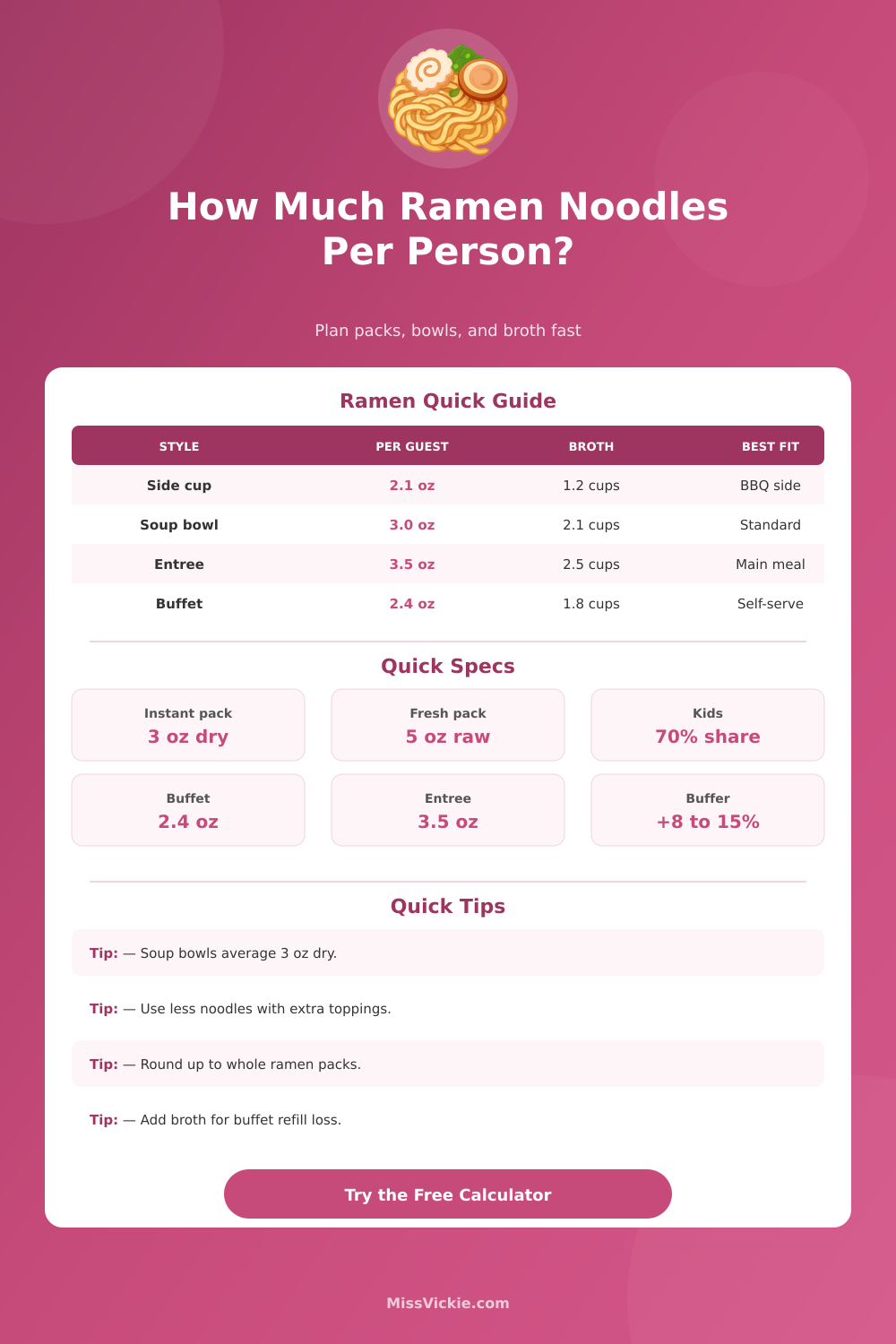
Most ramen meals use 2.5 to 3.5 ounces of dry-equivalent noodles per adult. Loaded topping bars use less noodles, while entree bowls and fresh packs use more.
Instant Brick
3 oz
Best for dorm dinners and fast crowd feeding with easy pack math.
Fresh Pack
5 oz
Feels restaurant-style and cooks into a springier, fuller bowl.
Cup Noodles
2.25 oz
Great for grab-and-go service where guests self-manage broth and toppings.
Frozen Kit
5.5 oz
Useful when you want richer texture and nearly full entree bowls.
| Serving Style | Adult Noodles | Kid Noodles | Best Use |
|---|---|---|---|
| Side Cup | 2.1 oz dry eq | 1.5 oz dry eq | BBQ plates, fried sides, sampler meals |
| Buffet Bowl | 2.4 oz dry eq | 1.7 oz dry eq | Self-serve bars with several toppings |
| Soup Bowl | 3.0 oz dry eq | 2.1 oz dry eq | Standard ramen dinner with broth |
| Entree Bowl | 3.5 oz dry eq | 2.5 oz dry eq | Main dish service with fewer sides |
| Late-Night Bowl | 2.7 oz dry eq | 1.9 oz dry eq | Party refuel or casual snack service |
| Ramen Type | Pack Weight | Cooked Yield | Typical Fit |
|---|---|---|---|
| Instant Brick | 3.0 oz dry | 7.5 oz cooked | Budget bowls and quick meals |
| Cup Noodles | 2.25 oz dry | 5.6 oz cooked | Single servings and office lunches |
| Fresh Ramen Pack | 5.0 oz raw | 8.0 oz cooked | Restaurant-style bowls |
| Frozen Ramen Kit | 5.5 oz raw | 8.5 oz cooked | Rich texture and bigger portions |
| Dried Straight | 4.0 oz dry | 8.8 oz cooked | Pantry storage and large batches |
| Guests | Side Cups | Soup Bowls | Entree Bowls |
|---|---|---|---|
| 4 | 9 oz | 12 oz | 14 oz |
| 8 | 17 oz | 24 oz | 28 oz |
| 16 | 34 oz | 48 oz | 56 oz |
| 25 | 53 oz | 75 oz | 88 oz |
| 40 | 84 oz | 120 oz | 140 oz |
| Service | Broth Per Adult | Broth Per 10 | Notes |
|---|---|---|---|
| Side Cup | 1.2 cups | 3 qt | Enough to coat noodles without a deep bowl |
| Buffet Bowl | 1.8 cups | 4.5 qt | Account for ladle overserving and refills |
| Soup Bowl | 2.1 cups | 5.25 qt | Most home ramen dinners land here |
| Entree Bowl | 2.5 cups | 6.25 qt | Use for meal-size bowls with fewer sides |
Calculating how many portions of ramen to prepare require understanding how much dry ramen expands when cooked. The amount of dry ramen noodles that you purchase is one consideration for calculating portions. Another consideration is an amount of liquid that fills the bowl when the ramen is cooked.
Ramen noodles often swell when they is cooked, so the swelling of the noodles is one factor that must be considered when calculating portions of ramen. Additionally, another factor to consider is the amount of broth to be use in the ramen; broth will evaporate while the ramen is simmermed, so broth must be accounted for in the calculation of portions of ramen to prepare. The way in which you will serve the ramen will impact the portion of ramen that should be provide to each person.
How Much Ramen to Make
If the ramen is to be served as a side dish, a smaller portion of ramen should be prepared for each person. If the ramen is to be served as the main meal for each person who will eat the ramen, a larger portion of the ramen should be provided to each person. If the ramen is to be served in a buffet fashion, a slightly smaller portion of ramen should be provided to each person since each guest will add toppings to the bowl of ramen; toppings such as egg, pork and vegetables will fill each guest and allow for the provision of less ramen to each guest.
The type of ramen to be use can also impact the calculation of the portions of ramen that should be prepared. Ramen bricks for instant noodles is often easy to portion as they typically come in three-ounce packs. However, if you use fresh or frozen ramen kits, their weight must be determined as they are often more heftier than the dry instant ramen bricks.
Additionally, wavy noodles will hold more sauce and take up more space in the pot than straight noodles. Lastly, if the ramen is to be prepared for children, the portion size can be less as children have more smaller appetites then adults. Another consideration is the type of broth that will be used in the preparation of the ramen.
Light broth will coat the noodles but take up little volume in the bowl. However, rich broths like tonkotsu-based broths are very filling so there will be less of that broth serve to each person. If preparing ramen for a large group of people, extra broth should be prepared as some of the broth will evaporate during the simmering process of the noodles.
Additionally, it is also a consideration to prepare ten to fifteen percent more ramen than the calculation indicate as some bowls may spill and some people may want more servings of the noodle-based broth. To determine the total shopping list for ramen, the total weight of dry noodles that will be cooked should be calculated. The number of packages of ramen to be purchased can be determined by rounding up to the nearest whole package of ramen.
If preparing large portions of ramen, it is best to boil the packages of noodles in batches so the noodles are not undercooked or too soft when served to the guest. By placing the packages of ramen into ice water, the cook can stop the cooking process and the dry noodles can be reheated in the broth when prepared to be serve. If the ramen is to be served as a buffet, it is best to increase the number of packs of noodles to be prepared by ten percent and the amount of broth by twenty percent.
The increased amount of noodles and broth will be needed for the buffet-style of serving ramen. If alcohol will be served at the party in which the ramen will be served, the amount of ramen should be increased in the preparation of the meal since alcohol can increase the hunger level of the guests. It is also important to cook one test portion of ramen to determine the amount of dry noodles that will be required to make the ramen portion.
By weighing the noodles before cooking the ramen and after serving it, the ratio of dry to cooked noodles can be determined for the specific brand of ramen that will be prepared for the guests.