Rack of Lamb Cooking Time Calculator
Estimate oven time for a rib rack from rack weight, rib count, thickness, oven temperature, sear choice, starting temperature, target doneness, carryover heat, crust coating, and rest time.
🥩Rack of lamb presets
Choose a starting point for a frenched or untrimmed rack, then adjust the rib count, center thickness, sear, coating, target finish, and planned rest.
⚖Units
🍴Rack size and roast setup
🔥Sear, crust, doneness, and rest
Rack of lamb timing estimate
Timing breakdown
Use a food thermometer in the center of the rack. Time is only an estimate.
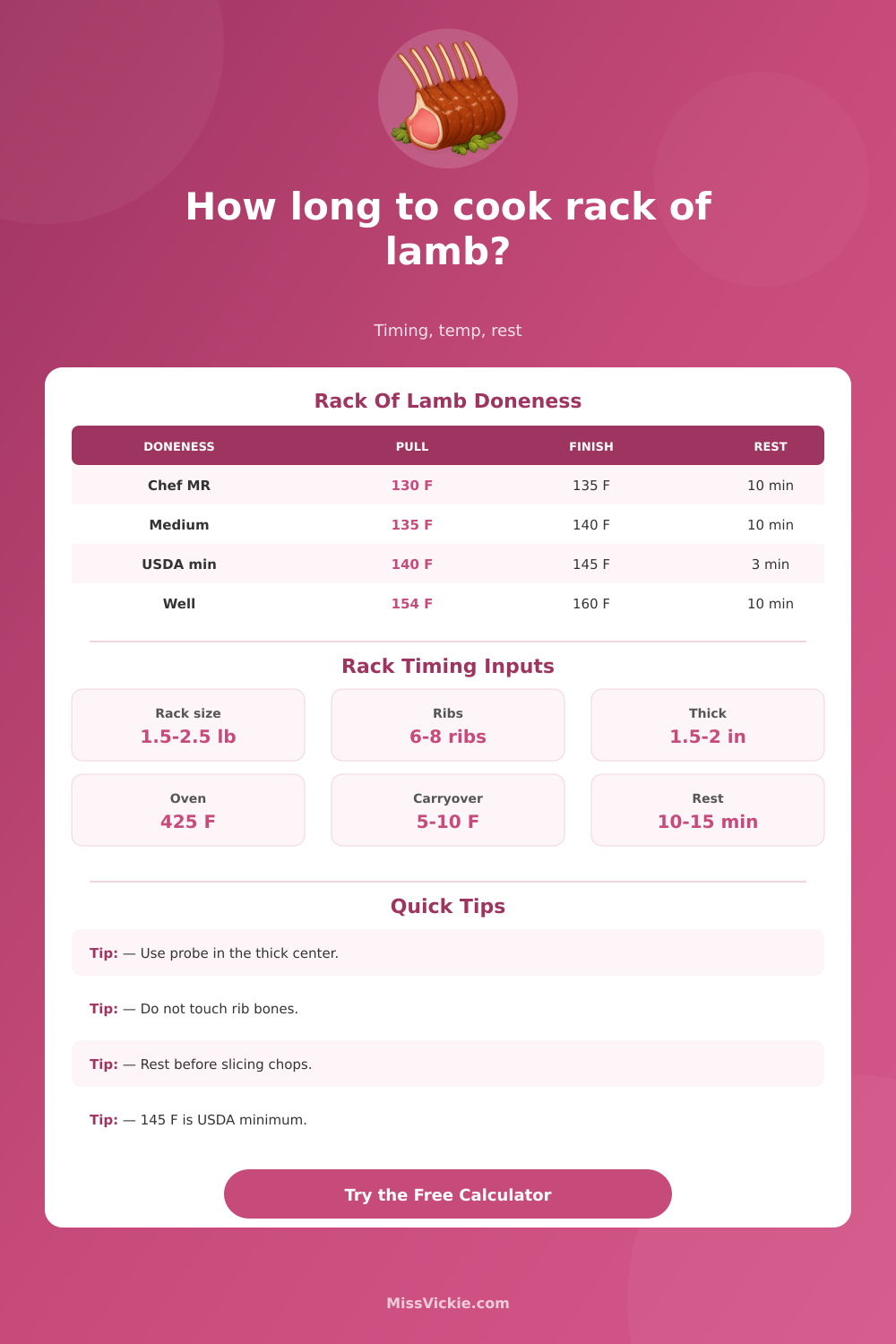
🌡Rack doneness and safety references
Whole lamb cuts should reach 145°F and rest at least 3 minutes for safety.
The food safety rest is shorter than the usual 10 to 15 minute quality rest.
Small racks often rise 5 to 10°F after leaving the oven.
A hot oven browns a lean rack quickly after searing or seasoning.
📋Pull temperature guide
| Target style | Finish after rest | Typical pull with 7°F carryover | Safety note |
|---|---|---|---|
| Chef rare rack | 125°F / 52°C | 118°F / 48°C | Below the USDA safe minimum for whole lamb cuts. |
| Chef medium-rare rack | 135°F / 57°C | 128°F / 53°C | Common preference, but below the USDA safe minimum. |
| Chef medium rack | 140°F / 60°C | 133°F / 56°C | Still below the 145°F USDA minimum. |
| USDA minimum rack | 145°F / 63°C | 138°F / 59°C | Meets USDA guidance when rested at least 3 minutes. |
| Medium-well rack | 150°F / 66°C | 143°F / 62°C | Above the safe minimum after carryover. |
| Well done rack | 160°F / 71°C | 153°F / 67°C | Firm texture, but safely above the minimum. |
⏱Oven timing ranges for one 8-rib rack
| Rack setup | Oven temp | Start temp | Approx oven time |
|---|---|---|---|
| 1.5 lb frenched rack, seared | 425°F / 218°C | 45°F / 7°C | 16 to 21 minutes to medium-rare preference. |
| 2 lb standard rack, seared | 400°F / 204°C | 45°F / 7°C | 20 to 27 minutes, depending on thickness. |
| 2.5 lb thick cap rack, no sear | 375°F / 191°C | 40°F / 4°C | 28 to 38 minutes, with earlier probe checks. |
| Two tied racks or crown-style roast | 375°F / 191°C | 45°F / 7°C | 35 to 55 minutes because the center is thicker. |
🧄Crust and sear adjustment table
| Surface choice | Timing effect | Best check | Rack note |
|---|---|---|---|
| Salt, pepper, oil | Fastest browning | Probe at 6 minutes early | Good for hot ovens and simple lamb flavor. |
| Herb garlic paste | Adds about 1 minute | Watch minced garlic | Lower oven heat slightly if herbs darken. |
| Mustard breadcrumb crust | Adds 2 to 4 minutes | Check center, not crumbs | Crumbs brown before the eye reaches target. |
| Wet yogurt marinade | Adds 3 to 5 minutes | Pat surface first | Moist coating slows browning and evaporation. |
✅Probe placement and serving checks
Thermometer placement: Insert the probe into the thickest meaty eye from the side, away from rib bones, fat pockets, and the roasting pan.
Resting rack: Tent loosely, keep the crust dry, and slice between bones after the carryover rise has settled.
Food safety: Time can only estimate doneness. For whole lamb cuts, use 145°F plus at least 3 minutes rest as the safe reference.
Crust timing: Breadcrumb, nut, and yogurt coatings can look done before the center is done, so trust internal temperature.
Cooking a rack of lamb at home is always uncertain. It depends on many things, such as how your oven distribute heat. Do you want a crusty exterior but a tender, pink interior? Thickness, rib count, and weight all factor into how long the rack should cook. The thicker the eye, the longer it will take to come up to temperature (even with the same overall weight). If you’re working with a frenched rack, it will cook a little quicker than a rack with a chunk of fat on top since bones alters its insulating properties.
And depending on where you start, it will cook different. A cold rack straight out of fridge requires extra time compared to one that has been sitting around at room temp. Other factors like the type of coating on the food’s surface change things, as crusts slows the browning. The method also matters. Searing on top of stove raises the heat before oven work. Marinating will similarly slow down the cook but increase total time.
How the Cooking Calculator Helps You
How does the calculator account for all this? It eliminates your need to do any mental calculations. For example, it accounts for how much the food’s temperature rise while resting. This way, you can pull it off the rack at the target temperature instead of waiting until the oven display show the final temperature. Safety and texture are influenced by the rest time (but no one ever talks about it). If a short rest is chosen, juices stays on top of surface, making the meat appear cooked through while the inside continue to rise. Allowing the meat to relax and for the temperature to equalize will result in a proper rest. Based off how long you plan to rest, this is what the tool will request.
The guide for food safety indicates that the minimum safe internal temperature for whole cut of lamb is 145 degrees with a three-minute rest (to help determine your level of doneness). There’s another important test beyond numbers to know if it’s accurate: Probing. The probe go into the center of thickest portion of the eye (no fat or bone). A quick poke will tell you if it need more time before serving. Ovens and oven racks is different; humidity affects heat transfer. So check early to avoid overcooking.
The plan means cooking a rack of lamb becomes something you can do repeatedly without any stress. Enter your oven and rack information to recieve an estimated cooking time. Check with a thermometer to confirm. Voila: a consistent result that makes cooking easy and relaxing. It’s why this technique applies anytime you’re cookin a rack of lamb.