🥧 Pumpkin Pie Filling for a Pie Calculator
Estimate pumpkin pie custard quantity from pie diameter, pan depth, target fill height, crust shrink, pumpkin puree, evaporated milk or cream, egg set ratio, bake loss, and ramekin overflow.
Measure the inside rim after the crust is in place. A pumpkin custard is thinner than fruit filling, so small changes in fill height, crust shrink, and bake loss can change the amount of puree, dairy, and eggs.
Full Breakdown
Balanced custard for a standard slice after cooling.
Cleaner slices for deep filling or cream-rich custard.
Classic body with less loose water than regular milk.
Shows whether the extra custard fits available cups.
Common Pumpkin Pie Fill Amounts
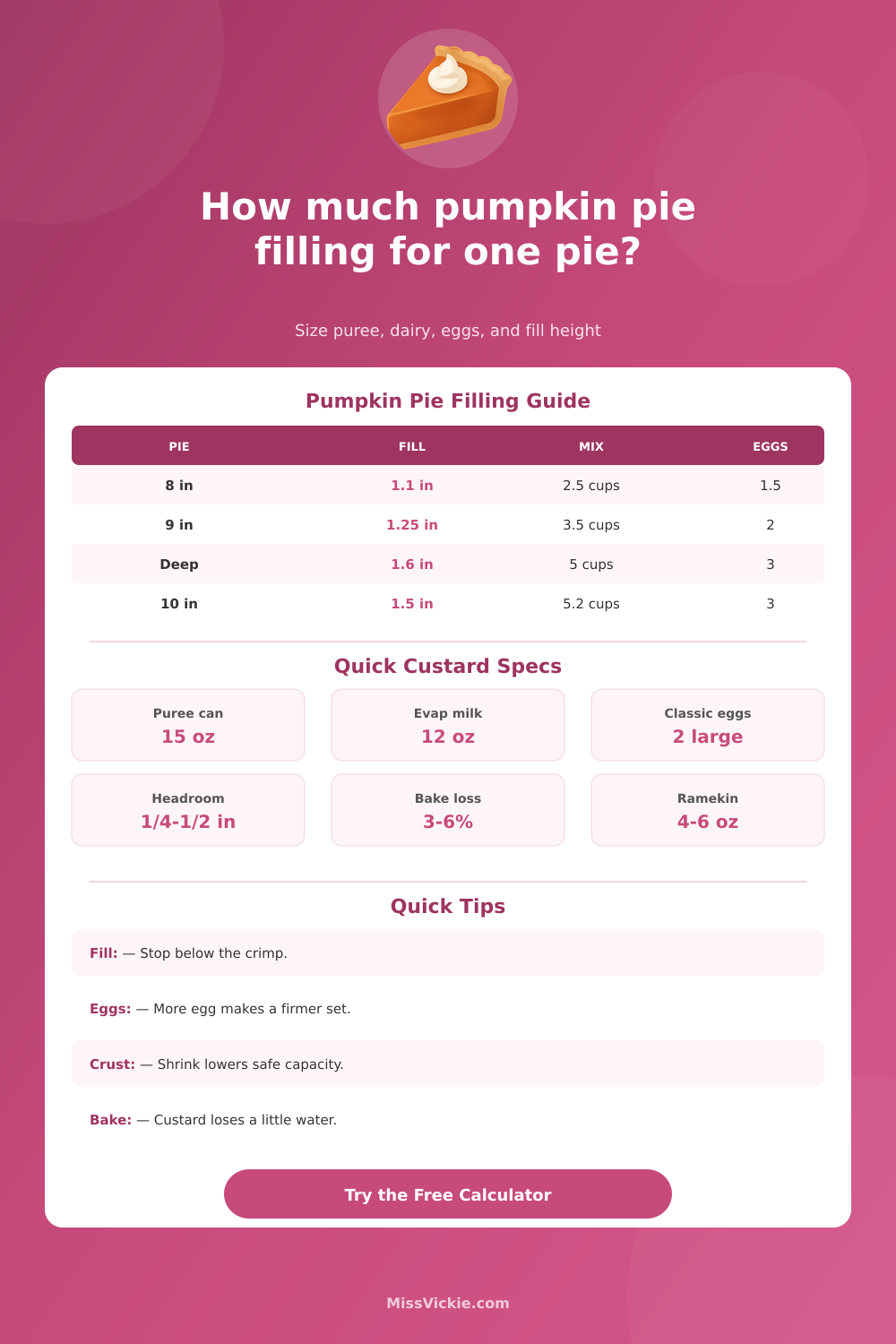
| Pie plate | Usual fill height | Raw filling | Typical eggs |
|---|---|---|---|
| 8 inch regular | 1.05 to 1.15 in | 2.3 to 2.8 cups | 1 to 2 large |
| 9 inch regular | 1.15 to 1.35 in | 3.2 to 4.0 cups | 2 large |
| 9.5 inch deep | 1.45 to 1.75 in | 4.4 to 5.6 cups | 3 large |
| 10 inch holiday | 1.35 to 1.65 in | 4.8 to 6.0 cups | 3 large |
Custard Balance Guide
| Style | Puree share | Dairy share | Best use |
|---|---|---|---|
| Classic | 47% | 32% | Standard pumpkin pie texture |
| Pumpkin-forward | 52% | 27% | Thicker puree flavor |
| Silky dairy-rich | 43% | 36% | Heavy cream or half-and-half |
| Firm clean-slice | 49% | 29% | Deep dish pies |
Dairy Density And Set Notes
| Dairy | Approx g/cup | Set effect | Use when |
|---|---|---|---|
| Evaporated milk | 252 g | Classic firm body | Traditional canned puree pies |
| Heavy cream | 238 g | Softer rich body | Silky custard texture |
| Half-and-half | 242 g | Medium body | Less rich than cream |
| Coconut milk | 240 g | Needs firmer egg | Dairy-free style pies |
Pie Geometry Checks
| Setting | Low | Usual | High |
|---|---|---|---|
| Crust shrink | 0% | 4 to 7% | 10%+ |
| Overflow guard | 3% | 6 to 9% | 12%+ |
| Bake loss | 2% | 4 to 6% | 8%+ |
| Ramekin fill | 70% | 80% | 90% |
Calculator estimates are based on common pumpkin custard ratios, large eggs, and round or sloped pie plates. Real pans, crust thickness, puree moisture, and oven behavior vary, so pour slowly and stop below the crimp.
Determining an correct amount of pumpkin pie filling is necessary because the amount of pumpkin pie filling will determine if the pumpkin pie properly set or if the pie has a sunken middle and soggy edge. Many people use the standard recipe for pumpkin pie, but that recipe dont necessarily account for the number of piece of pumpkin pie filling that can be made from a specific pan. The pumpkin pie filling amount calculator allow for the inputs of pan dimensions and preferences, and then it calculates the amount of puree, dairy, and egg needed to create the perfect amount of pumpkin pie filling.
The dimensions of the pan must be accurately measure because the diameter of the pan only account for part of the volume of the pan. A deep ceramic pan will hold more pumpkin pie filling than a shallow metal pan of the same diameter. The depth of the pan must also be accounted for because pumpkin pie crust will shrink when baked.
How to Get the Right Amount of Pumpkin Pie Filling
If you pour the pumpkin pie filling into the crust without accounting for crust shrinkage, the pie may overflow the crust or the crust may not be completely fill with pumpkin pie filling. The volume of the custard will change when baked because the water in the custard will evaporate and the protein in the eggs will set and harden during baking. The calculator account for this change in volume with the bake loss adjustment and the overflow guard.
The overflow guard account for the portion of the crust that is not covered by the pumpkin pie filling. This space allow the pumpkin pie filling to expand when placed into the oven or when baked for the first ten minute. These adjustments ensure that the pumpkin pie filling will retain it’s desired slice height.
The ratio of pumpkin to dairy ingredient is another factor that will impact the texture of the pumpkin pie filling. The classic pumpkin pie recipe use evaporated milk and a specific amount of egg so that the pie easily slice. If you use buttercream in place of evaporated milk, the texture of the pie will be more softer.
To balance the softer texture created by the heavy cream, more egg will be required for proper setting of the pumpkin pie filling. The calculator allow for the selection between these different type of dairy ingredient so that the ratio of pumpkin to liquid can still be correct for the dairy product that is use. The amount of egg in the pie filling is also calculated because the amount of egg will impact whether or not the pumpkin pie filling will be spoonable or have a clean slice.
It is common for individual to create more pumpkin pie filling than can be held by the pie shell. In such cases, ramekin can be used to hold the extra pumpkin pie filling. The calculator calculate the amount of extra pumpkin pie filling that may be create from the overage percentage that is chosen.
Additionally, the calculator can estimate whether the amount of extra pumpkin pie filling will fit into the ramekins that are available. The baking time for ramekins is less than for pumpkin pie because the ramekin custard require less headroom. Accounting for the use of ramekins allow the individual to avoid wasting the created pumpkin pie filling and to avoid overfilling the pie shell with the pumpkin pie filling.
The most common error with making pumpkin pie filling are treating all type of pumpkins and pie shells the same. The density of the pumpkin puree can vary if using homemade pumpkin puree because of the different amount of liquid that can be expressed from different pumpkins. The amount of volume that straight-sided tart pan can hold differ from the amount of volume that sloped pie shells can hold.
Lastly, the depth of a frozen pie shell will differ from that of a ceramic pie shell. The pumpkin pie filling amount calculator account for these difference because the calculator allow for the individual to choose the type of shell and the type of pumpkin puree. Once the individual has determined the proper amount of pumpkin pie filling using the calculator, the filling should be poured slow into the crust.
When poured, the pumpkin pie should be poured until the filling is a quarter inch below the crimped edge of the crust. During the first fifteen minute of baking, the pumpkin pie may expand to the edge of the crust. If the pie do expand to the edge of the crust, a sheet pan may be used to catch the pumpkin pie filling overflow.
These steps will allow the individual to successfully bake pumpkin pie without having to make any adjustment to the amount of pumpkin pie filling during the baking process.