🍺 Pressure Fermentation Calculator
Calculate PSI levels, fermentation time, and temperature targets for any yeast strain
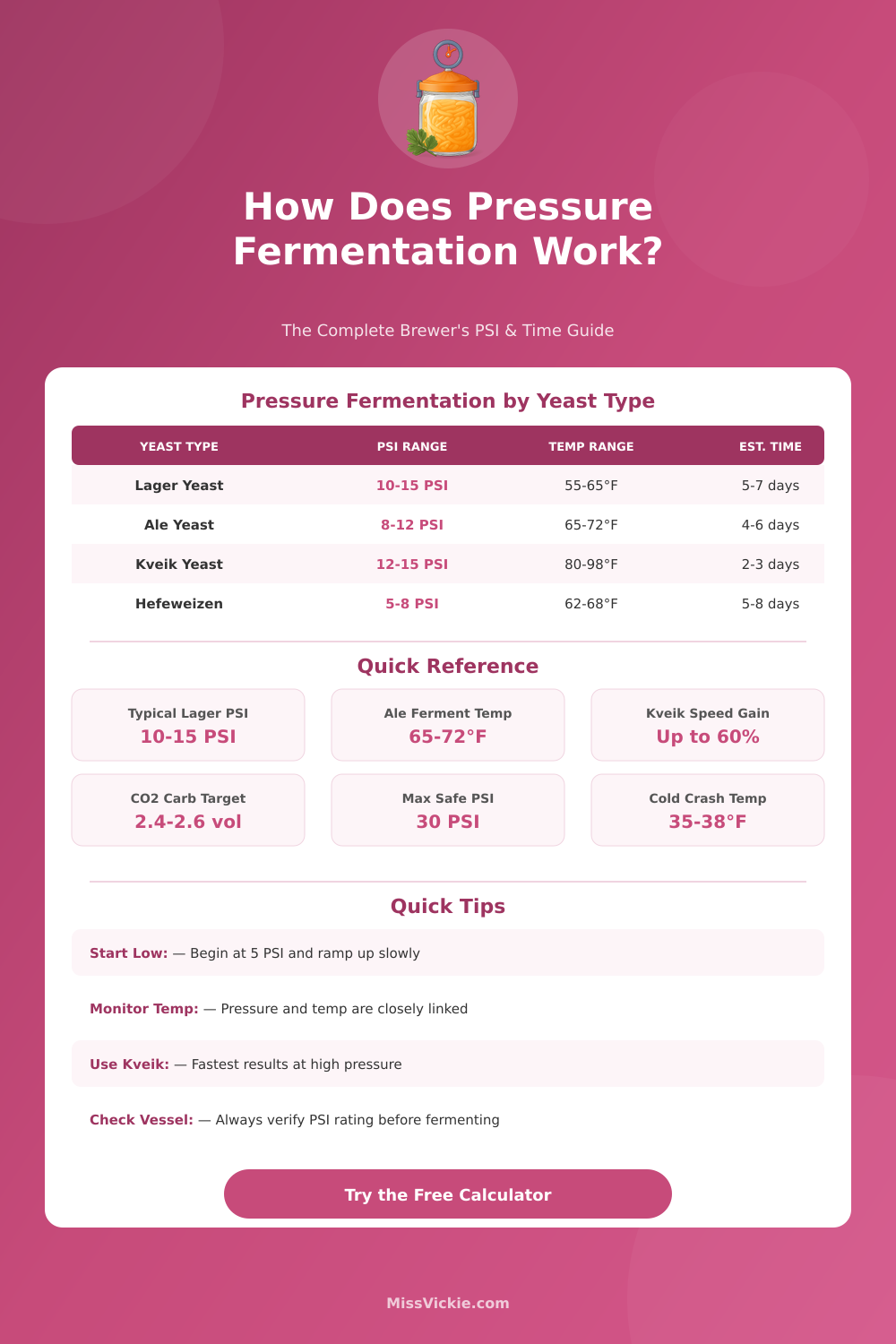
| Yeast Type | PSI Range | Temp Range (°F) | Est. Time | Notes |
|---|---|---|---|---|
| Lager Yeast | 10–15 PSI | 55–65°F | 5–7 days | Near-lager flavor at ale temps |
| Ale Yeast | 8–12 PSI | 65–72°F | 4–6 days | Suppresses fruity esters |
| Kveik Yeast | 12–15 PSI | 80–98°F | 2–3 days | Fastest of all options |
| Hefeweizen Yeast | 5–8 PSI | 62–68°F | 5–8 days | Low PSI preserves esters/phenols |
| Pilsner Yeast | 10–14 PSI | 55–62°F | 6–8 days | Clean crisp profile |
| Saison Yeast | 6–10 PSI | 70–80°F | 4–7 days | Moderate pressure recommended |
| Belgian Yeast | 5–8 PSI | 68–76°F | 5–8 days | Low PSI retains character |
| Temperature | CO2 Volumes (ambient) | PSI to Achieve 2.4 vol |
|---|---|---|
| 35°F (2°C) | 1.1 vol | 3.4 PSI |
| 45°F (7°C) | 0.9 vol | 5.7 PSI |
| 55°F (13°C) | 0.7 vol | 8.5 PSI |
| 65°F (18°C) | 0.55 vol | 11.3 PSI |
| 75°F (24°C) | 0.44 vol | 14.7 PSI |
| 85°F (29°C) | 0.35 vol | 18.9 PSI |
| 95°F (35°C) | 0.28 vol | 24.0 PSI |
| Method | Typical Time | Equipment Needed | Ester Level | Best For |
|---|---|---|---|---|
| Traditional Lager | 4–6 weeks | Refrigerator + carboy | Low | Authentic lagers |
| Pressure Lager | 5–7 days | Pressure fermenter | Very Low | Fast clean lagers |
| Traditional Ale | 7–14 days | Carboy + airlock | Medium-High | British & American ales |
| Pressure Ale | 4–6 days | Pressure fermenter | Low-Medium | Clean ales, IPAs |
| Kveik Pressure | 2–3 days | Pressure fermenter | Low | Fast turnaround |
In fermentation microorganisms, most commonly bacteria and yeast, break down foods and form entirely new flavors together with useful substances. It happens without oxygen so it no necessarily requires it. Germs do chemical changes that turn sugar into something different.
Here the main difference between fermentation and decay of foods: fermented foods use precise strains of fungi or bacteria that do not generate any danger. When food spoils on its own, none controls what grows here, and then the risk of bad things is very high. Fermentation on the other hand is planned and ruled: you enclose specific bacteria, yeast or molds in right conditions to turn raw food into delicious and safe food.
What is fermentation and why it is good for food
That typical sour taste in sauerkraut, kimchi and other fermented foods? Fermentation gives it. Except flavor it blocks harmful bacteria that want to take the place and prepare ideal ground for good bacteria, probiotics; for benefit.
Lactobacilli present in yogurt, sauerkraut and many natural fermented foods. Interestingly, fermentation destroys antinutritional elements, strengthen nutritional value and even help the body produce necessary vitamins.
How many fermented foods you should eat daily? Scientists yet count that exactly. According to studies, four until six portions a day could depress inflammation and increase the diversity of intestinal bacteria.
The wisest way is start slowly. Since little amounts progress to two-three portions during the day. That is the good measure.
For instance yogurt in the morning, kimchi at lunch and sauerkraut at dinner. Portions are easily manageable; a quarter cup of sauerkraut matches one of them.
Fermentation matters also for bread making. Yeast eat sugar and starch in the dough, break them to carbon dioxide and ethanol… That what gives rise and structure.
Sourdough is like this delicious because the starter ferments long time before mixing with the dough. In approximately 75 degrees Fahrenheit, bulk fermentation usually require between one and two hours.
Fermented hot sauces base on lactic acid bacteria instead of vinegar for their kick. Those bacteria naturally live on fruits and vegetables, included chili peppers and like low-oxygen, salty conditions. For sake one uses koji, that destroys rice proteins and starch after wash and cook of the rice.
Some ale beers ferment for a whole year. Lager yeast extend that time even more.