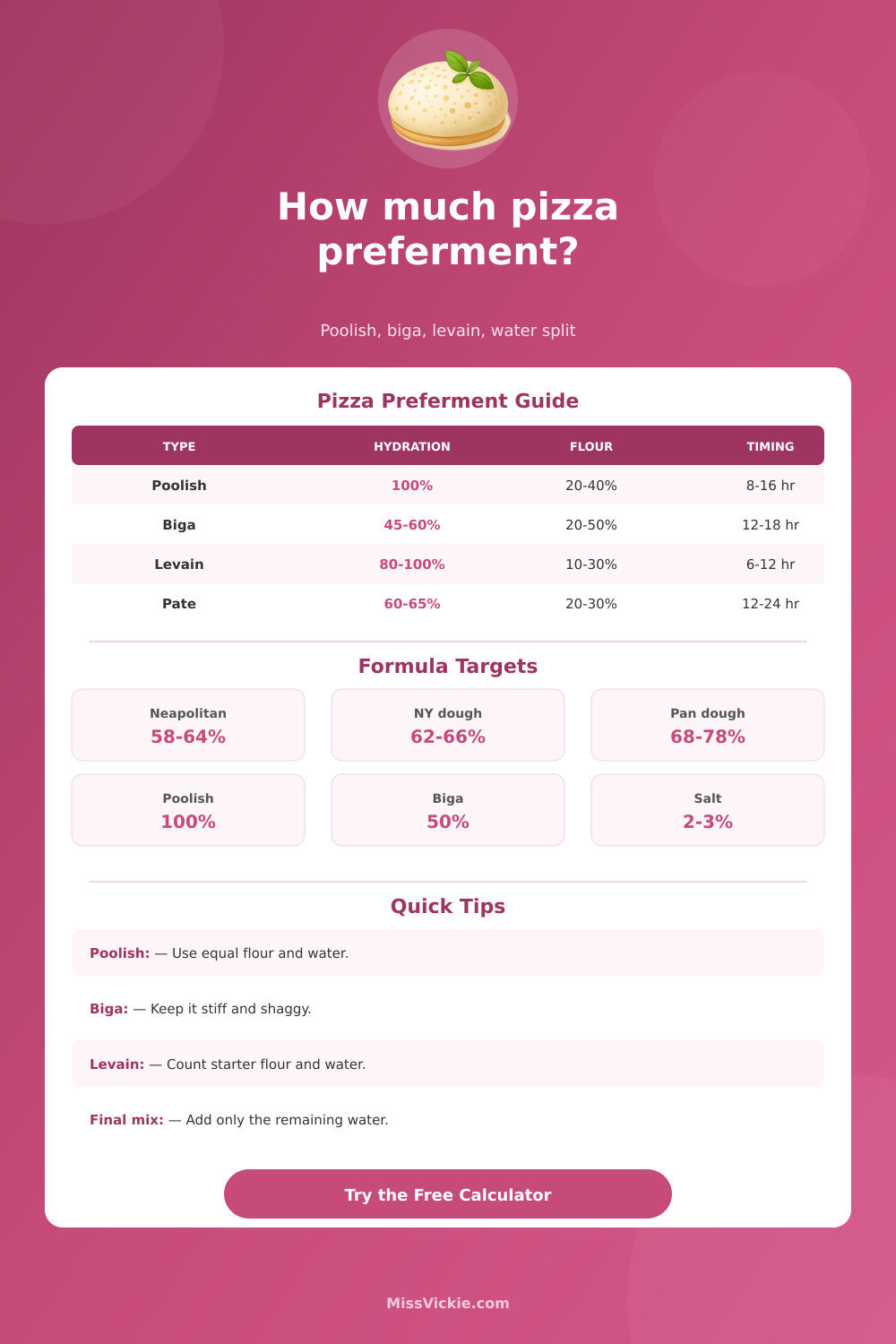
Preferment flour, hydration, yeast, and final water split
Preferment Pizza Dough Calculator
Scale poolish, biga, sponge, pate fermentee, or sourdough levain for pizza dough. Calculate total flour, preferment flour, preferment water, final mix water, salt, oil, yeast, dough balls, and fermentation timing.
Choose a real pizza formula starting point, then adjust ball count, ball weight, preferment type, hydration, yeast, salt, oil, and fermentation schedule.
Formula Breakdown
| Preferment | Hydration range | Prefermented flour | Pizza use | Texture cue |
|---|---|---|---|---|
| Poolish | 100% | 20-40% | Neapolitan, pan, same-day flavor boost | Bubbly batter, domed then slightly relaxed |
| Biga | 45-60% | 20-50% | Roman, New York, long cold pizza dough | Shaggy clumps, sweet aroma, expanded |
| Sponge | 65-90% | 15-35% | Home oven pizza with flexible timing | Soft paste, airy top, mild yeast smell |
| Pate fermentee | 60-65% | 20-30% | Old dough flavor in lean or thin crust | Firm dough piece, lightly fermented |
| Levain | 80-100% | 10-30% | Sourdough pizza, naturally leavened pies | Expanded, tangy, active bubbles |
| Pizza style | Ball weight | Total hydration | Salt | Oil |
|---|---|---|---|---|
| Neapolitan round | 230-280 g | 58-64% | 2.5-3% | 0% |
| New York slice | 380-520 g | 62-66% | 2.2-2.8% | 1.5-3% |
| Detroit pan | 550-750 g | 68-75% | 2-2.6% | 2-5% |
| Roman sheet | 900-1400 g | 72-82% | 2.4-3% | 1-3% |
| Thin crust | 180-240 g | 52-58% | 2-2.5% | 1-4% |
| Temperature | Preferment yeast cue | Typical time | Use when | Watch for |
|---|---|---|---|---|
| Cold, 4-8°C | Very low yeast or active levain | 18-48 hr | Overnight planning and mild acidity | Under-ripe stiff biga |
| Cool room, 16-19°C | 0.03-0.08% yeast | 12-18 hr | Classic biga and poolish timing | Slow rise in weak flour |
| Room, 20-23°C | 0.05-0.15% yeast | 8-14 hr | Evening mix, morning dough | Collapsed poolish |
| Warm, 24-28°C | 0.02-0.08% yeast | 4-8 hr | Same-day flavor build | Acidic or slack dough |
Baker percentages are based on total flour. Preferment flour and water are included in the final dough hydration, not added on top of it.
Fermenting some of your dough in advance during the first step (called preferment) affects both feel and taste of pizza. That initial process strengthen the gluten network to prevent tearing during stretching. It also creates flavor compounds that give final dough a subtle sweetness, even if you’re baking at home oven temps.
First, determine how much dough you want to ferment ahead of time. Then, decide what hydration percentage of this preferment should be and how much water go into the rest of the dough. The calculator above takes care of the math for you. That’s the decision: how much of all your flour do you want to use for that jump-start?
How to Use a Preferment Calculator
Most recipes calls for twenty-five to thirty-five percent; it imparts noticeable taste without creating such an active dough that it fall apart in a lengthy cold proof. A biga (at fifty percent hydration) remains stolid, lending aroma and chew; at one hundred percent hydration, a poolish will spread out nicely, offering good extensibility. With levain, which includes both water and flour as part of the seed starter, the calculator deducts those figures from upcoming preferment formula, ensuring no one doubles up on anything.
The other two variables (hydration and time) is interrelated: once your preferment percentage has been entered, the remaining factors determine whether the preferment will stay in control. If it’s hydrated more heavily, it’ll ferment sooner, so adjust the time down or drop the room temp to avoid over-fermentation and a resulting more acidic dough then usual. Conversely, if the preferment is stiffer, it will progress slower and withstand chillier environment. This is why most New York and Roman formulas calls for biga when planning for several days or even overnight.
You can see at a glance how much final water remains by subtracting amount of water in the preferment. This prevents one of the most frequent mishap of all: topping off an already-hydrated preferment with all of recipe water.
The ball size and style controls will set target dough accordingly. For instance, a Detroit (or pan) dough require more water and extra fat to stay soft beneath sauce and cheese. In contrast, a Neapolitan ball of roughly two hundred sixty grams, with a sixty four percent hydration, will yield an airy thin rim.
Use the reference tables on page to view the typical ranges for each input and see if they is within accepted practice, or if you’re stretching one a little past its normal range. Salt and oil content affect both handling and flavor. Higher salt (2.5-3%) stiffens dough and slows down fermentation. Lower salt lets you add a bit of oil, which helps soften the crumb for pan types.
The calculator links all percentages to total flour weight. This means adjusting the flour weight or ball count automatically adjust every ingredient to match without any extra math.
Yeast is also temperature-dependent; it increase about twice as fast with each eight degrees Celsius of increase. That means even if your kitchen’s a bit warm, a batch of yeast that take an hour at twenty-one degrees will take only half that time at twenty-six. That’s where the timing fields comes into play. Once the starter’s been mixed, cold final proof allows for more leeway: The fridge can hold dough for two or three days, during which slow development of flavor will continue.
Running the numbers forces you to quit guessing about the yeast load and the water split. Seeing it all laid out so clearly lets you adjust one variable at a time. You can taste difference, then repeat process with confidence rather than hoping the next batch turns out just as well. (And of course, the real value in running the numbers is that you know if the temperature you have on hand will match the schedule you would of wanted to run.)