Potatoes for Mashed Potatoes Calculator
Estimate raw potatoes to buy, cooked potato weight, finished mash volume, butter, milk or cream, salt, and extra portions for family dinners, holiday pans, potlucks, and buffet trays.
🥔Mashed Potato Batch Presets
Choose a real serving situation, then adjust servings, potato type, appetite, peel trim, dairy style, holiday buffer, and cooked yield.
⚖Mashed Potato Inputs
Mashed potato plan
Adjust inputs to size the batch.
Batch Breakdown
Finished Mash
Mixing Order
📊Serving Size Grid
Best when stuffing, rolls, vegetables, and several sides share the plate.
Reliable family portion for weeknight meals with one main and one vegetable.
Better for guests who expect mashed potatoes and gravy as a featured side.
Useful for self-serve lines where scoops vary and some guests return.
📋Reference Tables
| Potato Type | Best Mash Texture | Typical Yield | Cup Density |
|---|---|---|---|
| Russet | Fluffy, dry, starchy mash | 82 to 88 percent | About 7.0 oz per cup |
| Yukon Gold | Creamy, buttery mash | 84 to 90 percent | About 7.3 oz per cup |
| Red potatoes | Rustic skin-on mash | 86 to 92 percent | About 7.5 oz per cup |
| White potatoes | Balanced soft mash | 84 to 90 percent | About 7.2 oz per cup |
| Sweet potatoes | Softer, sweeter puree | 78 to 86 percent | About 7.8 oz per cup |
| Servings | Dinner Side Raw | Holiday Raw | Finished Volume |
|---|---|---|---|
| 4 people | 2.1 to 2.5 lb | 2.8 to 3.3 lb | 4 to 6 cups |
| 6 people | 3.1 to 3.8 lb | 4.2 to 5.0 lb | 6 to 9 cups |
| 12 people | 6.2 to 7.5 lb | 8.4 to 10 lb | 12 to 18 cups |
| 25 people | 13 to 16 lb | 18 to 21 lb | 25 to 38 cups |
| 50 people | 26 to 32 lb | 35 to 42 lb | 50 to 75 cups |
| Dairy Style | Butter Per Pound | Milk Per Pound | Result |
|---|---|---|---|
| Lean mash | 1 tbsp | 2 tbsp | Light, potato-forward texture |
| Classic mash | 2 tbsp | 1/4 cup | Balanced family-style bowl |
| Creamy style | 3 tbsp | 1/3 cup | Softer restaurant texture |
| Holiday rich | 4 tbsp | 1/2 cup | Very rich, glossy finish |
| Dairy-free | 1.5 tbsp oil | 1/4 cup broth | Savory and lighter |
| Waste or Yield Factor | Calculator Effect | Use When | Planning Cue |
|---|---|---|---|
| Skin-on trim | 4 percent waste | Thin skins stay in the mash | Scrub well before cutting. |
| Classic peel | 12 percent waste | Smooth holiday potatoes | Buy more for deep eyes. |
| Heavy trim | 18 percent waste | Older potatoes or blemishes | Round purchase weight up. |
| Low cooked yield | 78 to 82 percent | Watery boil or soft sweet potatoes | Drain and steam dry well. |
| High cooked yield | 88 to 92 percent | Steam, bake, or waxy potatoes | Expect a denser mash. |
⚖Mashed Potato Comparison Grid
High starch makes a lighter mash, but peel waste and water loss can be higher.
Natural buttery texture needs a little less dairy and holds well in bowls.
Thin skins can stay in, reducing waste and making a denser scoop.
Extra butter and warm dairy help the batch stay smooth after holding.
💡Mashed Potato Tips
Potato size, age, boiling method, and draining time all change yield. For a holiday table, round the raw potato purchase up to the next practical bag size.
Are you deciding how much mashed potatoes to serve at a holiday dinner? Uh oh: There’s that familiar feeling of apprehension as you weigh demands of your guests against potential leftovers. Nobody wants a half-full pot, but nobody want leftovers clogging their fridge, either.
The calculator translates headcount into actual weight required; it factors in expected dairy usage along with any waste from peeling the potatoes. A fuzzy estimation becomes a clear grocery list.
How Much Mashed Potato Do You Need?
It depends on the kind of potato you use. Starchy russets is classic for fluffy mash; their high starch content breaks down into airy goodness while they cooks. Because they go well with milk and butter, they are light and fluffy. Yukon Golds provide creamy flavor due to their higher fat content. They holds their shape better during rustic treatments.
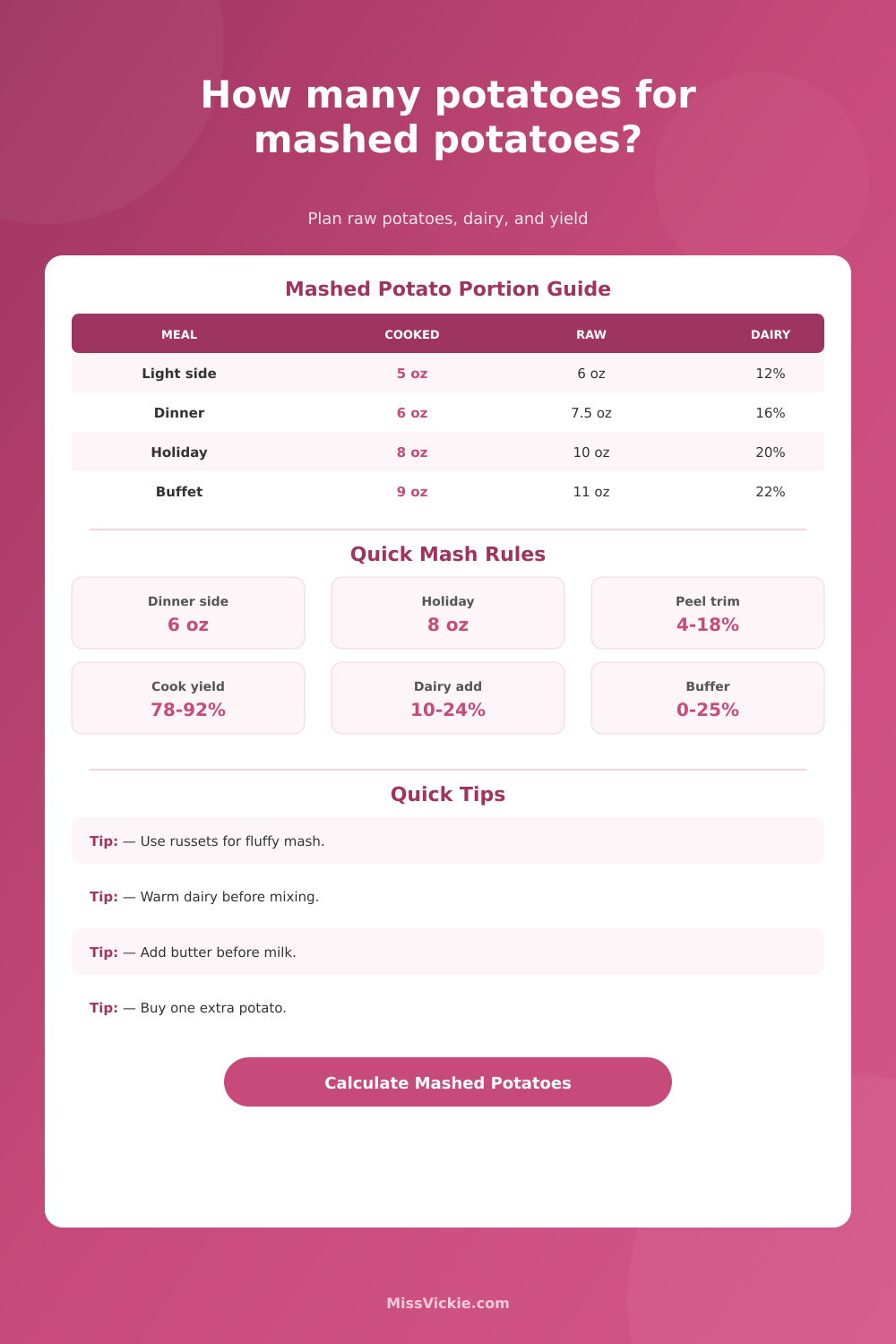
It accounts for the different yields of starchy and waxy potato by weighing them raw and including denser types. Skins cause a lot of waste. When you fully peel potatoes, the total weight decrease, so you need to purchase more. Peeling your potatoes can decrease your weight by about 10-15% before they even hit the pot. The calculator allows for specifying your exact trim loss, avoiding under-purchases. That means purchasing enough for everything going down the drain and onto plates.
To me, richness in this dish come from dairy. Some people use very little milk (making for a leaner mash) and others use lots of butter (multiple tablespoons per pound of potato) and cream. Dairy adds weight and volume to the potatoes, giving them more body. Knowing which one to go with allows you to keep everything at the proper temperature, since adding cold dairy to hot starch will cause it to seize up. This is why the tool lets you know what volume of liquid to warm.
But how much? That depends on what’s being served with it. If it’s a light side, then less. If it’s a mash for a comfort-food main course like mashed potatoes, more. The presets accounts for everything from buffet-style to weeknight meals and will adjust ounces per person according to the number of people at dinner. There’s also a buffer feature, which gives you a bit of wiggle room in case there’s not enough (but this is something you’ll pay for with an extra potato or two).
Planning accurately trumps complicated skills. After you have precise quantities of both dairy and raw potato, it’s just a matter of cooking. Drain, dry, mash, stir in warm fat until smooth. There are no more guesses; there’s nothing to fear except for whether or not your dish tastes good. A bit extra at the grocery store never hurts; it’s when you run out while serving that butter wouldn’t save you.
Actualy, a luxurios amount of potato should of been bought based off the guest list.