Age, sex, food servings, sweat, sodium balance, supplements, and target mode
Potassium Intake Calculator
Estimate daily potassium intake from foods and supplements, compare it with an age and sex target, and see how activity and sodium affect your planning number.
Choose a common day, then edit the servings and labels. This calculator is for general information only and does not diagnose low or high blood potassium.
Potassium Intake Breakdown
Source Comparison From Your Inputs
High-potassium starch for one medium potato, flesh only.
One cooked cup adds potassium plus fiber and plant protein.
A familiar fruit source, useful but not the only high-potassium choice.
One cup contributes potassium along with calcium and protein.
One cup is potassium-rich, but portion size matters for sugar.
Two raw cups add potassium with very little sodium.
Three cooked ounces gives potassium plus protein and fats.
One ounce is a smaller but practical snack contribution.
| Age Group | Male AI | Female AI | Pregnancy / Lactation AI |
|---|---|---|---|
| Birth to 6 months | 400 mg | 400 mg | Not applicable |
| 7 to 12 months | 860 mg | 860 mg | Not applicable |
| 1 to 3 years | 2000 mg | 2000 mg | Not applicable |
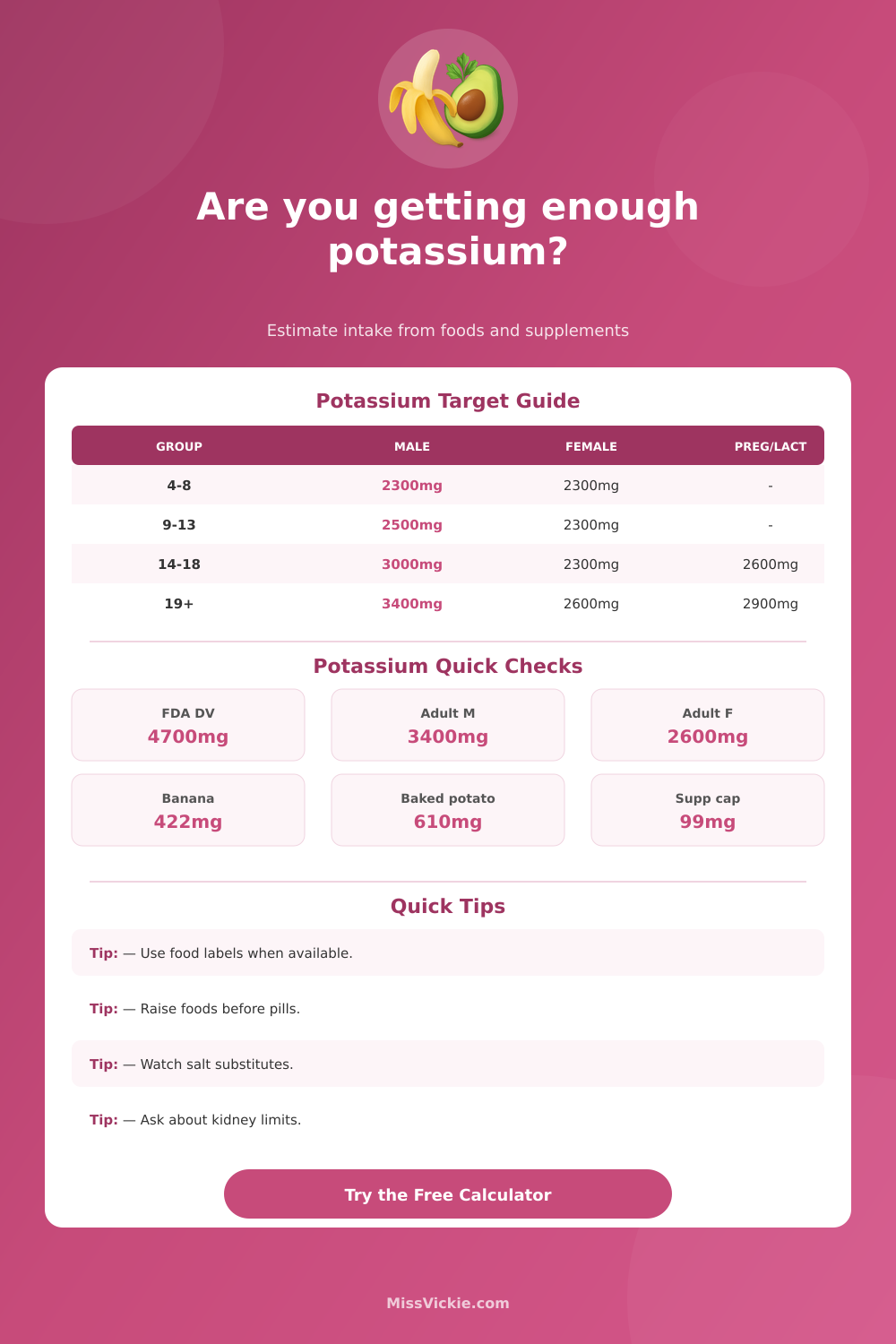
| 4 to 8 years | 2300 mg | 2300 mg | Not applicable |
| 9 to 13 years | 2500 mg | 2300 mg | Not applicable |
| 14 to 18 years | 3000 mg | 2300 mg | Pregnancy 2600 mg; lactation 2500 mg |
| 19 to 50 years | 3400 mg | 2600 mg | Pregnancy 2900 mg; lactation 2800 mg |
| 51 years and older | 3400 mg | 2600 mg | Use clinician guidance for pregnancy or lactation |
| Food | Reference Serving | Potassium | Percent DV |
|---|---|---|---|
| Dried apricots | 1/2 cup | 755 mg | 16% |
| Lentils, cooked | 1 cup | 731 mg | 16% |
| Acorn squash, mashed | 1 cup | 644 mg | 14% |
| Baked potato, flesh only | 1 medium | 610 mg | 13% |
| Kidney beans, canned | 1 cup | 607 mg | 13% |
| Orange juice | 1 cup | 496 mg | 11% |
| Banana | 1 medium | 422 mg | 9% |
| Milk, 1% | 1 cup | 366 mg | 8% |
| Chicken breast, grilled | 3 oz | 332 mg | 7% |
| Salmon, cooked | 3 oz | 326 mg | 7% |
| Activity Or Sweat Setting | Planning Cushion | Use Case | Calculator Effect |
|---|---|---|---|
| Low sweat day | 0 mg | Mostly indoors, no workout | Uses target without activity add-on |
| Light movement | 75 mg | Typical cooking, errands, easy walk | Small cushion for routine losses |
| Moderate workout | 175 mg | Workout, warm kitchen, yard work | Raises the planning target slightly |
| Heavy sweat | 300 mg | Long workout, heat, heavy shift | Adds a larger food-based cushion |
| Endurance or very hot day | 450 mg | Long hot event or repeated sweating | Flags a high-sweat planning day |
| Sodium Pattern | Example Sodium | Potassium Cue | Calculator Effect |
|---|---|---|---|
| Lower sodium day | 1500 mg | Ratio often looks stronger | No target bump |
| Label reference day | 2300 mg | Compare potassium directly to target | No sodium bump |
| Moderately high sodium | 3000 mg | More produce and beans may help balance | Adds a modest planning cue |
| High sodium restaurant day | 4000 mg | Ratio usually falls unless potassium foods rise | Adds a stronger planning cue |
| Salt substitute use | Varies widely | May contain potassium chloride | Use clinician guidance if at risk |
Potassium is an important mineral for the human body because potassium help to stabilize blood pressure, helps to keep the muscles in the body working proper, and helps to maintain a steady heartbeat. Many adults do not consume enough potassium due to eating processed foods instead of foods that contain potassium. Processed foods typicaly replaces foods that contain potassium like potatoes, beans, and leafy vegetable.
Furthermore, processed foods also contain high amounts of sodium, which creates an imbalance between the sodium and potassium levels in the body. It is, therefore, important for individuals to track the amount of potassium that they consume each day in order to maintain proper level of this essential mineral in their bodies. The calculator that is available on this page will calculate the amount of potassium that an individual should consume each day based off they age, sex, and life stage.
How Much Potassium Should You Eat?
The calculator takes into account the amount of potassium that an individual consumes from the foods that they eat each day, as well as from any supplements that they take. Additionally, the calculator factors in the amount of potassium that is lost from the body through sweating if an individual does not experience sweating under normal conditions. Furthermore, the calculator also considers the amount of sodium that an individual consumes in order to determine the potassium to sodium ratio of the individual, which will indicate whether or not the amount of potassium that they consume is sufficient to balance the amount of sodium that their body consume.
Overall, this calculator is a tool that provides estimations only of the potassium levels of an individual, and should not be used to replace medical analysis of the body. Individuals between the ages of 19 and 50 should consume at least 2600 mg of potassium daily, while those over the age of 50 should consume between 2600 and 3400 mg per day. These amounts may change based upon an individual’s life stage and the specific requirement that their body has of that particular life stage.
For instance, individuals who are pregnant or breastfeeding will require more potassium than adults, as will teenagers. The calculator will automatically determine the correct amount of potassium that an individual should consume based upon their entered age and sex; however, the individual can override this amount and choose to use the 4700 mg value that should be consumed daily as indicated on food product. The calculator will tell the individual how close to their chosen target they are consuming potassium, as well as how much more potassium they should consume to reach their daily target.
The calculator asks the individual to enter the amount of potassium that they consume from each category of foods that they eat daily. For instance, the calculator will ask for the amount of potassium from fruits like bananas or raisins, vegetables like beans or spinach, dairy product like milk, and protein foods like meat or beans. Each of these food categories will ask the individual to pick the food item and the number of serving of that food that they consume each day.
The amount of potassium that each food contains can be found on the label of that food product; the calculator will multiply the amount of servings of the food that are consumed by the amount of potassium in each serving; additionally, the individual may adjust the amount of potassium if the individual plans to account for the size of the produce that is consumed or the weight of the canned food product. An individual’s activity level is factored into the calculator, because the more active that an individual is, the more potassium that is lost through the bodys natural process of sweating. For instance, an individual who performs any activity other than light activity will lose some of the bodys potassium levels, and the more strenuous the activity, the more potassium that will be lost.
Furthermore, if the individual lives in a hot climate, the body will naturally lose more potassium through sweating. These factor will be accounted for in the calculator to ensure that the amount of potassium that is recommended for an individual actualy reflects the amount of potassium that the individual loses each day through physical activity. The calculator also factors the amount of sodium that an individual consumes each day into this potassium calculator.
An individual who consumes more than 2300 mg of sodium daily will have a decreased ratio of potassium to sodium if an individual does not increase their consumption of foods that contain potassium. This measurement can help an individual to ensure that their diet contains appropriate amount of both minerals. Additionally, if an individual consumes salt substitutes that contain potassium chloride, the amount of potassium that the body loses through the bodys natural processes may change; individuals who take blood pressure medicine or who have kidney issues should consult with a physician before adding these type of products to their diets.
An error that many individuals make with this calculator is to believe that the supplements of potassium are the best way for the individual to increase their intake of this essential mineral. The majority of the over-the-counter potassium supplements contain only 99 mg of elemental potassium per supplement. Foods like lentils or baked potatoes contain more potassium than a supplement.
The calculator can show how much potassium that an individual gets from the supplements that they take each day as a percentage of their total requirement; the majority of individuals get their potassium from food products instead of supplements. An individual who uses the calculator each day does not have to be perfect in their intake of potassium each day, but only has to ensure that they are reaching the target each day with some combination of foods that provide that potassium. For instance, they may not have much potassium in their fruit intake one day, but they may balance that by increasing their consumption of foods like beans and potatoes.
Additionally, their sodium intake may be high one day but can be balanced the next day by increasing their consumption of vegetables. These types of trade-offs can be easily seen with the calculator. It is common for individuals to worry that increasing the potassium levels in their bodies will increase the levels of potassium in their blood to dangerous amount.
However, as long as an individual has healthy kidneys, this will not be an issue; the body can balance the amount of potassium in the blood, and excretes the excess potassium. The exception to this rule is individuals with kidney issues, individuals who take certain medication, or those who take high amounts of potassium supplements without medical supervision. Thus, the calculator includes a note in the case that the amount of potassium consumed from supplements is increasing beyond 99 mg daily of potassium.
There are a variety of benefits to using this calculator; for instance, an individual can use the calculator when they are at the grocery store in order to determine what foods will provide the most potassium for that individuals body. Additionally, they may also benefit from the calculator in the planning of meals that include foods high in potassium. Each of these benefits may become habit of an individual who uses the calculator each day.
Additionally, the amount of potassium that an individual should consume may change with their life stage. An older adult who consumes fewer portions of food will require more concentrated sources of potassium; teenagers who participate in sports will lose potassium through their sweat and can use the activity settings of the calculator to determine how much more potassium that their body will need each day due to this activity level. Individual who are pregnant will change the amount of potassium that they need from their diet; the calculator will help their awareness of the types of foods that they need to consume in order to meet their potassium requirements.
The goal of this calculator is not to provide an individual with a perfect score each day in which they meet their requirements, but instead to provide an individual with a clear picture of their bodys requirement for potassium. Thus, the calculator removes the need for individuals to calculate the amounts of the minerals by hand; instead, they can focus upon the food selections that will contain the amount of potassium that they need; additionally, maintaining an awareness of their bodys requirement for this type of mineral will allow them to manage their body and its minerals effectively through their daily meals.