Pinto Bean Soaking Time Calculator
Estimate pinto bean soak time, soaking water, brine salt, room-temperature risk, altitude adjustment, and cooking time for refried beans, chili, soup, charro beans, bowls, and whole-bean sides.
🫘 Pinto Bean Presets
Choose the closest pinto bean batch, then tune dry weight, bean age, soak style, water ratio, room temperature, altitude, dish style, creaminess, and cooking method.
⚖ Soak And Cook Details
Pinto bean soaking plan
Enter your pinto bean batch details to estimate soak time, water, salt, and cooking time.
Input Breakdown
Adjustment Breakdown
Suggested Timeline
📌 Pinto Soak Snapshot
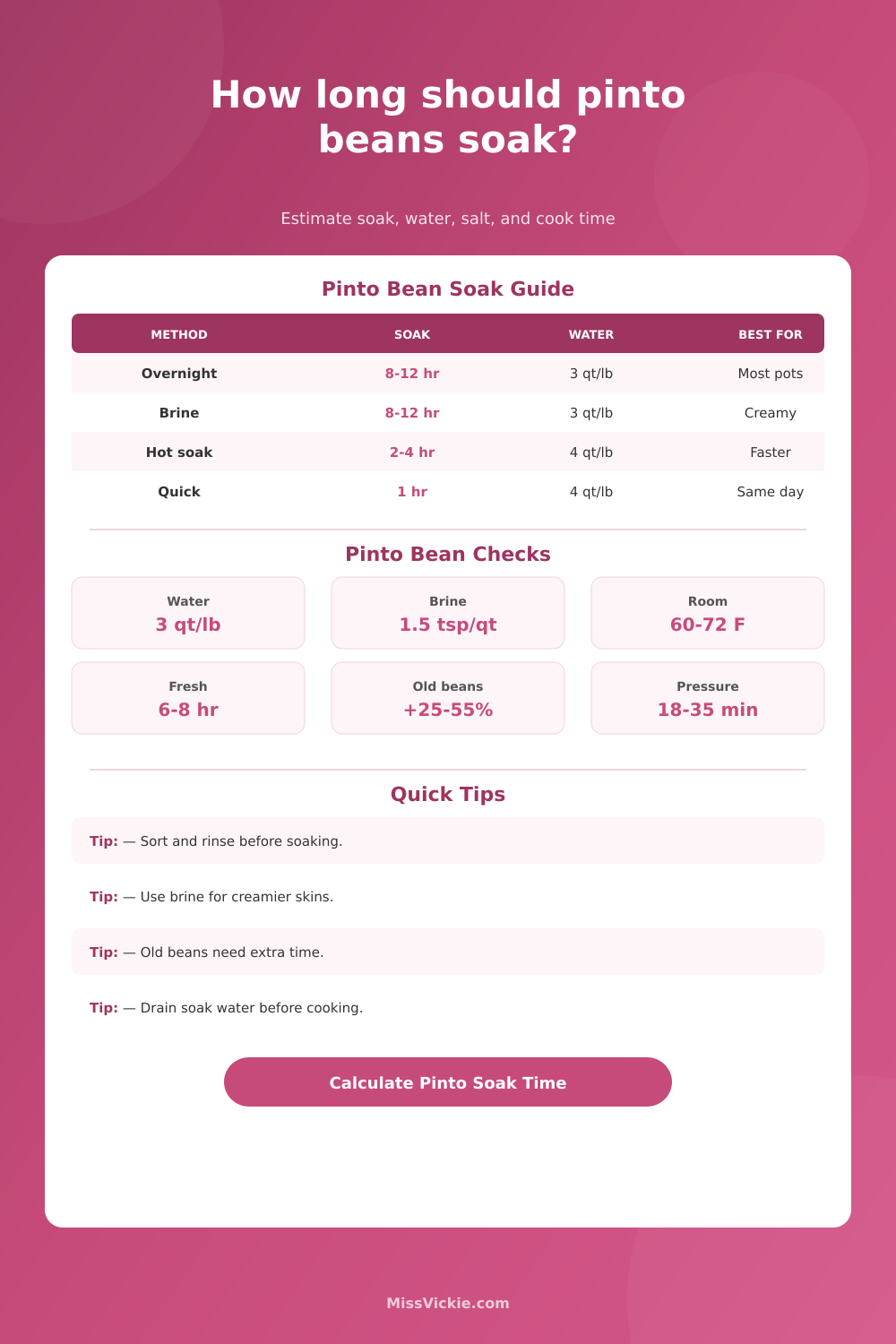
📊 Soaking Method Table
| Soak Method | Typical Time | Water Ratio | Salt Guidance | Best Use |
|---|---|---|---|---|
| Overnight soak | 8 to 12 hours | 3 qt per lb | No salt required | Reliable whole pinto beans for most pots |
| Salt brine overnight | 8 to 12 hours | 3 qt per lb | 1 to 1.5 tsp fine salt per qt | Creamy beans with softer skins |
| Hot soak | 2 to 4 hours | 4 qt per lb | Salt optional after draining | Same-day beans with better hydration than a quick soak |
| Quick soak | Boil 2 minutes, rest 1 hour | 4 qt per lb | Salt optional after draining | Emergency dinner timing |
| No soak | 0 hours | Rinse only before cooking | Salt after beans begin softening | Pressure cooker backup when time is tight |
🕛 Bean Age And Hydration Table
| Bean Age | Soak Adjustment | Cook Adjustment | Texture Risk | Practical Check |
|---|---|---|---|---|
| Fresh crop or under 6 months | Shorten 10 to 15% | Shorten 10 to 15% | Low | Skins wrinkle quickly after soaking |
| Typical pantry, 6 to 12 months | Use normal range | Use normal range | Low to moderate | Beans plump evenly overnight |
| Older beans, 1 to 2 years | Add 15 to 25% | Add 20 to 35% | Some firm centers | Pinch-test several beans before cooking |
| Very old or unknown age | Add 30 to 45% | Add 40 to 60% | High | Use brine and plan extra simmer time |
⛰ Altitude And Cooking Method Table
| Cook Method | Soaked Pinto Range | No-Soak Range | Altitude Impact | Texture Note |
|---|---|---|---|---|
| Stovetop simmer | 60 to 100 minutes | 100 to 150 minutes | Add time above 2,500 ft | Best control for whole beans |
| Covered Dutch oven | 75 to 115 minutes | 120 to 165 minutes | Add time above 2,500 ft | Gentle, even heat |
| Electric pressure cooker | 18 to 30 minutes | 35 to 50 minutes | Smaller change, add natural release | Fast, good for creamy beans |
| Slow cooker low | 6 to 9 hours | Not preferred | Old beans may stay firm | Use soaked beans only |
| Slow cooker high | 3.5 to 5.5 hours | Not preferred | Old beans may stay firm | Check liquid level early |
🍲 Dish Style Target Table
| Dish Style | Best Soak | Creaminess Target | Cook Finish | When To Salt Cooking Pot |
|---|---|---|---|---|
| Whole pinto side dish | Overnight or brine | Tender whole | Beans hold shape but squash easily | After simmer begins |
| Refried beans or bean dip | Brine overnight | Very soft | Beans mash with little pressure | After soaking, then adjust at end |
| Chili or stew | Overnight or quick soak | Creamy centers | Finish slightly firm before adding acid | Before long simmer |
| Charro or borracho beans | Overnight | Tender whole | Brothy, intact beans | After aromatic base is added |
| Firm salads or bowls | Overnight | Firm and intact | Drain before skins split | Lightly in cooking water |
⚙ Soak Method Comparison
Best default when dinner is tomorrow and you want predictable stovetop timing.
Salt in the soak helps pinto skins soften without falling apart too soon.
Gives more hydration than a one-hour quick soak without waiting overnight.
Useful in a pressure cooker, but expect a wider texture range in older beans.
💡 Pinto Bean Soaking Tips
Food-safety note: if your kitchen is very warm or the soak will run long, refrigerate the soaking bowl and expect a slightly longer hydration window.
When you look at Pinto beans in your cupboard they seem straightforward. But cooking them well take some care. First you have to wake them up with water and heat.
Soaking is not as precise a process as most of us believe it should of. It’s flexible. You don’t have to get exactly to the minute mark. What you’re after is that dried seeds soften enough so that they will cook through evenly. If beans become too soft they’ll be mushy; if they haven’t been hydrated enough, they’ll remain raw inside.
How to Soak Pinto Beans
Why Soak? Pintos are hardy beans with tough skins that help them retain their starchy goodness. Unless that skin softens, the bean will split open before inside is tender. That’s why many of us think we have poor beans; really all we’ve done is failed to let them soak properly.
The website even has a soaking calculator. The chart helps you figure out how long to soak based off age of your beans and where you live. You won’t have to fiddle with conversions and coefficients or use guesswork.
Freshness is important. New beans haven’t lost as much moisture as old, so they cook faster than older stock. Old beans often needs to soak or simmer longer to get the same naturaly creaminess that fresh beans have.
The other part of that equation is salt. Years of kitchen wisdom (anecdotal) cautioned against salting your beans till they softened, out of fear that salt would cause their skins to gets tough. Turns out that’s just not so; when you add salt during the soak phase, it begins to break down structure of the pectins early. Result? The beans cook up creamier, whether served whole or mashed into refried.
As the table of references indicates, soaking in brine enhances texture, but doesn’t alter cooking time all that much. It is a little something, sure, but it is worth noting if you’re after a quality dip in your own kitchen.
Boiling water in different altitudes affects water boiling, which affects bean cooking. At higher altitudes, water reaches a lower boiling point (due to less atmospheric pressure). While you may have a strong boil going on your stovetop, the water itself will not be as hot than it is at sea level. This means that there is less heat being given to the beans. To get them tender under these conditions requires a longer cooking window. The tool adjusts for this automatically. That means no fear of undercooking your dinner simply due to altitude.
Safety and timing considerations is affected by room temperature as well: A warm kitchen accelerates both hydration and bacterial growth, meaning you don’t want to over-soak in a warm environment. To accommodate a warm house, shorten the soak time (or transfer the bowl to the refrigerator) until they’re done. The lower temperature will slow everything down, keeping things safe all the while.
That’s why most folks opt for an overnight soak; it just works within their schedule, not because it’s best. If you’re in a hurry, a quick soak can be great; though it sometimes result in slightly less uniform texture if you are rushing. This debate largely gets sidestepped with a pressure cooker, which forces hydration via both pressure and heat. With a pressure cooker, soaking is also optional, but you still get better consistency as a result.
Bottom line: You’re after fully hydrated beans that has cooked consistently throughout. They should be soft enough to be mashed but firm enough to hold their shape if needed for your recipe. Let time take care of things; watch the water level, and trust that the beans themselves will tell you when they’re done. They’ll swell up and lose their chalkiness at the center.