🥧 Lard for Pie Crust Calculator
Calculate lard, butter, flour, water, salt, sugar, total dough, and rolling waste for single crusts, double crusts, lattice pies, deep dishes, and chilled leaf lard pastry.
For pan sizing, use the inside diameter and the height of the sloped side you plan to cover. For flour sizing, enter the flour you already want to use and the calculator will scale fat, water, and seasoning from that weight.
Pie crust breakdown
Clean flavor, very tender bite, and a pale flaky crust when kept cold.
Mostly lard with enough butter to add dairy aroma and browning.
Balanced flake and flavor; easier for butter-loving pie eaters.
Measure it cold, then chill again before cutting it into the flour.
Typical Flour by Pie Pan
| Pie setup | Diameter | Depth | Flour range |
|---|---|---|---|
| Small single shell | 8 in | 1.1 in | 125-145 g |
| Classic single shell | 9 in | 1.25 in | 150-170 g |
| Classic double crust | 9 in | 1.25 in | 285-325 g |
| Deep dish double | 9.5 in | 1.75 in | 350-395 g |
| Large holiday pie | 10 in | 1.5 in | 360-420 g |
Baker's Percent Guide
| Ingredient | Tender | Balanced | Sturdy |
|---|---|---|---|
| Total lard or fat | 75% | 70% | 62% |
| Ice water | 35% | 38% | 42% |
| Salt | 1.5% | 1.8% | 2% |
| Sugar for browning | 0% | 2% | 5% |
| Trim and lattice waste | 5% | 10% | 18% |
Lard Type Adjustments
| Lard type | Flavor | Water tweak | Handling |
|---|---|---|---|
| Chilled leaf lard | Clean | No change | Cut in cold pea-size pieces |
| Soft leaf lard | Clean | -1% | Chill 20 minutes before mixing |
| Chilled rendered lard | Mild savory | No change | Best for savory and fruit pies |
| Soft rendered lard | Savory | -2% | Freeze briefly if it smears |
| Store tub lard | Neutral | -3% | Chill, cube, then work quickly |
Crust Count Multipliers
| Style | Bottom | Top | Waste note |
|---|---|---|---|
| Single bottom | Full | None | 5-10% trim |
| Blind shell | Full | Patch | 8-12% trim |
| Full double | Full | Full | 8-14% trim |
| Lattice | Full | Strips | 12-20% trim |
| Cutout top | Full | Partial | 12-18% trim |
This calculator uses common pastry baker's percentages and geometric pan estimates. Flour brand, humidity, lard softness, and rolling thickness can shift the final feel, so hold back a spoonful of water and add it only if needed.
Lard is an fat that can be used to make pie crusts, and lard will produce a flaky and tender crust. The melting temperature of lard is lower than butter, and when lard melts, it create small pockets within the crust that allow the steam to separate the layers of the crust. These pockets allow the crust to become flaky.
The calculator can help you determine the weights of each ingredient need for your pie crust. Depending on the type of pie crust you would like to make, the calculator will adjust the weights of lard, butter, ice water, salt, and sugar according to your choice. The fat percentage is the most important measurement when using the calculator.
Make a Pie Crust with Lard Using the Calculator
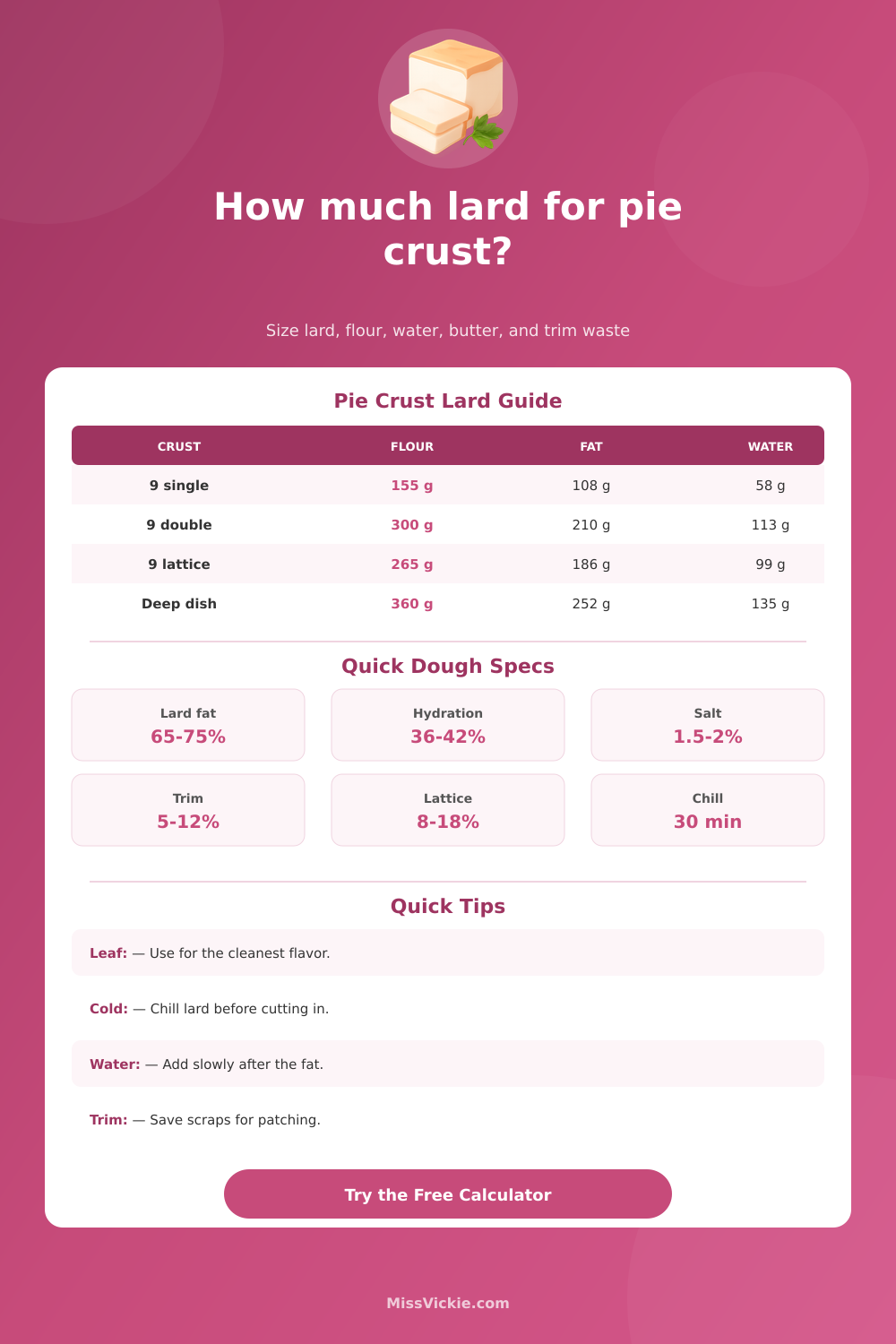
The percentage of fat will determine the texture of your crust. Most pie crust recipes uses between 65 and 75 percent fat relative to the weight of the flour. If you use a higher percentage of fat relative to the flour, your crust will be short and tenderly.
Using a lower percentage of fat will allow your crust to have structural elements like lattice or crimps. The calculator also allows you to choose what percentage of the total fat should be from butter. Using 0 percent butter will create a neutral flavor for your pie crust.
Using 25 percent butter will introduce an aroma to the crust that comes from the butter and will cause the crust to brown more better on the baking sheet. Using 50 percent butter will make the crust taste of butter while remaining tender to the touch due to the lard. Water percentage is another important measurement for your pie crust.
The percentage of water will determine whether your dough will crack or shrink while baking. Using too little water will make your dough crack while rolling. Using too much water will make your crust shrink or become toughly.
The calculator will begin with 38 percent water. However, the water percentage will adjust according to the type of lard you use. Using leaf lard, you will need all of the water because the leaf lard will remain firm.
Using tub lard, you will need less water because the tub lard contains some moisture. Using the recommended amount of water for tub lard will make your dough too sticky. Finally, the size of the pan in which you will bake the pie crust and the style of the crust will determine the weight of flour that you will need.
A nine-inch bottom crust will require less flour than a double crust. A deep-dish crust will require more flour than a traditional crust because of the increased amount of dough needed for the sidewall of the crust. The calculator calculates the surface area of the pie based on the diameter and depth of the pie, and then add a waste allowance to that total.
The waste allowance is for trimmed dough and patches to the crust. If you select the lattice top for your crust, the waste allowance will be higher because there will be more scraps from cutting the lattice patterns. The temperature of the lard is another factor in the crust recipe.
Cold leaf lard will produce distinct flakes in your dough, but soft rendered lard may smear in the dough if it becomes too warm. To avoid this, many cooks will cube the lard and freeze it for ten minutes prior to adding it to the flour. The calculator will include a note on the recipe about the temperature of the lard after you select your type of lard.
Other ingredients like salt and sugar will change the flavor of the crust. The recipe requires one point eight percent salt to balance the richness of the fat in the crust, and two percent sugar if the pie is a sweet pie. Savory quiches or meat pies will have zero percent sugar.
The calculator will automatically scale the salt and sugar amounts to the size of your recipe, so the percentages will remain the same regardless of the number of pies of any size that you are making. This calculator is useful to know the ingredients that will be required for the pie crust before you go to the store to purchase them. If you are making four mini pies, for instance, the calculator will calculate for you the amount of flour that will be required for the crust and waste allowance.
If you change the type of crust that you are making, the calculator can show you how much additional dough will be required. This calculator will prevent the mistake of purchasing all of the ingredients for your pie crusts only to realize later that you dont have enough of any particular ingredient. Once you have mixed the crust dough with the lard, you must follow a few steps to ensure that the lard forms proper flakes in your crust.
The lard should remain in visible pieces in the dough instead of the dough maker rubbing it into a meal. Water should only be added to the crust until the crumbs begin to hold together when squeeze. The dough must rest to hydrate the flour, and then must be rolled out on a floured surface using short rolling strokes to ensure that the lard remains in flakes within the finished crust.
The calculator will not prepare your dough for cooking, but will provide you with the recipe weights so that you can successfully begin to make your crust.