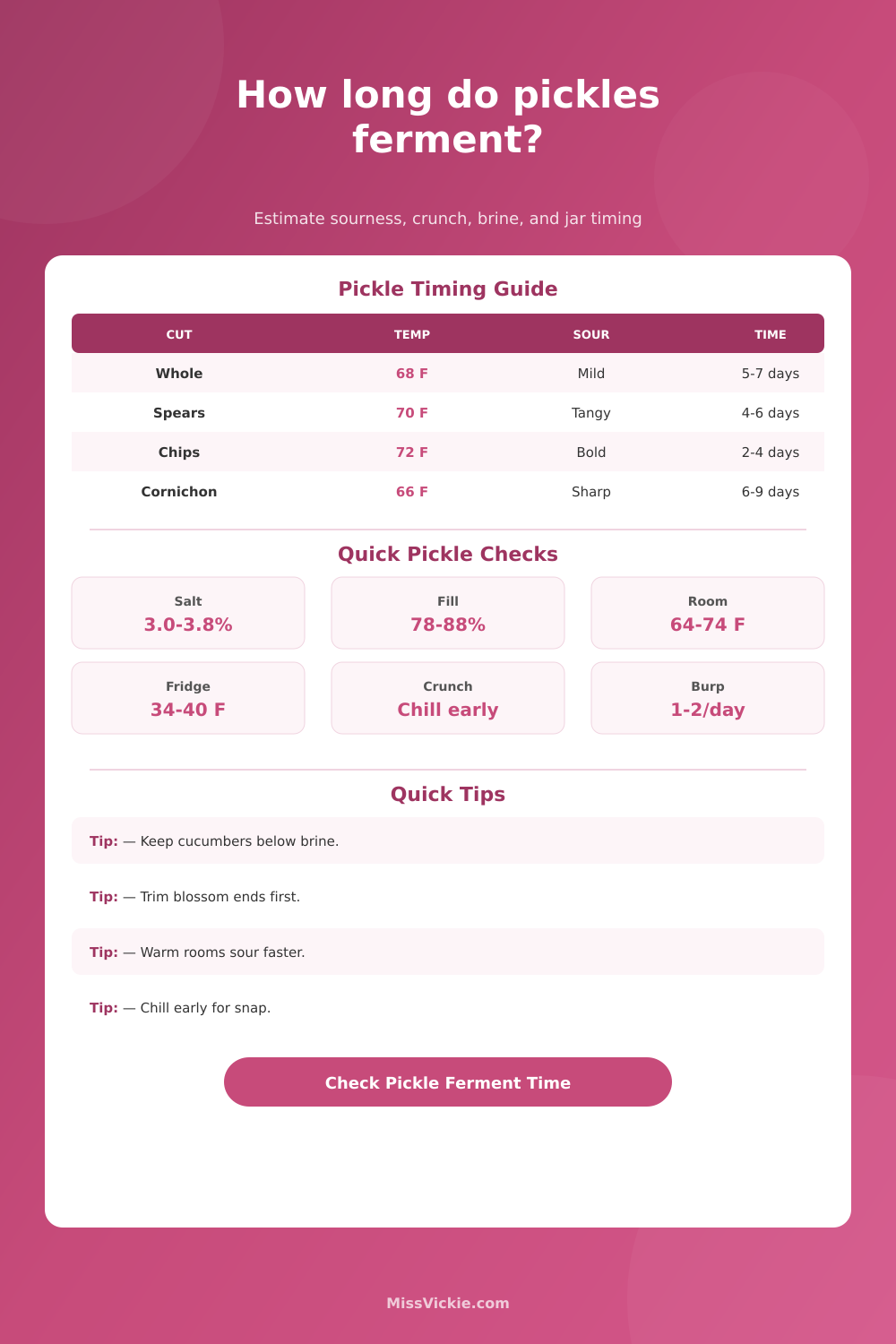
Pickle Fermentation Time Calculator
Estimate sour pickle timing from cucumber size, cut style, brine salt, room temperature, jar size, garlic and spice load, sourness goal, crunch priority, and fermentation stage.
🥒 Pickle Presets
Start with a real fermented pickle setup, then tune the brine, room, jar fill, flavor load, sourness, and crunch target.
⚖ Fermentation Details
Pickle fermentation plan
Adjust the fields to estimate room time, fridge aging, burping, and crunch timing.
Timing Breakdown
Jar And Texture
Step Schedule
- Pack cucumbers below brine.
- Watch for cloudy brine and bubbles.
- Taste before the crunch window closes.
🧂 Brine Salt Snapshot
Use non-iodized salt and calculate percent by water weight. This planner estimates timing; discard jars with mold, slime, rotten odors, or unsafe handling history.
🥒 Cucumber Cut Timing Table
| Cucumber Cut | Typical Room Time | Best Sourness | Crunch Risk | Kitchen Note |
|---|---|---|---|---|
| Whole Kirby cucumbers | 5-9 days | Half-sour to full-sour | Low if chilled on time | Trim blossom ends and keep weighted under brine. |
| Quarter spears | 3-6 days | Half-sour to tangy | Medium | Good balance for sandwiches and snack jars. |
| Lengthwise halves | 4-7 days | Tangy table pickles | Medium-low | Centers stay crisp longer than thin slices. |
| Thick chips | 2-4 days | Quick tangy pickles | Medium-high | Use for burgers and move cold before softening. |
| Thin coins | 1-3 days | New pickle to tangy | High | Fast souring and fast texture loss. |
| Large chunks | 4-7 days | Tangy to full-sour | Medium | Works when garden cucumbers are too large for whole pickles. |
🌡 Temperature And Stage Guide
| Room Temperature | Ferment Speed | Burping Need | Texture Effect | What To Do |
|---|---|---|---|---|
| 58-63°F / 14-17°C | Slow | Light | Very good crunch | Give whole cucumbers extra days before judging sourness. |
| 64-68°F / 18-20°C | Balanced | Daily checks | Best all-around | Taste once bubbles and cloudiness become steady. |
| 69-74°F / 21-23°C | Active | Daily to twice daily | Crunch window narrows | Move half-sours cold as soon as flavor is right. |
| 75-80°F / 24-27°C | Fast | Twice daily | Softening risk rises | Use shorter room time, more headspace, and a tray. |
| 81°F+ / 27°C+ | Very fast | High | High softening risk | Ferment in a cooler spot or chill early for quality. |
🫙 Jar Size And Headspace Table
| Container | Typical Use | Good Fill | Gas Behavior | Best Burping Plan |
|---|---|---|---|---|
| Pint jar | Meal prep chips or spears | 75-84% | Small volume changes quickly | Check daily, chill early. |
| Quart jar | Household dill pickles | 78-86% | Predictable brine rise | Daily burp or airlock. |
| Half-gallon jar | Family batch | 78-86% | More pressure if packed tight | Use tray and leave headspace. |
| Gallon jar | Party or garden harvest | 76-84% | Strong active bubbling | Airlock or careful daily vent. |
| 2-gallon crock | Traditional full-sour batch | 70-82% | Open surface needs attention | Weight well and skim if needed. |
| 5-gallon crock | Large harvest preserving | 68-80% | Slow center, active surface | Cool room, clean cover, steady checks. |
🔬 Sourness, pH, And Texture Table
| Target | Flavor Cue | pH Direction | Crunch Cue | Fridge Strategy |
|---|---|---|---|---|
| New pickle | Salty cucumber, faint fizz | About 4.8-5.2 | Very crisp | Chill as soon as light bubbles show. |
| Half-sour | Fresh dill, cloudy brine, mild tang | About 4.4-4.8 | Snappy center | Move cold before the center gets fully sour. |
| Tangy table pickle | Balanced sour and salt | About 4.0-4.4 | Crisp but flexible | Fridge age a few days after active room time. |
| Full-sour | Sharp lactic bite | About 3.7-4.1 | Softer rind | Cold age longer after room fermentation. |
| Extra-sour | Strong sour cooking pickle | Below 3.8 | Crunch secondary | Use for relish, salads, and cooked dishes. |
📊 Pickle Style Comparison Grid
Salty, fresh, very crisp, and only lightly fermented.
Deli-style cloudy brine, crisp center, and gentle acidity.
More lactic bite, deeper aroma, and softer cucumber texture.
Mostly cold-aged sharpness for relish, salads, and cooking.
💡 Fermented Pickle Tips
Making pickles isn’t chemistry homework (fermentation demands respect for unseen forces, but not mastery). More often, it’s a question of managing time: a slightly longer soak can make the difference between a mushy regret and a crisp deli half-sour. Instead of secret ingredients, it is about time. And rather then its friend, most home fermenters consider the clock their enemy. Fortunately, that’s an error that’s easier to correct than they suppose.
Just don’t guess about how fast it’s going in your kitchen environment; plug in your cucumber size and room temperature into the calculator up top, and let it handle the math. Then you’ll spare yourself hours of struggling with bubbles and hoping for the best.
Simple Tips for Making Crunchy Pickles
While you can’t make the weather outside cooperate, what you CAN control is temperature. And just as humans move frantically in the heat and work lazily on a cold day, so too do lactic acid bacteria. Slow and steady is good for protecting texture, but means being patient (the cool basement). Speeding things along in the warmth of a sunny counter risks having softer cucumbers long before they’ve reached peak flavor.
To show you all this, the reference table (on the page) shows the impact of higher temperatures, shrinking your window for achieving crispness. It’s about getting those bacteria working to make acid while eating sugars, but without going too far and destroying the cell walls that hold your cucumber together. In other words: find the middle ground, and know that faster is seldom better when you’re talking about texture.
The balance of the brine is also about salt: Too little and you risk spoilage organisms having a foothold, and too much will slow fermentation down to a crawl. For typical dill pickles, aiming toward a three- to four-percent solution (by weight) falls into that sweet spot. It’s not so strong as to impede growth or make the resulting pickle inedible, yet it promotes the development of plenty of lactic acid. Because the amount of salt you use directly affects how fast the bacteria work, the tool takes that as an input when adjusting timing.
Thin-cut chips will sour almost overnight compared to thick slices like whole Kirby cucumbers, because their thickness controls how deep the acid can reach inside. Cuts with more exposed surface will ferment faster, your burger pickles won’t wait as long as those speared on your sandwich.
Preserving crunch seems magical till you learn that most of it’s a matter of tannins and timing. During the fermentation process, the enzymes in the blossom end of the cucumber break down its firmness. If you slice off that little tip before packing it into the jar, there won’t be any enzymes left to turn your snack into soup. Oak leaves or grape leaves contribute their own natural tannins which also play a role in keeping structure in the brine. These plant additions is the equivalent of scaffolding holding up the flesh of the cucumber.
You don’t even have to grow a garden. Most texture mishaps are avoided long before thinking about pH levels with simple kitchen habits. Chill chill chill: That’s the true secret… As soon as the sourness reaches your taste preference, throw that jar in the fridge rather than wait another day (or week) on an arbitrary date on the calendar.
An airlock or burping lid will prevent explosion, but will also give you a way to peek at how active things are getting, without breaking the seal all the way open. Look for gentle bubbles and cloudy brine. Good fermentation is underway. Slimy looking liquid or a decidedly putrid smell? Toss it. Follow your nose, not the expected timeline from your reading material or your software. Remember, no matter what you’re making in the kitchen, your own sense of smell is always the last quality check in the process.
After the jar makes its way into the fridge, fermentation will continue very slowly, but not cease entirely. The cold will help the flavors develop and become sharper while preserving the snap you worked so hard to maintain. Remember that making pickles rewards patience and punishes hurry. Make small batches so that you can get a feel for the timing in your particular kitchen. Note the successes and do different next time. There’s no need to get it perfect the first time around. Just create a repeatable rhythm. Transform fresh veggies into tasty treats for later snacking.
Once you know why each step is important, once you understand how time, salt, and heat work together, there’s nothing to fear. Stop wondering if the jar is going to blow up. Just watch as the crunchy veggie slowly turn into zesty treats. That’s where the confidence lies, knowing that every move makes sense because you paid attention. It is not because you followed a formula blindly. You should of thanked yourself later (well, actualy your future self) for doing it right now.