Pepper ratio, grind size, surface coverage, and salt pairing
Pepper Per Pound of Meat Calculator
Calculate black, white, cracked, or mixed pepper for meat by weight, cut shape, cooking method, heat intensity, rub or mix-in style, salt percentage, crust loss, and serving style.
Choose a real cooking scenario, then fine tune meat pounds, pepper type, crack size, surface area, heat level, salt pairing, application, cooking method, and serving style.
Your Pepper Amount
Calculated pepper recommendation appears here.
Full Pepper Breakdown
General-purpose heat, best for steaks, roasts, burgers, and rubs.
Sharper and mustier, useful in sausage, poultry, and pale sauces.
Larger grains need a little more volume for even surface coverage.
Good for barbecue bark when the pepper aroma needs to survive smoke.
| Meat or Use | Mild Pepper | Balanced Pepper | Bold Pepper |
|---|---|---|---|
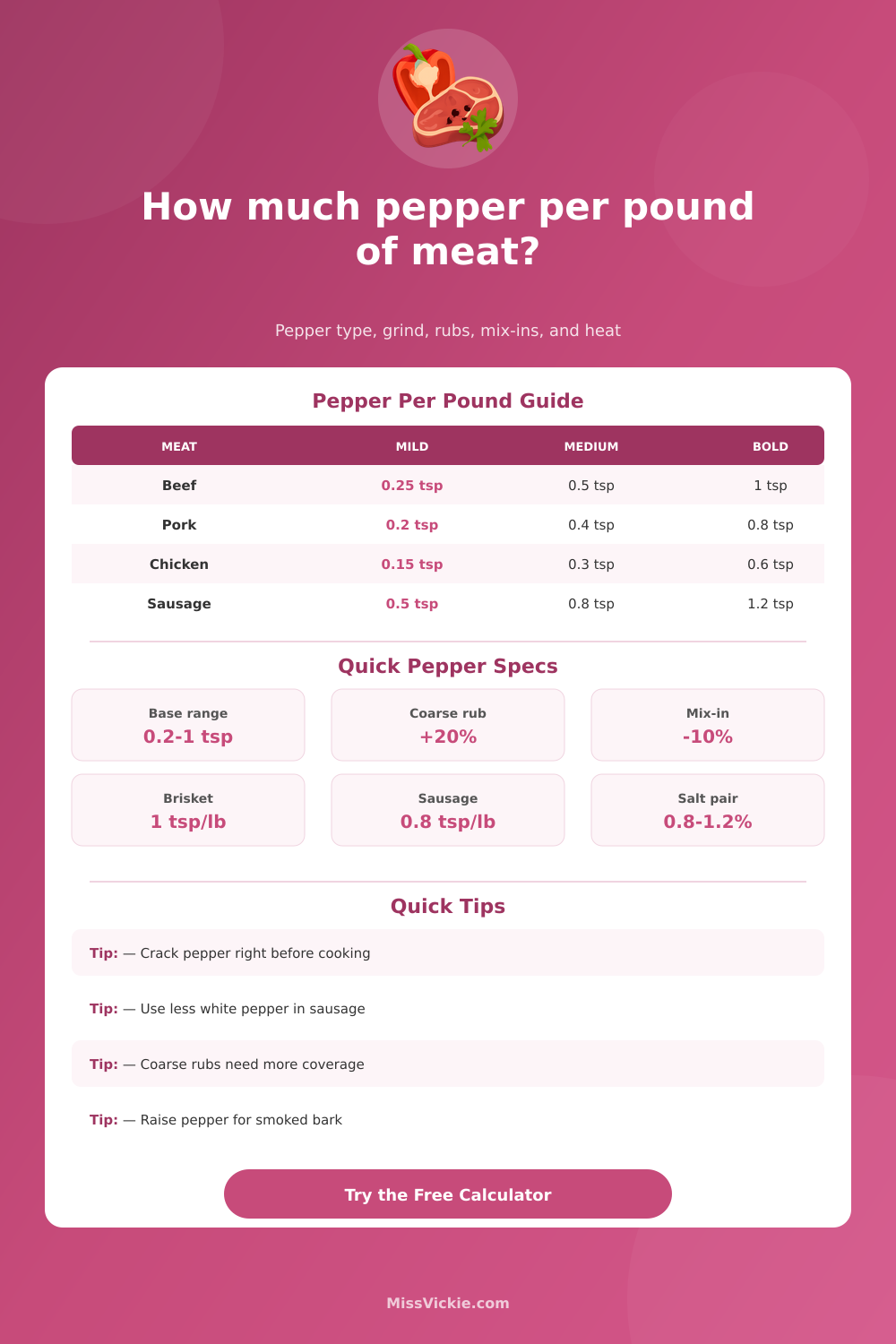
| Beef steak or roast | 0.25 tsp/lb | 0.5 tsp/lb | 1 tsp/lb |
| Pork shoulder or chops | 0.2 tsp/lb | 0.4 tsp/lb | 0.8 tsp/lb |
| Chicken or turkey | 0.15 tsp/lb | 0.3 tsp/lb | 0.6 tsp/lb |
| Sausage or meatloaf | 0.5 tsp/lb | 0.8 tsp/lb | 1.2 tsp/lb |
| Fish or shrimp | 0.1 tsp/lb | 0.2 tsp/lb | 0.4 tsp/lb |
| Grind Size | Volume Effect | Best Use | Notes |
|---|---|---|---|
| Fine ground | 0.9x | Mix-ins | Strong and fast tasting |
| Table grind | 1.0x | Everyday rub | Most recipe teaspoon measures |
| Coarse cracked | 1.18x | Steaks | More volume for coverage |
| Butcher crack | 1.3x | Brisket | Classic bark texture |
| Fresh crushed | 1.1x | Finishing | Big aroma, uneven density |
| Cut Shape | Surface Factor | Application | Typical Method |
|---|---|---|---|
| Ground meat | 0.92x | Mix-in | Sausage, burger, meatloaf |
| Thin cuts | 1.18x | Surface | Cutlets, chops, steaks |
| Cubes or kebabs | 1.1x | Surface | Skewers, stew meat |
| Large roast | 0.86x | Rub | Oven roast, whole bird |
| Brisket or ribs | 1.35x | Heavy rub | Low-and-slow smoke |
| Salt Pairing | Salt Percent | Pepper Feel | Best Match |
|---|---|---|---|
| No salt | 0% | Sharper | Finish pepper, sauce dishes |
| Low salt | 0.5% | More pepper-forward | Family meals, lean meats |
| Standard | 0.8% | Balanced | Steaks, chops, poultry |
| BBQ rub | 1.2% | Rounder | Brisket, ribs, pork shoulder |
| Sausage cure | 1.5% | Integrated | Fresh sausage, meatloaf |
Seasoning is just throwing some salt and pepper on your meat to make it look good, right? Not if you’re building a dish from scratch to develop flavor. How do you season sausages vs. Steak? What about fine ground black pepper vs. Coarse? Do you season the surface or mix it in? The device pictured up top find the answer for you after you input your preferences + weight. No more guesswork each time.
Most folks don’t think about grind size. You can fit a teaspoon of fine powder into a teaspoon’s worth of space just like coarse peppercorn, but they holds less pepper. There is more air in the coarser grains. So you’ll need to use more volume to get the same heat level. When making bark on a brisket, you want large, coarse flakes to grab onto the meat and give it some texture. Using fine ground pepper there result in a dusty layer that burns off quickly.
The Science of Seasoning Meat
When you choose coarse, the calculator account for this to make sure you don’t under-season. This is because a spoon filled with coarse pepper actualy holds less pepper than you might think.
Weight isn’t everything. It’s also about shape. For example, a dense piece of pork won’t have a lot of surface relative to its mass. Rubs barely penetrate that first inch or two of outside. By contrast, ground meat is all surface: Every bite of protein touches the seasoning. That’s why sausage requires more pepper per pound than a whole chicken breast does.
Because you’re actually integrating the flavor into the structure itself, not merely coating it in shell, if you apply the same ratio to both, you’ll end up with lightly seasoned roast and a sausage that tastes like nothing. Think of it like using salt as a force multiplier on pepper. Without any savory component to round out the bite, the pepper taste sharper without the salt. With more salt, the pepper becomes part of a complex taste rather than being just hot by itself. That’s why the calculator accounts for your desired salt percentage. Adding too much heat become unnecessary since the salt is delivering plenty of flavor. Until you experience both extremes, you might not know how big a difference salt makes.
There’s another twist: cooking method. Pepper’s volatile oils will be burnt away if high heat is used during grilling, dulling the taste before they ever hit your tongue. Smoke develops a rich crust that holds on to seasoning, but that require longer exposure to protect against dryness (and patches). Hours of smoking means the pepper has endured heat damage and moisture loss. Here, the tool allows you to account for anticipated crust or drip loss. It provides a cushion so what lands on your plate remains an intentional flavor; not accidentally so.
Unlike black pepper, white pepper doesn’t contain the outer layer of the peppercorn. This contains a lot of those fragrant compounds which contribute to fruitiness of black pepper. Described as being earthier, white pepper is also sharper and more pungent. It is great when used to add heat without leaving any visible specks, such as in pale sauces or dark sausage mixes. However, it can be overpowering if you treat it as a substitute for black pepper. The calculator is aware of the potency difference and compensates accordingly. Less volume = same perceived heat level.
And then there’s the variable that no formula can ever account for: freshness. Within months of opening, pre-ground pepper loses some of those important oils. If you’ve had a jar sitting in your cabinet since last winter, most of what remains is dust at this point. It’ll take a lot more to have any noticeable impact. When you crack the peppercorn yourself, however, they immediately release their aromas when placed on the meat. This instant burst of flavor is the difference between food cooked at home and food cooked at restaurants. The calculator uses reasonably fresh ingredients, so the results should of be treated as a starting place, not an absolute rule.
Seasoning isn’t an experiment; it’s more like engineering than art. Before you improvise, you need some ratios and structure. That’s what the calculator gives you: a framework for focusing on taste instead of math. From there, the connection between salt, shape, and grind becomes clear. And once you know, you’re no longer guessing… Just tasting. That’s when things realy change in the kitchen.