🥜 Protein in Peanut Butter Calculator
Calculate protein, calories & macros for any peanut butter serving size
| Serving Size | Weight (g) | Protein (g) | Calories | Fat (g) | Carbs (g) |
|---|---|---|---|---|---|
| 1 teaspoon | 5.3g | 1.2g | 31 | 2.7g | 1.1g |
| 1 tablespoon | 16g | 3.6g | 94 | 8.1g | 3.1g |
| 2 tablespoons (std) | 32g | 7.1g | 188 | 16.1g | 6.2g |
| 3 tablespoons | 48g | 10.7g | 283 | 24.2g | 9.3g |
| ¼ cup | 64g | 14.2g | 376 | 32.3g | 12.4g |
| ½ cup | 128g | 28.5g | 753 | 64.6g | 24.8g |
| 100 grams | 100g | 22.2g | 588 | 50.4g | 19.6g |
| 1 oz (28g) | 28g | 6.2g | 165 | 14.1g | 5.5g |
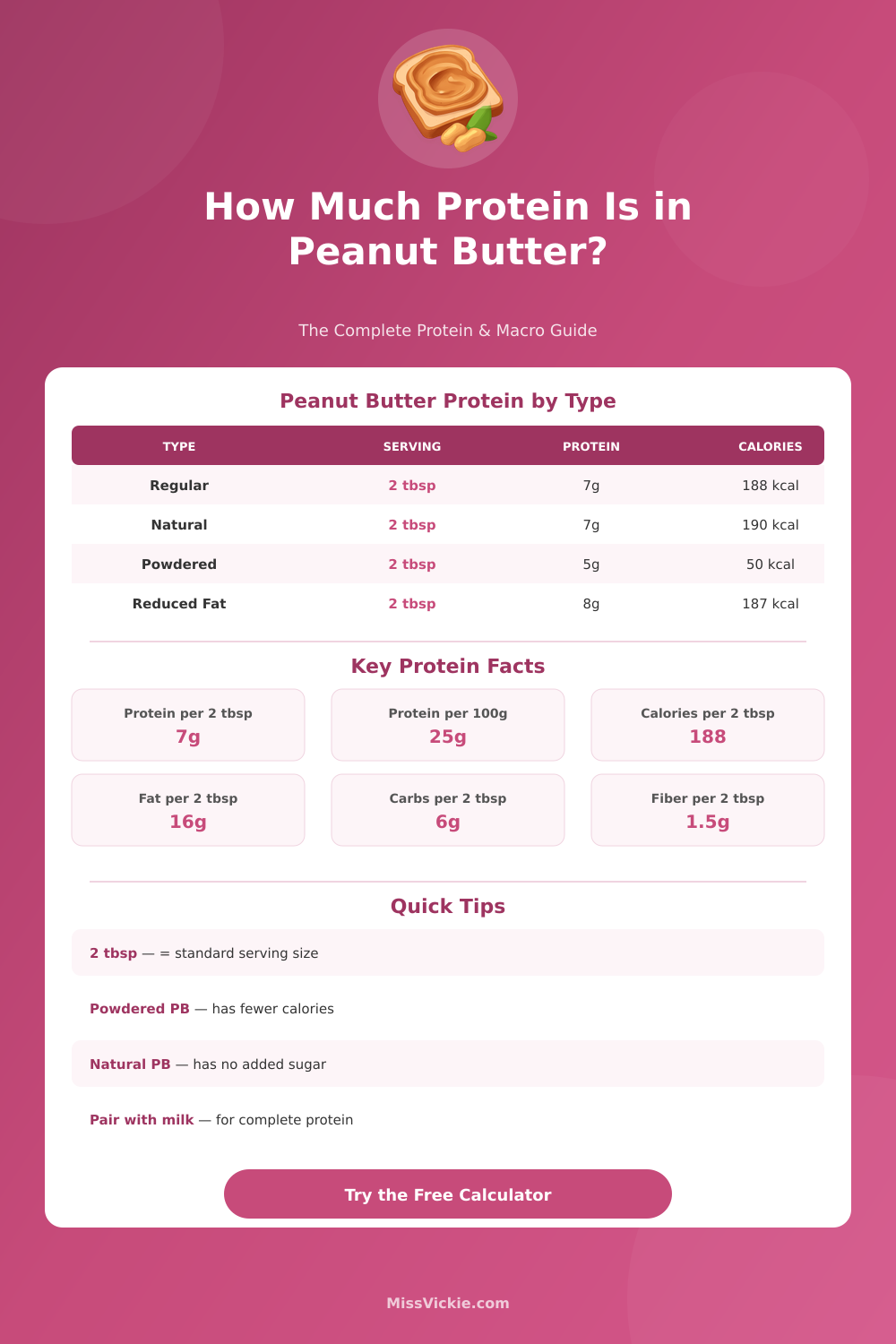
| Type | Protein/2 tbsp | Calories/2 tbsp | Fat/2 tbsp | Carbs/2 tbsp | Protein/100g |
|---|---|---|---|---|---|
| Regular (Jif, Skippy) | 7.1g | 188 | 16.1g | 6.2g | 22.2g |
| Natural / No-Stir | 7.0g | 190 | 16.4g | 5.4g | 21.9g |
| Reduced Fat | 8.1g | 187 | 12.0g | 11.7g | 25.3g |
| Powdered (PB2) | 5.5g | 50 | 1.5g | 5.0g | 40.0g |
| Extra Crunchy | 7.0g | 187 | 16.0g | 6.1g | 21.9g |
| Honey Roasted | 6.5g | 200 | 15.0g | 9.0g | 20.3g |
| Measurement | Tablespoons | Grams | Ounces |
|---|---|---|---|
| 1 teaspoon | 0.33 tbsp | 5.3g | 0.19 oz |
| 1 tablespoon | 1 tbsp | 16g | 0.56 oz |
| 2 tablespoons | 2 tbsp | 32g | 1.13 oz |
| ¼ cup | 4 tbsp | 64g | 2.26 oz |
| ½ cup | 8 tbsp | 128g | 4.52 oz |
| 1 cup | 16 tbsp | 258g | 9.10 oz |
peanut butter is a food spread, made from ground, dry roasted peanuts. It usually has extra items that change the taste or the make-up, for instance salt, sugars or oils. Between all nut butters it is the most popular.
According to the rules of FDA, so that a product is called peanut butter it must have at least 90 percent peanuts. Only salt, sweeteners and hardened plant oils can be added. Big brands in United States have some gram of trans-fats for one serving.
All About Peanut Butter
peanut butter comes in many types. One finds creamy, crunchy, flavored and fully natural types. In crunchy versions commonly appear big or little bits of peanut, that gives more texture.
The base must be smooth for easy spreading especially when one dips apples. From the nuts themselves comes good peanut butter. Roasted peanuts, salted or unsalted, form the usual choice.
Plain peanuts bring a softer tatse.
Natural peanut butter, made from just peanuts and sometimes a bit of salt, gives pure taste without any extras. Some bought in stores can separate and mix hard over time. Also store-bought peanut butters commonly go bad more soon then one hopes.
peanut butter packs useful nutrients, like vitamin E, magnesium, iron, selenium and vitamin B6. It is also rich in protein, healthy fats, folate, potassium and B-vitamins. Between those fats belong single fats, that help to lower the risk of heart disease. Even so it carries a lot of calories and fats.
One spoon of peanut butter, around 16 grams, delivers about 97 calories. Two spoons with the breakfast can stop sudden spikes of blood-sugar after the meal. The magnesium in peanut butter matters for the control and strengthening of muscles.
Two spoons form a healthy serving size, around 32 grams. It looks like the size of a golf ball. In one such serving one reaches almost a quarter of the daily fat-need.
It is rich in calories, so checking for extra sugar or oil before buying is a wise step.
peanut butter works for many recipes. It goes great with jelly in a traditional sandwich. It tastes good on bread or toasted English roll.
Apples, bananas, celery, crackers, graham crackers and even Oreo-biscuits all go with it. Peanut butter in French toast, oatmeal, banana-bread, cookies, pancakes and lava cake all rank between favorite sweets. In the savory side it is used in Thai peanut sauce, spicy peanut sauces for grilled chicken and pure south Indian peanut chutney.
Mix it in oat bowl or crisp bars forms a simple treat. Homemade peanut butter is made from only one or twoingredients in less than ten minutes, turning whole peanuts into the smoothest and creamiest spread.