Peach jam pectin, sugar, lemon juice, calcium, yield, and jars
How Much Pectin For Peach Jam Calculator
Estimate the pectin needed for peach jam from prepared fruit volume, peach weight, pectin style, sugar plan, lemon juice, ripeness, cook loss, jar size, and altitude.
Pick a peach jam scenario, then tune the fruit, pectin type, sugar ratio, lemon juice, and jar size before cooking.
Peach Jam Batch Breakdown
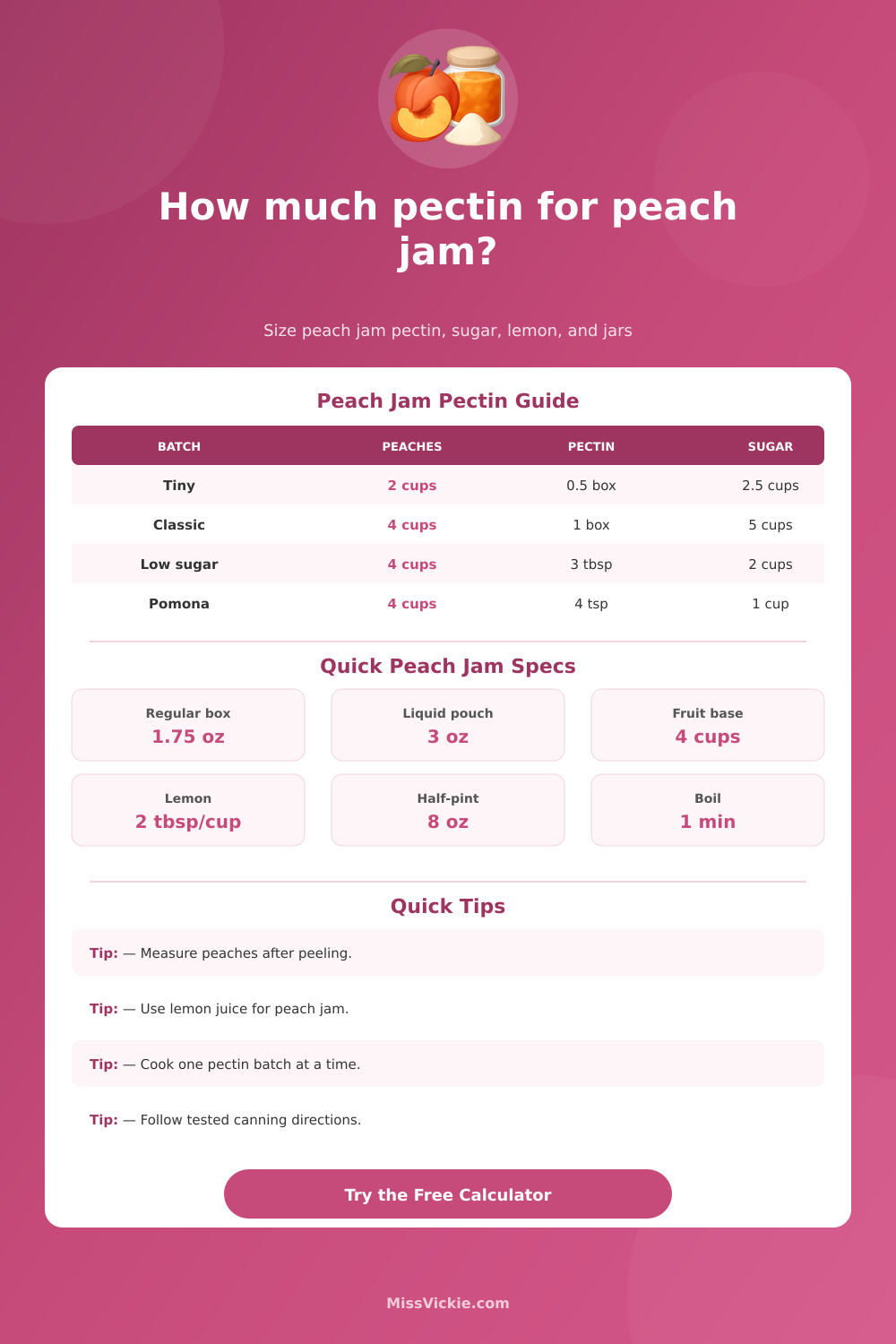
| Pectin Type | Typical Peach Base | Calculator Unit | Sugar Behavior |
|---|---|---|---|
| Regular powdered pectin | 4 cups prepared peaches | 1 box, 1.75 oz | Needs high sugar for a standard gel |
| Regular liquid pectin | 4 cups prepared peaches | 1 pouch, 3 oz | Usually added after sugar boil |
| Low or no sugar pectin | 4 cups prepared peaches | 3 tbsp powdered pectin | Designed for reduced sugar jams |
| Pomona-style calcium pectin | 4 cups prepared peaches | 4 tsp pectin plus calcium water | Can gel with little sugar or honey |
| Freezer jam pectin | 4 cups prepared peaches | 1 packet or 5 tbsp | Set depends on product directions |
| Bulk HM pectin | 1000 g fruit blend | 9 to 13 g pectin | Works best with high sugar and acid |
| Peach Prep | Density Used | Whole Fruit Yield | Best Use |
|---|---|---|---|
| Crushed peaches | 240 g per cup | 68% after peel and pit | Standard cooked jam texture |
| Diced peaches | 215 g per cup | 66% after peel and pit | Chunky jam or preserve style |
| Pureed peaches | 250 g per cup | 70% after peel and pit | Smooth jam or fruit spread |
| Thawed frozen peaches | 235 g per cup | 100% if already peeled | Off-season jam planning |
| Peach-nectarine blend | 238 g per cup | 72% after pits | Brighter flavor with similar pectin need |
| Skins included | 230 g per cup | 80% after pits | Rustic jam with more texture |
| Prepared Peaches | Regular Powder | Low Sugar Pectin | Estimated Half-Pints |
|---|---|---|---|
| 2 cups | 0.5 box | 1.5 tbsp | 3 to 4 jars |
| 3 cups | 0.75 box | 2.25 tbsp | 5 to 6 jars |
| 4 cups | 1 box | 3 tbsp | 6 to 8 jars |
| 6 cups | 1.5 boxes | 4.5 tbsp | 10 to 12 jars |
| 8 cups | 2 boxes | 6 tbsp | 13 to 16 jars |
| 12 cups | 3 boxes | 9 tbsp | 20 to 24 jars |
| Altitude | Boiling Water Time | Lemon Juice Reminder | Kitchen Note |
|---|---|---|---|
| 0-1000 ft | 10 minutes | Use bottled lemon juice | Start timer at a full rolling boil |
| 1001-3000 ft | 15 minutes | Do not reduce acid for canning | Keep jars covered by boiling water |
| 3001-6000 ft | 20 minutes | Peaches need reliable acidity | Expect slower return to boil |
| Above 6000 ft | 25 minutes | Follow tested recipe details | Confirm local extension guidance |
Best for classic sweet peach jam with a familiar firm gel.
Good when a recipe specifically calls for liquid pectin timing.
Best for peach flavor when sugar is reduced below classic levels.
Useful for honey, very low sugar, or flexible sweetener batches.
Peach jams is made from peaches, sugar, and pectin in specific ratio to create a successful jam that sets proper. While the peaches will provide flavor to the peach jam, the peaches does not contain much pectin by themselfs. Therefore, pectin must be added to ensure the peach jam thicken correctly.
The amount of pectin that is added will determine whether the resulting peach jam is a soft spread or a firm preserves. Pectin act as a gelling agent for the peach jam to thicken. However, there are different type of pectin that require different cooking method to set proper.
How to Make Peach Jam: Pectin, Sugar, and Ripeness
For instance, regular powdered pectin requires a high amount of sugar as well as boil the jam to reach a rolling boil. Low-sugar pectin is designed to interact with less sugar then regular pectin. Additionally, both liquid and Pomona-style pectin require different methods of adding the ingredient to the jam to interact with the pectin properly.
A jam calculator tool allow for the user to select the type of pectin that is to be use along with the amount of sugar that is desired in the jam. Based on these two selections, the tool can calculate the proper amount of each ingredient to use in the peach jam. The ripeness of the peaches will impact the texture of the peach jam.
Additionally, the ripeness will also impact the amount of pectin that are required. For instance, very ripe peaches have a broken structure, meaning that they contain less pectin by themselves than firmer peaches. Therefore, jam made from very ripe peaches may require additional pectin to set proper.
Firmer peaches may lead to the creation of a softer peach jam. These types of variables can be selected within the jam calculator to account for the ripeness of the peaches that will be used in the peach jam recipe. During the cooking of the jam, some of the water content of the peaches will evaporate.
This loss of liquid during the cooking process will change the amount of jam that is create. Peach jam simmers to allow the water to evaporate from the jam. The evaporation of water will lead to the remaining sugar and pectin becoming more concentrated within the jam.
Therefore, if a high percentage of cook loss is expected, more jam will boil down to create a thicker jam, but with less total volume. The jam calculator account for cook loss in the calculations for the total amount of jam that will be created. Lemon juice is an ingredient in peach jam that provide acidity to the jam.
Additionally, since peaches naturaly contain little acidity, lemon juice is required for the jam to be safe to make and set proper. Finally, you can add lemon juice to provide the flavor of peach jam. Follow the tested recipe to ensure that the appropriate amount of lemon juice is used; going below the recipe for lemon juice can lead to health risk for those who consume the jam.
The ratio of sugar to the peaches will determine both the sweetness of the jam as well as the texture. Classic peach jam recipe use 115 percent of the weight of the fruit as sugar to ensure proper interaction of the regular pectin with the jam. Using a lower ratio of sugar can be accomplished using low-sugar pectin and Pomona pectin, but the texture will change.
The amount of sugar in peach jam can be accounted for in the jam calculator that determines the total volume of jam that will be created based on each amount of sugar that may be use. Some additional factor to consider in the making of peach jam includes the size of the jars that will be used to contain the jam, as well as the altitude at which the jam is being made. Small jars will cool faster than large jars.
Additionally, large jars will require more time within the canner than small jars. The altitude may change the boiling point of the water, meaning that jams made at higher altitude may require different processing times for safety. These variables are accounted for in the jam calculator to ensure that the amount of jam that will be produced is realistic.
In order to measure the ingredients properly, prepared peaches should be measured instead of whole peaches. When the peaches are peeled, pitted, and crushed, there is less volume of the fruit than whole peaches. The pectin calculations is based on the volume of prepared peaches that will be used in the jam.
The amount of crushed, diced, or pureed peaches can be accounted for in the jam calculator. Not all types of pectin are created equally. Each type of pectin may require a different step in the jam-making process than another type.
For instance, the order in which the ingredients are prepared may change according to the type of pectin. Additionally, the amount of sugar that is used may change according to the type of pectin that is selected. This reference material can help ensure that each type of pectin is understood and followed according to its requirement.
The use of this calculation tool will ensure that the making of peach jam can be easily repeated in the kitchen. The jam recipe can be easily scaled to make more jam or less jam than the batch that is desired. Additionally, the numbers and calculation within the tool will ensure that the recipe is started with the correct amount of each ingredient, and that the ratio of the ingredients will be correct.
It should of been used to avoid mistakes.