🍝 MissVickie pasta converter
Pasta Converter for Dry and Cooked Servings
Convert pasta between cups, grams, ounces, and servings, then estimate cooked yield and boiling water for common shapes, from spaghetti to orzo.
Each preset fills a real pasta situation, from family dinner to meal prep, then runs the calculator with shape-specific yield and water guidance.
Use the shape selector, dry measure style, servings, and buffer to turn uncooked pasta into a cooked batch estimate that fits the meal you are making.
This table gives quick meal-size references for common pasta portions. The calculator adjusts those amounts by shape, measure style, and your chosen serving count.
| Meal type | Dry grams | Dry ounces | Cooked cups |
|---|---|---|---|
| Light side plate | 56 g | 2 oz | 1 cup |
| Standard main bowl | 85 g | 3 oz | 1.5 cups |
| Hearty dinner bowl | 113 g | 4 oz | 2 cups |
| Baked tray portion | 140 g | 5 oz | 2.5 cups |
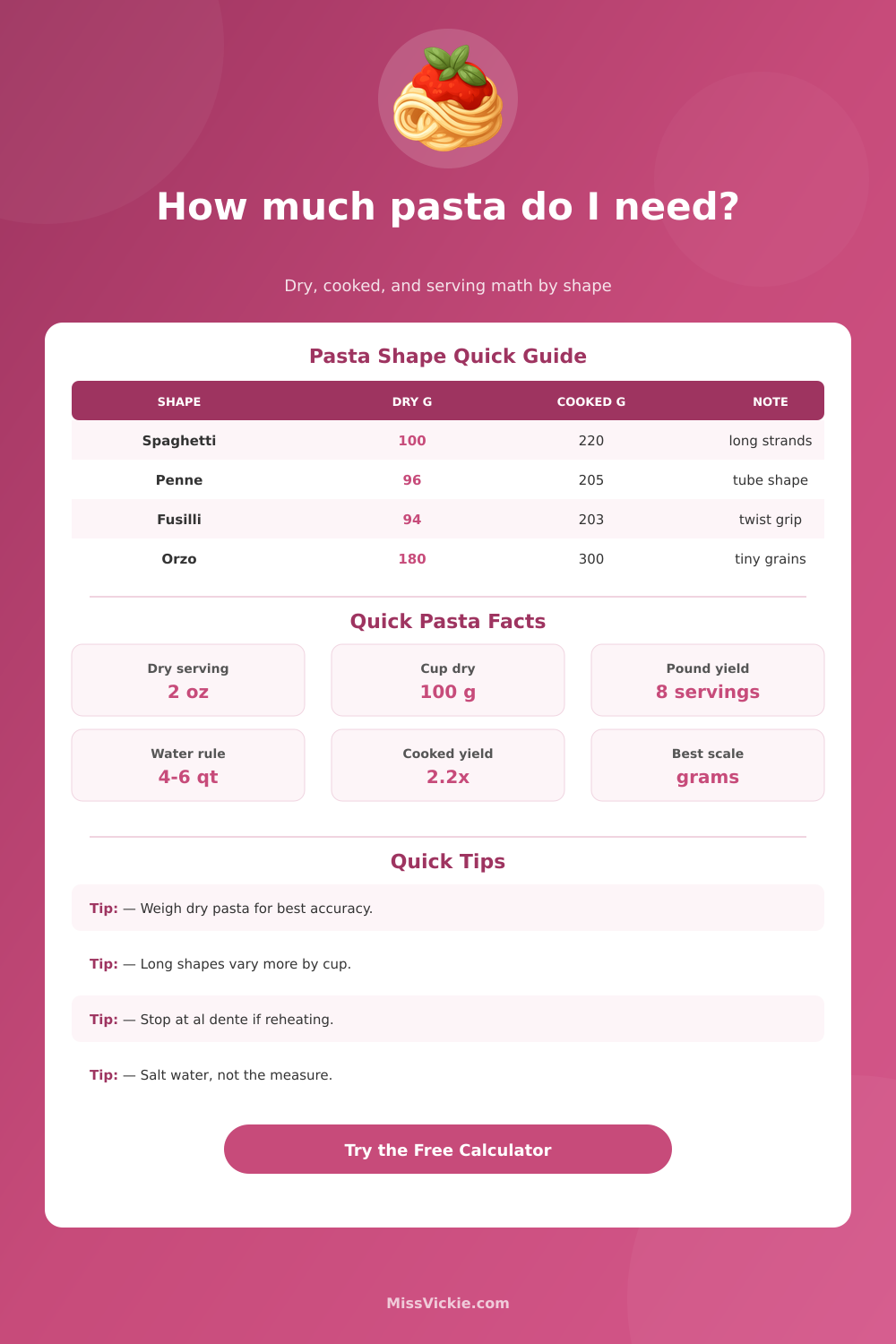
Dry cups do not weigh the same across shapes. These reference values match the calculator's built-in shape data and help explain why orzo and spaghetti behave differently.
| Shape | Dry g per cup | Cooked g per cup | Shape note |
|---|---|---|---|
| Spaghetti | 100 g | 140 g | long strands |
| Penne | 96 g | 130 g | tube shape |
| Fusilli | 94 g | 128 g | twist grip |
| Orzo | 180 g | 150 g | tiny grains |
Use this table when a recipe gives you one measure and you need another. The values are approximate dry-pasta conversions, so the shape selector still matters.
| Measure | Spaghetti | Penne | Orzo |
|---|---|---|---|
| 1 cup dry | 100 g | 96 g | 180 g |
| 1/2 cup dry | 50 g | 48 g | 90 g |
| 2 oz dry | 57 g | 57 g | 57 g |
| 1 lb dry | 454 g | 454 g | 454 g |
This quick batch guide shows how a meal-size pasta amount grows as the crowd gets larger. It is a handy check before you cook a second pot.
| Guests | Dry grams | Dry ounces | Cooked cups |
|---|---|---|---|
| 2 | 110 g | 4 oz | 2 cups |
| 4 | 225 g | 8 oz | 4 cups |
| 6 | 340 g | 12 oz | 6 cups |
| 8 | 454 g | 16 oz | 8 cups |
Best for repeated batches because shape differences are easier to control by weight.
Quick for pantry math, especially when the recipe already uses dry-volume measures.
Helpful when a box or bag lists ounces and you want a fast kitchen conversion.
Best when you are scaling dinner for a crowd and need one simple target number.
To measure pasta proper, consider that dry and cooked pasta has different weights. When you cook dry pasta, it expand. Thus, the weight of the dry pasta will increases after it is boiled.
To ensure the pasta weigh the appropriate amount, use precise converting method so that you dont make too little or too many pasta. Different pasta shape have different densities. Because of the difference in densities, different pasta shapes will weighs differently when measured in a measuring cup.
How to Measure and Cook Pasta
For example, spaghetti strands are thin and long, leaving space for air within a measuring cup. On the other hand, penne pasta are thicker and weigh more in a measuring cup. Therefore, it is best to use a kitchen scale to measure pasta in gram because it is more accurate than measuring cups.
One gram is a unit of weight, and the weight of the pasta will be more consistent than volume measurement because the amount of air in the pasta in the measuring cup does not affect it. Standard serving size of dry pasta contain 85 grams of dry pasta per person. When cooked, 85 grams of dry pasta will become approximately one and a half cup of cooked pasta.
If you are preparing pasta for many people, multiply the weight of the dry pasta by the number of guests you will feed. Include a buffer for pasta when preparing for many people. A five to ten percent buffer will ensure that everyone get at least one portion of pasta.
This extra portion accounts for pasta sauce that will cling to the pasta or guests that wants an extra serving of pasta. Consider the method you use to measure pasta. If you spoon pasta into a measuring cup light, the dry pasta will weigh less than if you pack the pasta into the measuring cup.
You must choose a method before measuring pasta for a recipe. When boiling pasta, use four to six quarts of water for every one pound of dry pasta. Using less water than recommended will produce pasta that stick to other strands of pasta because of the starch it release into the water.
Always add salt to the boiling water to flavor the pasta. When preparing meal for a crowd, use batch planning to calculate the amount of pasta needed for the number of people you are feeding. For two people, four ounces of dry pasta will yield two cup of cooked pasta.
For eight people, one pound of dry pasta will yield eight cups of cooked pasta. Scale the recipe for the number of serving you want to cook so that there is no need to cook a second pot of pasta. Use different measuring tool to cook pasta.
Volume measurements, such as cups, are use to measure the amount of pasta. However, it isnt as accurate as the weight measurement. Weight measurements, such as grams and ounces, is more accurate because they do not change from the air within the pasta in the measuring cup.
Use grams to measure pasta for recipes because it is more precise. Use ounces to connect the number of serving of pasta to the kitchen scale. When cooked pasta is prepared, if you will be freezing it, cook the pasta al dente.
Pasta cooked al dente is firm to the bite and will not become sticky when reheated. If you will be making a casserole with cooked pasta, cook the pasta more soft so it blends with the cheese. Cook the pasta and store it in the refrigerator for up to a few days or freeze it for up to a few week to have it for a later date.