MissVickie butter pasta sauce math
Butter for Pasta Sauce Calculator
Estimate butter for pasta sauce from sauce type, pasta weight, finished sauce volume, emulsification water, butterfat percentage, finish or roux method, richness target, serving count, and salt risk.
🍝Pick a butter sauce scenario
Each preset fills a real pasta sauce plan. Adjust pasta weight, sauce volume, starchy water, butterfat, method, richness, and serving count after it loads.
⚖Choose units
🥄Pasta, sauce, and butter inputs
🧈Butter sauce reference points
📋Butter by pasta sauce type
| Sauce type | Butter range per 100 g pasta | Water help | Best method | Why it changes |
|---|---|---|---|---|
| Tomato sauce finish | 5 to 9 g | Moderate | Cold butter off heat | Butter softens acidity and adds gloss without making the sauce heavy. |
| Cream or Alfredo | 10 to 16 g | Low to moderate | Soft butter or cold finish | Cream already supplies fat, so the calculator watches richness closely. |
| Cheese emulsion | 7 to 13 g | High | Cold butter plus starchy water | Cheese needs water and gentle heat to avoid clumps and oily breakage. |
| Brown butter herbs | 12 to 20 g | Moderate | Brown butter base | Some water cooks out and the flavor is concentrated before tossing. |
| Lemon butter seafood | 8 to 14 g | High | Cold butter finish | Acid and seafood juices need extra emulsion support. |
| Roux pasta bake | 6 to 10 g | Low | Butter cooked with flour | Flour thickens the sauce, so excess butter can feel greasy. |
💧Pasta water, sauce volume, and emulsification
| Pasta amount | Light water finish | Classic water finish | Cheese emulsion water | Notes |
|---|---|---|---|---|
| 225 g dry pasta | 30 to 45 ml | 45 to 75 ml | 75 to 110 ml | Enough for two to three servings. |
| 454 g dry pasta | 60 to 90 ml | 90 to 140 ml | 140 to 200 ml | Reserve extra water before draining. |
| 680 g dry pasta | 90 to 130 ml | 130 to 210 ml | 210 to 300 ml | Add gradually while tossing. |
| 1 kg dry pasta | 130 to 200 ml | 200 to 310 ml | 310 to 450 ml | Wide pans make emulsion easier. |
| Party tray pasta | 200 ml plus | 300 ml plus | 450 ml plus | Hold some water for reheating. |
| Butter method | Heat behavior | Calculator effect | Use for | Watch for |
|---|---|---|---|---|
| Cold finish | Melts gently off heat | Best emulsion stability | Tomato, lemon, cheese sauces | Add in small cubes. |
| Soft finish | Melts quickly in pan | Slightly higher break risk | Cream and weeknight sauces | Keep pan heat low. |
| Brown butter | Water cooks out first | Needs more starting butter | Sage, nutty, filled pasta | Stop before bitter solids. |
| Light roux | Butter binds flour | Butter is limited by flour | Macaroni-style sauce bases | Cook raw flour taste out. |
| Monter au beurre | Glossy mounted finish | Strong finish multiplier | Pan sauces and restaurant gloss | Do not boil after mounting. |
🧮Common butter pasta sauce batches
| Batch | Pasta | Sauce volume | Butter target | Best finish |
|---|---|---|---|---|
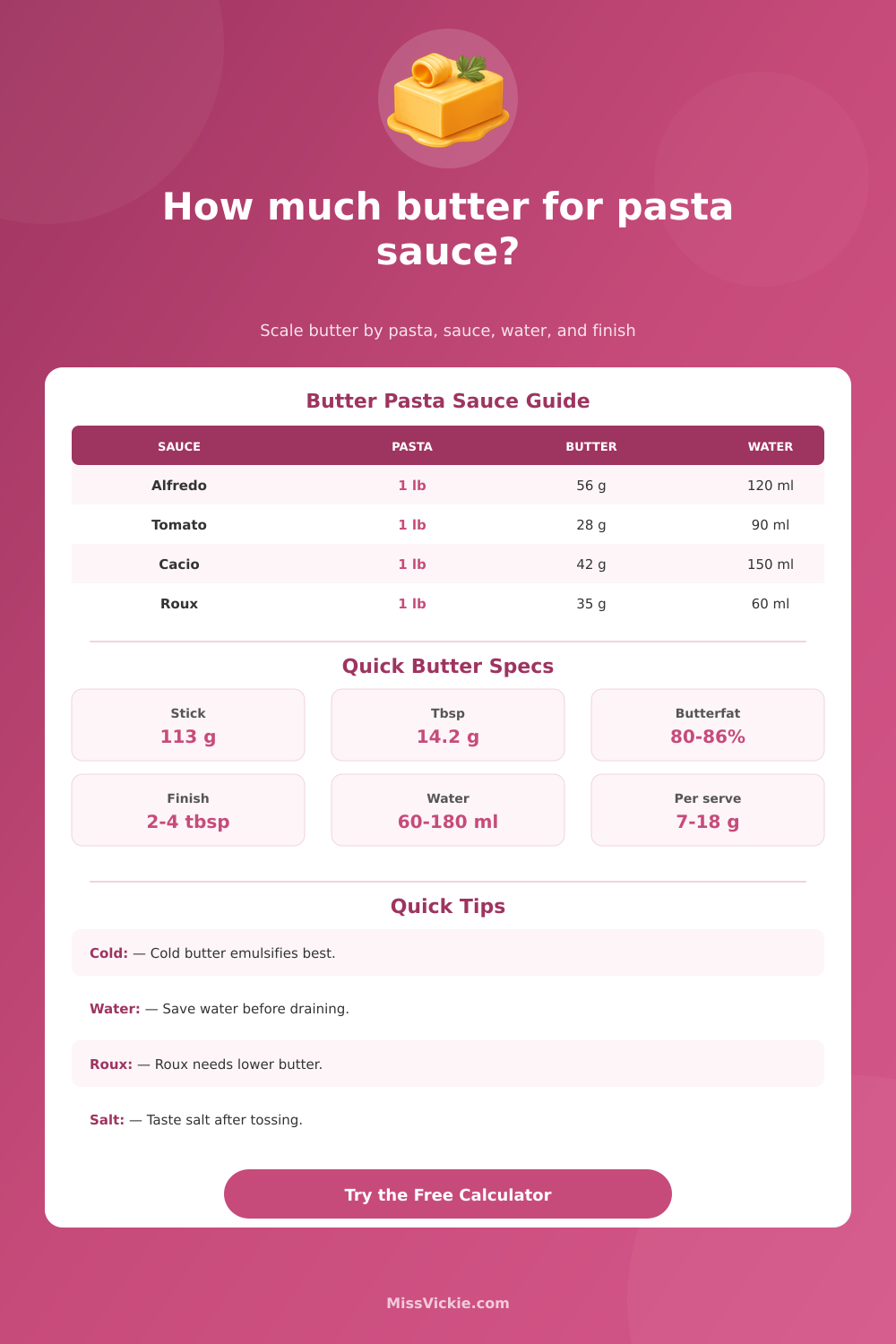
| Tomato spaghetti for 4 | 454 g | 500 to 650 ml | 28 to 42 g | Cold cubes off heat |
| Alfredo fettuccine for 4 | 454 g | 450 to 600 ml | 55 to 75 g | Soft butter plus cheese |
| Cacio-style pasta for 4 | 454 g | small pan sauce | 36 to 55 g | High pasta water support |
| Brown butter ravioli | 340 g | minimal sauce | 55 to 75 g | Brown first, loosen later |
| Baked pasta roux sauce | 680 g | 900 to 1200 ml | 45 to 70 g | Cook butter with flour |
| Party rigatoni | 1.8 kg | 2.5 to 3.5 L | 160 to 260 g | Finish in wide batches |
💡Butter pasta sauce calculation notes
This calculator estimates cooking quantities for kitchen planning. Butter brands, pasta starch, cheese salt, pan width, and heat level can change the final texture.
Determining a correct amount of butter to add to pasta sauce is essential in the cooking kitchen. The amount of butter that you use will change the texture and flavor of the sauce that is prepared. Too little butter will make the sauce thin, while too much will make the butter slip off the noodles or leave a greasy layer on the plate.
The amount of butter needed to prepare the sauce will depend on a few variables, including the type of sauce being prepared, the amount of pasta to be cooked, the amount of liquid in the pan, and the desired level of glossiness in the sauce. The butter calculator will provide a specific quantity of butter that you will need to add to your pasta sauce so that you dont have to guess at the amount that are required. To use the calculator, you will need to enter the weight of the dry pasta that will be prepared, the volume of the sauce that will be prepared, the amount of starchy pasta water that will be cooked, the butterfat percentage that will be used in the sauce, and the cooking method that will be used.
How Much Butter to Use in Pasta Sauce
In addition to these variables, the calculator will also adjust for the richness of the sauce, the amount of salt in the sauce, and the amount of butter that may be lost during the cooking process. Each of the variables entered into the butter calculator are necessary to determine the amount of butter that will be required for your sauce. You must enter the weight of the pasta into the calculator because the butter will be used to coat the noodles, and the amount of pasta will determine the amount of butter that is required.
You must enter the volume of the sauce because this determines how much of the base sauce liquid is in the pan prior to add the butter. The amount of starchy pasta water that will be added to the sauce is also an important component of the sauce preparation, as the starchy water will help to keep the butter from separating from the sauce. The butterfat percentage will also be an important element in the sauce preparation, as butter that is of the European variety will contain more fat than butter that is of the standard American variety.
Finally, the type of cooking method that will be used to prepare the sauce will impact the amount of butter that is required for the sauce to properly emulsify; browning the butter will remove some of the liquid from the butter, using a roux will allow for less butter to be used in the sauce, and using cold cubes of butter that have been removed from the heat source will allow for the formation of a glossily sauce. The richness of the sauce can be programmed into the butter calculator, as sauces can require a greater level of richness than others. Sauces that contain cheese, for example, will require more butter than sauces that contain tomato-based liquids.
In addition to richness, you must also program the amount of salt in the sauce into the calculator, as the salt will build up in the sauce that is being prepared. Using salted butter as well as salty cheese or meat will increase the amount of salt in the sauce, and the amount of salt in the butter can be difficult to balance after you add the butter to the sauce. The reference tables included in the butter calculator will explain the type and amount of butter that is needed for each family of sauce.
Tomato sauces will require the least amount of butter due to the fact that tomato sauces are created to have a glossy appearance. Cheeses need more pasta water to be added to the sauce to help them emulsify and remain mixed with the sauce. Brown butter sauces require an initial amount of butter to be added due to the amount of liquid that will evaporate from the butter while it is being browned.
Sauces that are thickened with a roux will require less butter to be added because the flour performs the same function of thickening the sauce as the butter would of. These different requirement for sauces indicate the way in which the amount of butter that is required for a sauce to be prepared is related to the other ingredients that are added to the pan during the sauce preparation process. The mistakes that many people make when adding butter to pasta sauce include adding the butter too early in the sauce preparation process or adding large amount of butter at once.
Adding butter too early in the sauce preparation process over high heat will cause the butter to separate from the sauce. Adding too much butter all at once will create a greasy film of butter on the sauce. Additionally, people often fail to reserve enough pasta water.
If there isnt enough pasta water reserved, it will be impossible to adjust the texture of the sauce, and the cold butter will not melt into the sauce properly. Using the correct amount of butter will create a sauce that will properly emulsify when it is served. The sauce will cling to the noodles properly, and it will not pool on the plate.
If the sauce emulsifies properly, it will reheat without the sauce breaking down, and it will not leave an oily slick on the plate when viewed from certain angle. The butter calculator will allow you to prepare as many batch of sauce as you would like by scaling the amount of butter that is required. The calculator will give you the starting point for the amount of butter for your pasta sauce; however, you will have to make the final adjustment to the sauce to prepare it as you would like it.