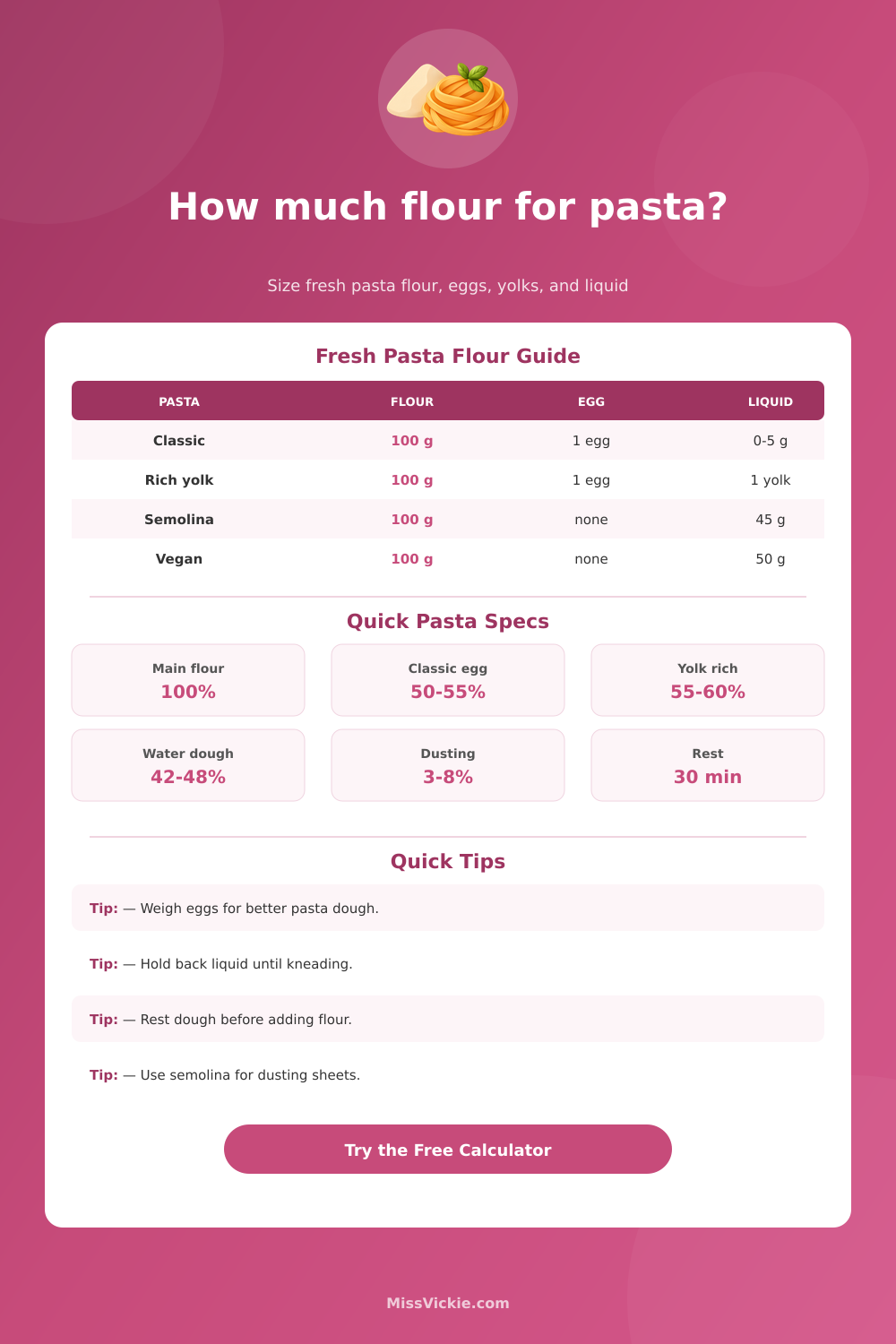
Fresh pasta flour, egg, yolk, liquid, and dusting ratios
How Much Flour For Pasta Calculator
Calculate flour for fresh pasta from servings, target dough weight, pasta style, flour blend, egg size, yolks, added liquid, salt, oil, and bench flour allowance.
Start with a real pasta dough profile, then adjust the flour blend, egg weight, hydration, and dusting flour for your kitchen.
Full Pasta Dough Breakdown
One large egg for about 100 g flour makes a firm, rollable all-purpose dough.
More yolk gives color, tenderness, and richer filled pasta sheets.
Sturdy dough for hand-shaped pasta, extruded shapes, and chewy bite.
Purees count as liquid and often need small flour adjustments after resting.
Bran absorbs slowly, so rest before adding much extra flour.
Moderately firm dough rolls thin without tearing during boiling or baking.
Softer dough seals better around filling and tolerates extra handling.
Binder-heavy blends vary widely, so add liquid slowly and rest well.
| Dough Style | Flour Ratio | Egg / Liquid Ratio | Best Pasta Use |
|---|---|---|---|
| Classic whole-egg pasta | 100 g flour | 1 large egg, about 50 g | Tagliatelle, fettuccine, pappardelle, simple sheets |
| Rich egg-yolk pasta | 100 g flour | 45 g whole egg plus 15 to 20 g yolk | Ravioli, tortellini, delicate filled pasta |
| Lasagna sheet dough | 100 g flour | 50 to 54 g egg or mixed egg-water | Thin sheets that stay flexible after rolling |
| Semolina water dough | 100 g semolina blend | 42 to 48 g warm water | Orecchiette, cavatelli, trofie, rustic shapes |
| Spinach pasta | 100 g flour | 45 g egg plus 8 to 12 g squeezed spinach puree | Green sheets, lasagna, filled pasta |
| Whole wheat pasta | 100 g flour blend | 55 to 62 g egg and water | Nutty noodles with longer rest time |
| Vegan water pasta | 100 g flour | 48 to 54 g water or vegetable puree | Egg-free hand-cut noodles or simple sheets |
| Flour Blend | Absorption Cue | Texture Result | Adjustment Note |
|---|---|---|---|
| Tipo 00 / all-purpose blend | Moderate absorption | Silky sheets and tender bite | Good baseline for egg pasta and ravioli |
| All-purpose flour | Slightly lower protein | Soft homemade noodles | Hold back a little liquid until the dough rests |
| Semolina and durum blend | Slower hydration | Chewier, more toothsome pasta | Use warm water and rest longer before shaping |
| Bread flour support | Higher protein | Elastic dough with stronger bite | Useful in small amounts for long noodles |
| Whole wheat blend | Bran pulls in moisture slowly | Rustic flavor and firmer bite | Add 3 to 7 hydration points and rest well |
| Spinach pasta blend | Puree varies by squeeze level | Green color with softer handling | Count puree as liquid and flour the board lightly |
| Gluten-free pasta blend | Depends on starch and binder | Less elastic, more fragile sheets | Use blend-specific directions when available |
| Batch Goal | Fresh Dough Target | Typical Flour Needed | Common Egg Count |
|---|---|---|---|
| Two light servings | 220 to 250 g dough | 145 to 165 g flour | About 1 1/2 to 2 large eggs |
| Four dinner servings | 480 to 540 g dough | 310 to 350 g flour | About 3 to 4 large eggs |
| Six generous servings | 720 to 840 g dough | 465 to 540 g flour | About 5 to 6 large eggs |
| One ravioli sheet batch | 650 to 800 g dough | 400 to 500 g flour | Eggs plus yolks for sealing |
| One lasagna pan | 700 to 900 g dough | 455 to 580 g flour | About 5 to 6 large eggs |
| Party for twenty | 2300 to 2600 g dough | 1500 to 1680 g flour | About 14 to 16 large eggs |
| Dough Signal | Likely Ratio Issue | Small Fix | When To Judge |
|---|---|---|---|
| Dry crumbs will not gather | Wet ratio too low or eggs were small | Add 5 g water per 100 g flour | After 3 minutes of kneading |
| Sticky paste on the board | Wet ratio too high or puree was loose | Dust lightly and rest before adding more | After 20 to 30 minutes resting |
| Tears while rolling sheets | Dough too dry or not rested | Mist surface, wrap, and rest longer | After gluten relaxes |
| Sheets shrink back quickly | Too much strength or too little rest | Rest covered between rolling passes | Before final thin setting |
| Ravioli edges will not seal | Too much bench flour on sheets | Brush with water and reduce dusting | Before filling the next sheet |
| Hand shapes collapse | Dough too soft for semolina shapes | Add semolina and knead firmer | Before shaping the full batch |
Making fresh pasta require determining the proper ratio of flour to liquid. The ratio of flour to liquid will determine whether the pasta dough rolls good and holds its shape when cooked. Using an incorrect amount of flour and liquid will cause the pasta to crack while rolling or adhere to the tool used to roll the pasta.
The type of flour used will impact the amount of liquid needing. The size of the eggs will impact the amount of liquid needed. The amount of liquid that is added will impact the texture of the pasta.
How Much Flour and Liquid to Use for Fresh Pasta
The type of liquid will impact the texture of the pasta. Finally, the specific type of pasta to be made will impact the ratio of ingredient to be used in the pasta dough. Flour is used in making pasta, as the protein in the flour will create the gluten necessary to create the pasta dough.
Different type of flour will have different amounts of protein and different abilities to absorb the liquid needed to activate the proteins within the flour. Soft all-purpose flour will absorb differently than bread flour or semolina flour, for instance. Therefore, it is necessary to select the correct type of flour and the amount of liquid needed to hydrate the flour to create the pasta dough.
Eggs are used in creating fresh pasta. Using whole eggs will add both the liquid and solids necessary to make the pasta. Using only extra yolks will provide the flavor to the pasta without increasing the amount of liquid.
People often use extra yolks when making pastas that are filled with various filling. Because the size of the eggs may vary, it is best to weigh the eggs rather than counting how many eggs are being use in the recipe. Additional liquids besides the eggs may be required to make fresh pasta.
The amount of water may be required to make semolina pasta, for instance. Additionally, the use of vegetable puree will add both the necessary liquid to the pasta dough, as well as fiber to the fresh pasta. It is necessary to separate the portion of the eggs from the additional liquid to monitor how much liquid is being added to the pasta.
The reason for separating the liquids is that ingredients like milk will behave differently from water once the pasta dough rests, as well as once the pasta is rolled. Salt and oil can be added to the pasta dough, as well. Salt will increase the strength of the gluten within the pasta, but too much salt will make it difficult to roll the pasta.
Oil will tend to make the pasta dough softer, but it will also reduce the amount of water that the flour can absorb. These ingredient should be accounted for in the recipe so that the chef determines if they would like the pasta to be softer in texture to the touch. Dusting the pasta dough with flour is a process that occurs after the pasta is mixed, but is not used in creating the pasta dough itself.
However, if the pasta is rolled for an extended period of time, it may be necessary to add extra tablespoon of flour to the pasta. However, these additional tablespoons of flour will increase the hydration of the pasta dough. Once the pasta has rested, it is necessary to test the consistency of the pasta dough on the countertop.
If the pasta dough is too dry, it may become easier to roll after resting the pasta for twenty minute. If the pasta dough is too sticky, it will firm up after resting the pasta dough. However, it is necessary to hold back some of the liquid until after the pasta has rested so that the pasta can be rested and tested for the proper consistency.
Finally, it is necessary to use the calculator to determine the amount of flour, liquid and eggs to be used in the pasta to be created. The different types of pasta require different characteristic in the pasta dough. Noodles should use a moderately firm pasta dough so that they do not develop hole when rolled thin.
Hand-shaped pastas, such as orecchiette, require a stiff semolina pasta dough. Finally, pastas that contain fillings require the pasta to be soft enough to allow the pasta to adhere to the filling, but strong enough to not tear during boiling. The size of the batch of pasta that will be produced will impact the pasta dough.
Small batches of pasta provide little room for error in the preparation of the pasta. However, if larger batches are prepared, there is both more pasta to work with, but also more space required to allow the pasta dough to rest, as well as additional attention required to ensure that the hydration of the pasta is even throughout the batch. The portion sizes in the calculator will allow for the adjustment of the amount of flour and eggs required.
Some of the most common error in preparing pasta include not weighing the eggs and adding the liquid all at once. If the number of eggs indicated on the carton of the eggs are used instead of weighing the eggs, the pasta dough may crack during the rolling process. Additionally, if all of the liquid is added at once to the flour, the pasta may be too wet.
However, if the pasta is rolled and no resting period is skipped, the pasta may become sticky or firm to the touch after resting the dough, indicating that some of the liquid should of been held back until after resting. In addition to the quantities of each ingredient necessary for making fresh pasta, it is also necessary to account for environmental factor. For instance, the bag of flour that is opened may absorb some of the moisture in the air.
High humidity in the kitchen will affect the liquid that the opened flour package can absorb. Additionally, eggs that are at room temperature will hydrate the dough faster than eggs that are refrigerator temperature. Thus, the calculator will remove some of the guesswork regarding the true ingredients and ratios of fresh pasta dough to be used in the pasta.
The purpose of these ratio of ingredients is to enable cooks to make fresh pasta. Once the amount of flour that is used is balanced with the amount of eggs and liquid, the cook can roll the dough and cut the pasta into the desired shape and size. Using these measurements and ratios will make the entire process of making pasta easier for the cooks.