🍝 Pasta Calorie Calculator
Calculate calories in pasta by type, serving size, and cooking method
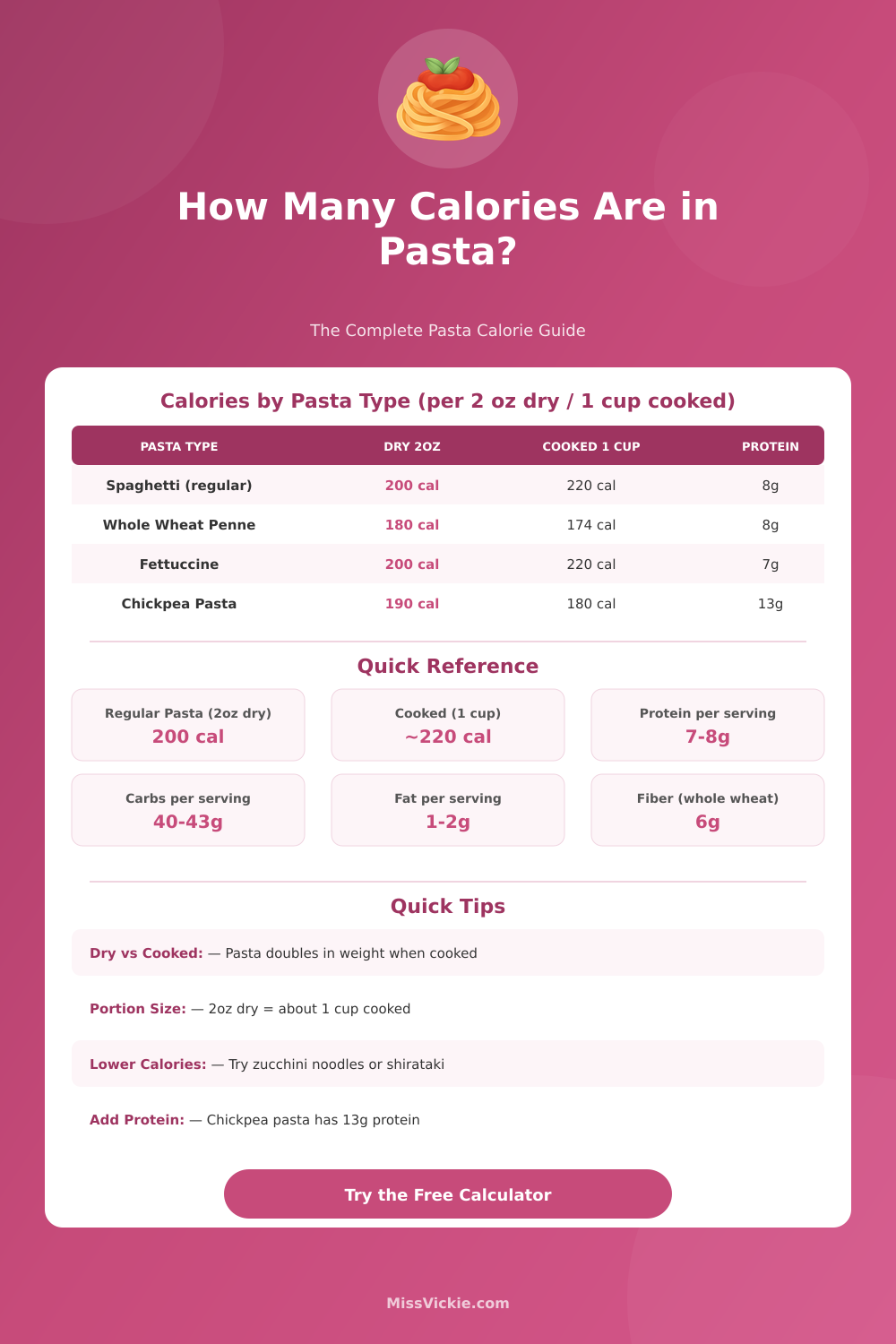
| Pasta Type | 2 oz dry | 1 cup cooked | 2 cups cooked | Protein/2oz |
|---|---|---|---|---|
| Spaghetti (regular) | 200 cal | 220 cal | 440 cal | 7g |
| Whole Wheat Penne | 180 cal | 174 cal | 348 cal | 8g |
| Fettuccine | 200 cal | 220 cal | 440 cal | 7g |
| Bowtie / Farfalle | 200 cal | 220 cal | 440 cal | 7g |
| Rotini / Fusilli | 200 cal | 220 cal | 440 cal | 7g |
| Orzo | 200 cal | 212 cal | 424 cal | 7g |
| Chickpea Pasta | 190 cal | 180 cal | 360 cal | 13g |
| Lentil Pasta | 185 cal | 175 cal | 350 cal | 14g |
| Gluten-Free Pasta | 210 cal | 222 cal | 444 cal | 4g |
| Spinach / Veggie Pasta | 190 cal | 182 cal | 364 cal | 7g |
| Food | Calories | Carbs | Protein | Notes |
|---|---|---|---|---|
| Regular Pasta (2oz dry) | 200 | 42g | 7g | Enriched with B vitamins |
| Whole Wheat Pasta (2oz dry) | 180 | 38g | 8g | Higher fiber, more nutrients |
| White Rice (45g dry) | 160 | 36g | 3g | Lower protein than pasta |
| Brown Rice (45g dry) | 165 | 35g | 4g | More fiber than white rice |
| Chickpea Pasta (2oz dry) | 190 | 32g | 13g | Best protein option |
| Zucchini Noodles (2 cups) | 40 | 7g | 3g | Lowest calorie alternative |
| Dry Amount | Cooked Weight | Cooked Volume | Approx. Calories |
|---|---|---|---|
| 1 oz (28g) dry | 2.1 oz (60g) cooked | ~0.5 cup | ~100 cal |
| 2 oz (56g) dry | 4.2 oz (120g) cooked | ~1 cup | ~200 cal |
| 3 oz (85g) dry | 6.3 oz (180g) cooked | ~1.5 cups | ~300 cal |
| 4 oz (113g) dry | 8.4 oz (240g) cooked | ~2 cups | ~400 cal |
| 8 oz (227g) dry | 16.8 oz (480g) cooked | ~4 cups | ~800 cal |
| 1 lb (454g) dry | 33.6 oz (960g) cooked | ~8 cups | ~1600 cal |
Pasta is made from flat dough from wheat flour mixed with water or eggs. You form it in sheets or shapes, then boil or bake it. Before you used only durum wheat for pasta.
Today it is a printed product in forms like spaghetti, round tubes, butterflies and short types on the market
How to Make and Cook Pasta
For one person 2 ounces of dry pasta is enough. That matches a cup of cooked pasta. The look of 2 ounces changes according to the form.
Measuring can be hard, especially with little kinds like bow tie or macaroni tubes. Cooking, pasta almost doubles its volumme. In Italy they commonly ask how many grams you want to eat.
Usually you serve it as a first course, before a meat, seafood or vegetable second plate.
It is necessary to add much salt in the water for pasta. It must taste like seawater. Use a big pot with a lot of really hot water, not only quiet boiling.
At home you can make fresh pasta from only four things: flour, eggs, olive oil and salt. One way is to mix 1 part semolina, 1 part durum and 2 parts 00 Farina, with 1 egg for 100 grams flour plus a bit of salt; hot water helps the consistency. Making pasta long was a family custom, first with knives on tables, later with hand machines and now with KitchenAid devices.
It is work from love that involves the whole family, including children.
Dear pasta goes through bronze instead of teflon, which gives a rough surface. The drying is more careful, so it gets a nice structure after cooking. You recognize good pasta easily by the look and label.
Many fine pasta dishes are worth a try. Raw noodles lay directly in a pan and boil in tomato juice with a little bit, like risotto. If you leave them in a layer without moving, they burn and do crisp bits like the edges of lasagna.
Light noodles with sweet fennel and juicy fresh tomatoes already are a treat, especially with seafood. Fresh cherry tomatoes cooked until almost bursting, with minced garlic, shallots, olive oil and torn basil leaves, give a wonderful sauce.
Spaghetti and penne stay popular in the world of dry pasta. Little whole wheat shells work well with beans, because the bean shells stickto them. Even tri-colored spiral pasta can please because of its color and vegetables.
Even something simple as cooking too long or late addition of pasta can be the difference between a good meal and a bad one.