Paella Pan Size Rice Quantity Calculator
Calculate dry paella rice, broth, serving fit, rice layer depth, and burner coverage notes from your pan diameter, target depth, rice type, toppings, and cooking setup.
Load a common pan and menu style, then adjust the diameter, rice depth, servings, rice type, broth ratio, toppings load, and burner coverage.
Calculation Breakdown
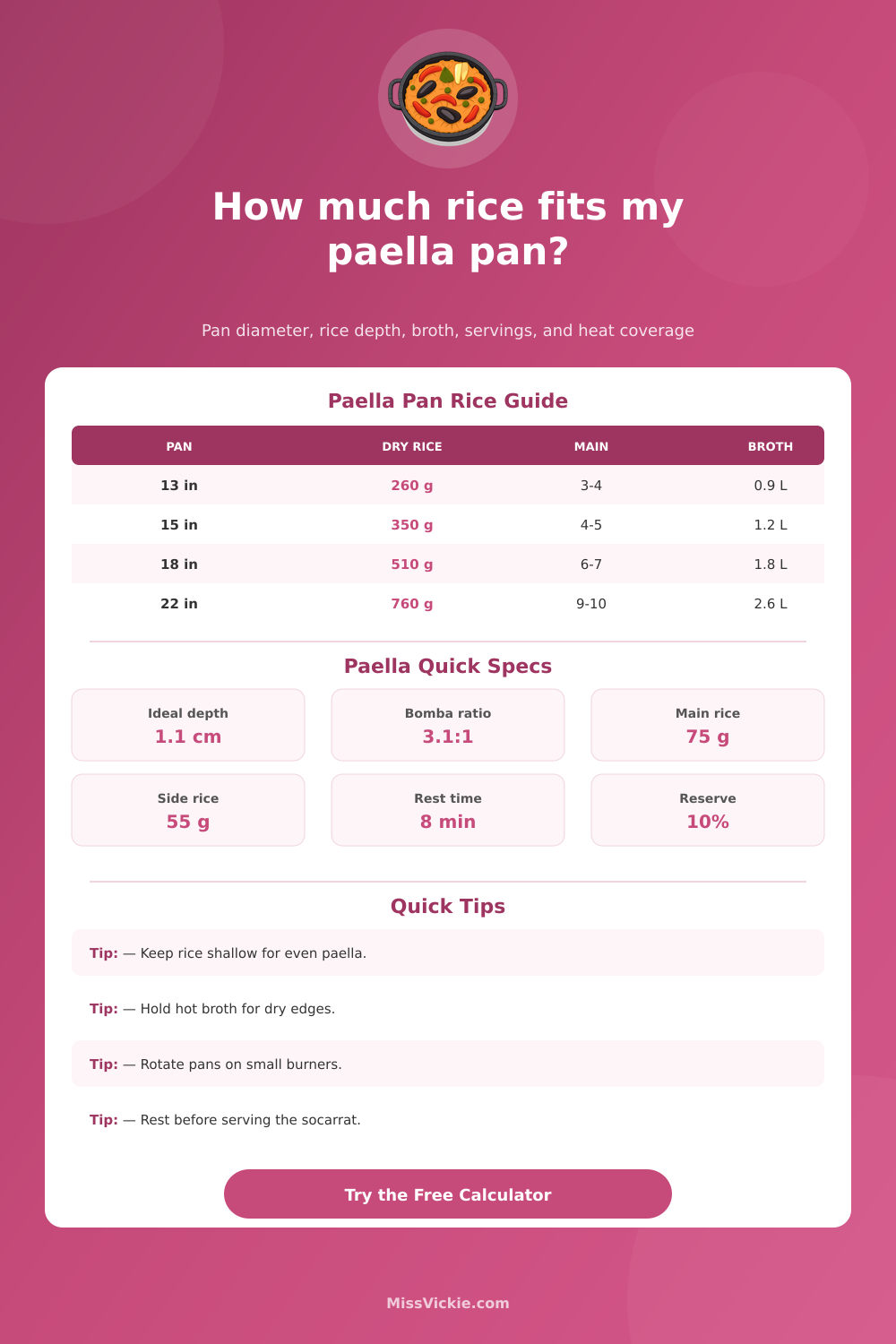
Best for 3 to 4 main servings with a thin 1.1 cm rice layer.
Good family size for 4 to 5 main servings and moderate toppings.
Works for 6 to 7 main servings when the burner reaches the edges.
Party size for 9 to 10 servings with a proper paella burner.
| Rice Type | Dry Cup Weight | Classic Broth Ratio | Best Paella Use |
|---|---|---|---|
| Bomba rice | 200 g per cup | 3.1 cups broth per cup rice | Forgiving grains that absorb extra broth without splitting. |
| Calasparra rice | 195 g per cup | 3.0 cups broth per cup rice | Traditional short-grain rice for slightly deeper pans. |
| Senia or Bahia rice | 190 g per cup | 2.8 cups broth per cup rice | Creamier grain, best with careful simmer control. |
| Arborio backup rice | 195 g per cup | 2.7 cups broth per cup rice | Usable in a pinch, but stir less and avoid excess broth. |
| Brown short-grain rice | 190 g per cup | 3.5 cups broth per cup rice | Needs pre-soaking or longer covered cooking before finishing. |
| Pan Diameter | Typical Dry Rice | Main Servings | Classic Broth Start |
|---|---|---|---|
| 11 inches / 28 cm | 180 to 210 g | 2 to 3 | 2.8 to 3.3 cups before reserve |
| 13 inches / 33 cm | 240 to 290 g | 3 to 4 | 3.7 to 4.5 cups before reserve |
| 15 inches / 38 cm | 320 to 390 g | 4 to 5 | 5.0 to 6.0 cups before reserve |
| 18 inches / 46 cm | 470 to 560 g | 6 to 7 | 7.3 to 8.7 cups before reserve |
| 22 inches / 56 cm | 700 to 830 g | 9 to 11 | 10.8 to 12.9 cups before reserve |
| Load Style | Rice Per Guest Effect | Broth Effect | Cooking Note |
|---|---|---|---|
| Light toppings | More rice-forward portions | 2% less broth | Thin layer browns quickly, so watch the final minutes. |
| Balanced load | Standard portions | No major change | Use a normal simmer and keep reserve broth hot. |
| Seafood-heavy | Slightly less rice per person | 3% more broth | Seafood releases juices and should not bury the rice. |
| Meat-heavy | Less rice per person | 5% more broth | Brown meat first so the rice layer still cooks evenly. |
| Vegetable-heavy | Slightly less rice per person | 8% more broth | Vegetables add moisture but also block evaporation. |
| Coverage | What It Means | Broth Move | Pan Handling |
|---|---|---|---|
| Full ring | Heat reaches the pan edge | Add about 2% for stronger evaporation | Best for large pans and even socarrat. |
| Good, 80% | Most of the base is heated | Use the normal calculated broth | Rotate once or twice during simmering. |
| Fair, 65% | Outer edge is cooler | Hold a larger reserve | Rotate often and avoid an overly deep rice layer. |
| Small burner, 50% | Center cooks much faster | Start slightly lower and add reserve only if needed | Use a smaller pan or finish in the oven. |
| Oven or grill | Broad heat from below and around | Normal to slightly higher broth | Check early because ovens vary widely. |
To cook a succesful paella, pay close attention to the thickness of the rice layers and the diameter of the paella pans. If the layer of rice is too thin, the layer will burn before the flavors has a chance to fully develop. However, if the layer of rice is too thick, the center of the layer will remain heavy and fail to crisp up along the edges of the rice layer.
Choose the size of the pan in relation to the amount of rice you will be cooking. If the pan is too small for the amount of rice you are cooking, the layer of rice will be too deep. Conversely, if the pan is too large for the amount of rice you are cooking, the layer will be too shallow.
How to Cook Paella Rice
The burner coverage should evenly heat the base of the pan to ensure that the rice is cooking evenly throughout the layer of rice. The type of rice that you use will impact the amount of broth that you need to use in your paella recipe. If you use bomba rice, which holds its shape during cooking, you will have more flexibility in relation to how long you cook your rice.
Calasparra rice is somewhere in the middle of bomba and senia rice in relation to texture. Senia rice will release more starch than bomba rice, which means that the rice could become gluey if cooked for too long. Arborio rice can be used as a substitute; however, you will have to stir it less than other rice variety.
Lastly, each type of rice requires a specific amount of broth to rice ratio, which may change with the toppings that are added to the paella. The type of toppings that are used will impact the amount of liquid that will be needed for the paella. Seafood will release some of its liquid while it cooks.
Some of the moisture that the meat releases as it browns can also be released into the pan. Additionally, some vegetables will trap some of its steam, which will impact the amount of liquid in the pan. Since these ingredient will release liquid into the pan, you will have to adjust the amount of broth that you use when you cook the paella.
You will have to set aside some of the broth for later use if your toppings are heavy. If you use a heavy load of toppings in your paella, you will need to use a larger reserve of broth and less rice per persons. The depth of the layer of rice is important to the cooking of the paella.
The standard depth of paella rice should be around one centimeter deep once the dry rice is spread evenly on the pan. If there is more than a centimeter of rice, the center of the rice will trap some of the steam, preventing it from becoming crispy. Additionally, if the rice layer is much deeper than one centimeter, the rice will burn before the center is fully cooked.
To determine the depth of the layer of rice that you will cook, use a calculator to help you determine the size of the pan that you will need for your number of servings. The heat of the burner needs to even cover the bottom of the pan. Using a burner that is smaller than the size of the pan will cause some rice grains to become chalky, as well as lead to the rice in the center of the rice layer to dry out.
Using a full ring burner will allow your rice to remain thin and will help you develop the socarrat that is important to the flavor and texture of your paella. Using a small burner will require you to rotate the pan to ensure that all of the rice is cooked to the same doneness. If you do not use a full ring burner, you will have to rotate the pan while it is cooking.
Allow the paella to rest after turning off the heat. Paella needs to rest for eight to ten minutes after being turned off. This resting period allows the rice grains on the top of the rice layer to absorb the remaining liquid on the rice layers surface.
During this time, the socarrat will have time to properly set. If the paella is cut too soon after being turned off, the rice may seem stuck to the pan; however, if you allow it to rest for the proper amount of time, the rice will be firm enough to easily remove from the pan. Common mistakes in paella include choosing the wrong size pan for the amount of people who will eat the paella, adding all of the broth at once, and not considering how the burner will heat the bottom of the pan.
Many people will choose a pan size according to the number of people who will be eating the paella. Using bomba rice, some will add all of the broth at once without setting aside some of the broth. Others will use a small burner with the paella without considering that the rice may not cook evenly.
However, if you use a calculator to determine the amount of rice, broth, and pan that you will need for your number of servings, you can avoid these mistakes and prepare your rice, broth, and heat correctly. You should of checked the pan size first.