🌾 Fiber in Oatmeal Calculator
Calculate exactly how much fiber is in your oatmeal serving — total, soluble & insoluble
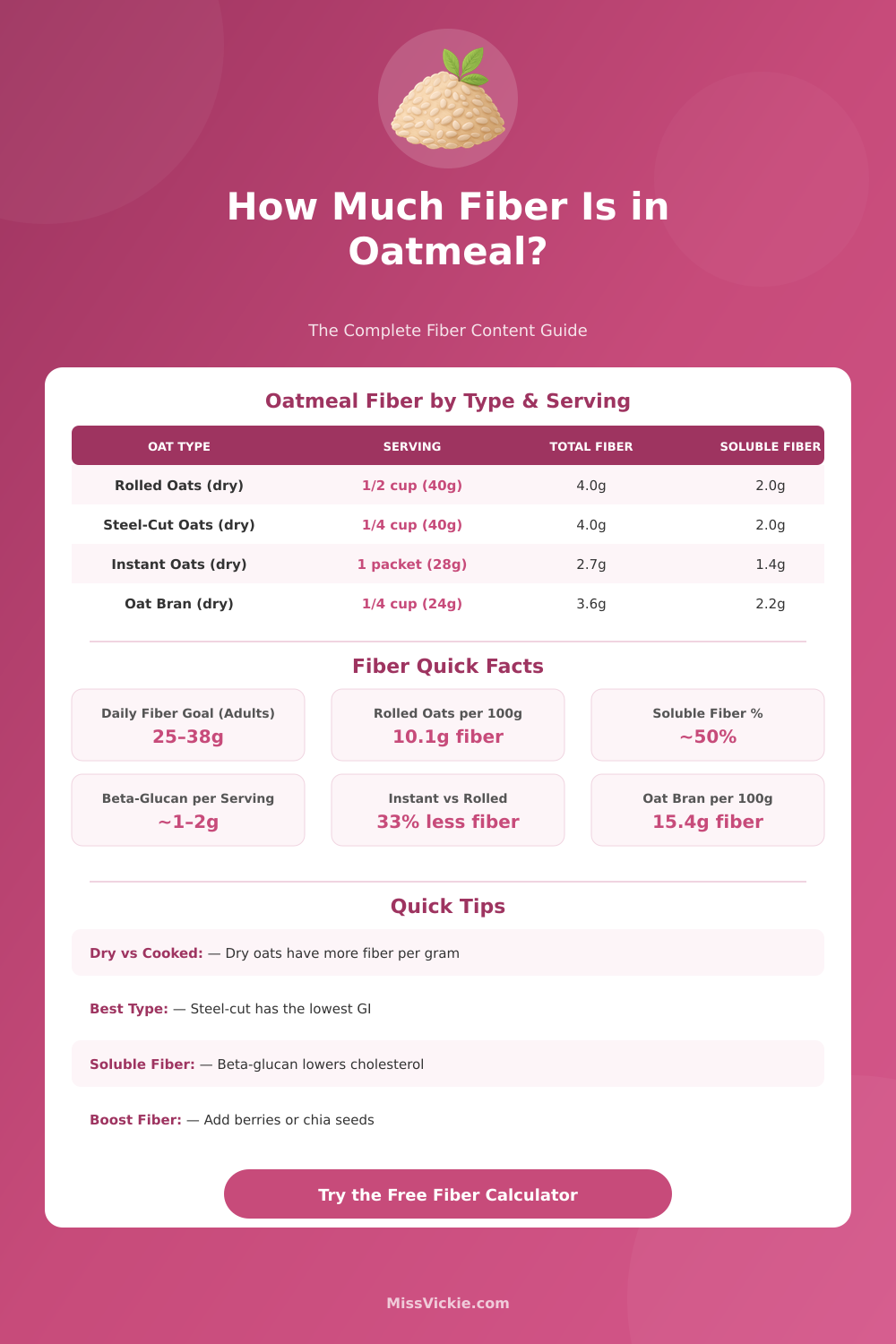
| Oat Type | Serving (Dry) | Total Fiber | Soluble Fiber | Insoluble Fiber |
|---|---|---|---|---|
| Rolled Oats | 1/2 cup (40g) | 4.0g | 2.0g | 2.0g |
| Steel-Cut Oats | 1/4 cup (40g) | 4.0g | 2.0g | 2.0g |
| Instant Oats | 1 packet (28g) | 2.7g | 1.4g | 1.3g |
| Quick Oats | 1/2 cup (40g) | 3.8g | 1.9g | 1.9g |
| Oat Bran | 1/4 cup (24g) | 3.6g | 2.2g | 1.4g |
| Oat Flour | 1/4 cup (30g) | 2.9g | 1.3g | 1.6g |
| State | Serving Size | Weight | Total Fiber | % Daily Value |
|---|---|---|---|---|
| Dry | 1/2 cup | 40g | 4.0g | 14% |
| Dry | 1 cup | 80g | 8.0g | 29% |
| Cooked | 1/2 cup | 117g | 2.0g | 7% |
| Cooked | 1 cup | 234g | 4.0g | 14% |
| Cooked | 1.5 cups | 351g | 6.0g | 21% |
| Age & Gender | Daily Goal | 1 Serving Oatmeal | % Goal Met |
|---|---|---|---|
| Women 19–50 | 25g | 4.0g | 16% |
| Women 51+ | 21g | 4.0g | 19% |
| Men 19–50 | 38g | 4.0g | 11% |
| Men 51+ | 30g | 4.0g | 13% |
| Children 4–8 | 25g | 4.0g | 16% |
| General Adult | 28g (FDA) | 4.0g | 14% |
| Measurement | Rolled Oats | Oat Bran | Instant Oats |
|---|---|---|---|
| 1 tablespoon | ~5g | ~6g | ~5g |
| 1/4 cup | ~20g | ~24g | ~21g |
| 1/2 cup | ~40g | ~47g | ~43g |
| 3/4 cup | ~60g | ~71g | ~64g |
| 1 cup | ~80g | ~94g | ~85g |
| 1 oz | 28.3g | 28.3g | 28.3g |
oatmeal is made from oats that are peeled, steamed and flattened. It also can come from shelled oat grains that are ground, rolled or cut with steel. Plain oats sometimes are called white oats while steel-cut oats have names like coarse oat bits or Irish oatmeal.
There are several kinds to choose from, and each of them cooks a bit differently.
Types and Ways to Cook Oatmeal
Quick oat bits work for busy days. Fully rolled oats make a good choice for everyday oatmeal, because they mix well in recipes and are easy to use. Steel-cut oats need more time to cook, but they give a chewy feeling.
Regular rolled oats are made by steaming toasted grains and passing them between rollers to create flakes. You can eat them raw or cook them in oatmeal for about ten minutes.
Instant oats come in packets for one serving. They cook most quickly, but usually have more sugar and less fiber than other kinds. Rolled oats work well and steel-cut even more, when it comes to taste and quality.
Quick oats can be warmed in a microwave for one to two minutes, while steel-cut oats must boil for a much lnoger time.
The suggested serving size for oatmeal is half a cup of dry oats. One cup of cooked oats delivers the best results. Oatmeal is a heart healthy morning food that you can make on the stove or in a microwave.
A rice cooker also works well to make oatmeal without standing over the pot and waiting until it thickens.
oatmeal can be topped in many ways. Milk or cream, butter, honey, maple syrup, fruits and nut butters all work as add-ons. Coconut milk is a simple weigh to improve a plain serving.
For something different, savory oatmeal with salt and pepper deserves a try. Adding peanut butter, eggs, tofu, avocado or soy sauce adds more protein and fat to it.
One common trouble when cooking oatmeal is that the pot boils over. As the heat cooks the oats, their skins break and trap air. The brief pressure pushes against the weak skins, and everything slides upward.
Using a deep pot with less surface area also helps to keep the oatmeal warm longer, because it does not cool that quickly.
Cooking oatmeal only with milk can make it too sticky. Mixing milk with water gives a better result. Frying the oatmeal after gentle boiling is an extra step that adds a whole new texture.
Oats are useful also outside morning food. They add fiber and texture to baking recipes and you should store them in a sealed tin or freezer bag. Oatmeal can even replace bread crumbs in meat loaf with half a cup per pound of meat.
Oatmeal helps thebody feel full for a good time, which means fewer snacks through the day.