Recipe batch, serving weight, macros, sodium, sugar, fiber, and Daily Values
Nutrition Label Calculator
Turn whole-recipe nutrition totals into a practical per-serving nutrition label with calories, macros, sodium, sugars, fiber, serving weight, and Daily Value estimates.
Start with a common recipe batch, then adjust the serving count, finished weight, macros, sodium, sugars, fiber, and minerals to match your dish.
Nutrition Facts
Recipe Label Breakdown
Connects the finished batch weight to the labeled serving grams or ounces.
Uses protein and carbs at 4 calories per gram, fat at 9 calories per gram.
Compares per-serving nutrients with adult reference values for label planning.
Rounds calories, grams, milligrams, and percentages into package-style numbers.
| Nutrient | Adult Daily Value Used | Label Direction | Planning Note |
|---|---|---|---|
| Total fat | 78g | Limit for many labels | High-fat recipes move quickly toward 20% DV per serving. |
| Saturated fat | 20g | Limit | Butter, coconut oil, cheese, and fatty meats often drive this row. |
| Cholesterol | 300mg | Limit | Eggs, dairy, shellfish, and organ meats can raise this number. |
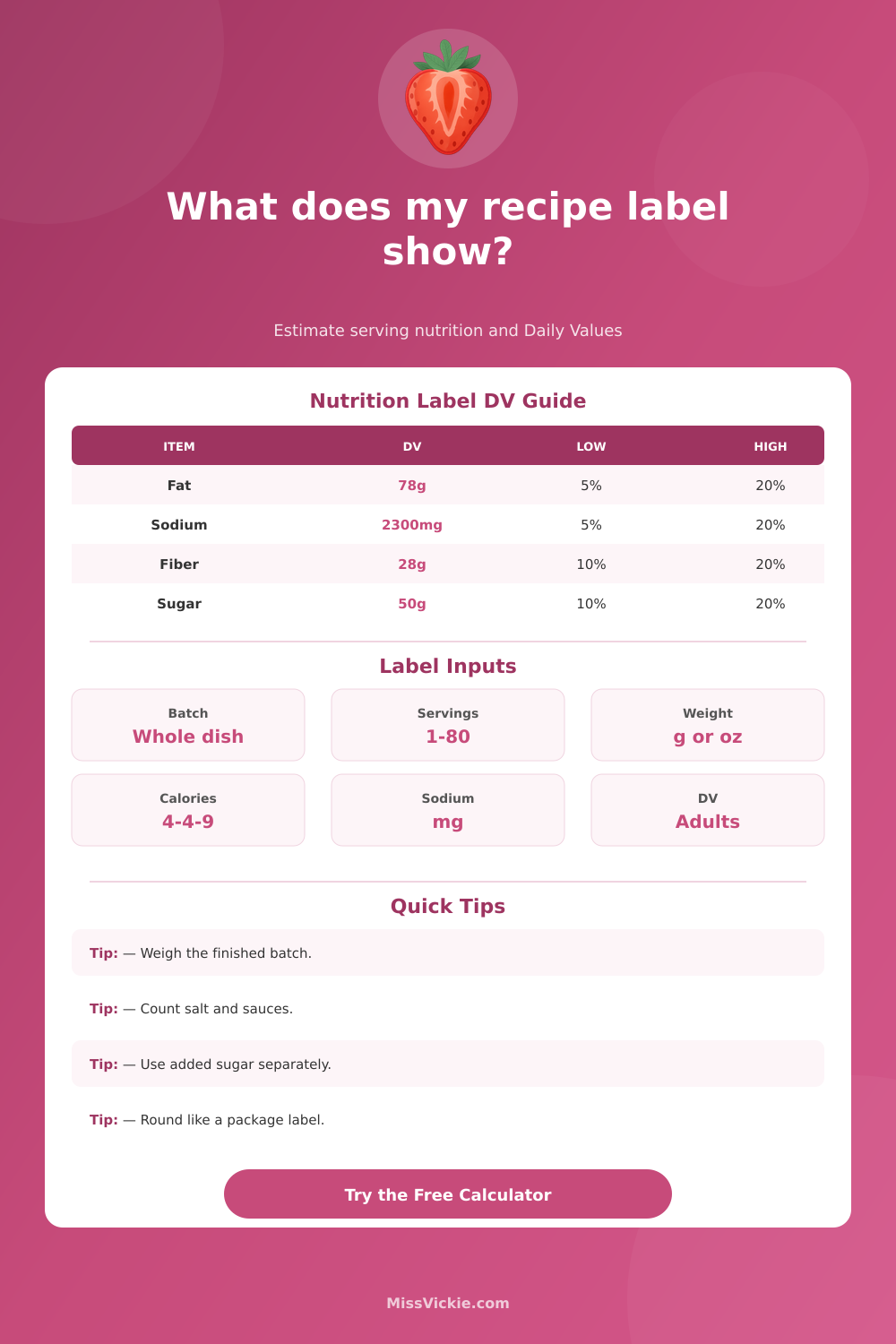
| Sodium | 2,300mg | Limit | Salt, broth, condiments, cheese, cured meats, and sauces matter. |
| Total carbohydrate | 275g | Reference | Includes starches, sugars, and fiber in the recipe batch. |
| Dietary fiber | 28g | Target | Beans, oats, whole grains, fruits, and vegetables raise fiber. |
| Added sugars | 50g | Limit | Track added sugar separately from fruit or dairy sugar. |
| Label Row | Calculator Formula | Typical Rounding | Example Use |
|---|---|---|---|
| Calories | Protein x 4 + carbs x 4 + fat x 9 | Nearest 5 or 10 | Fast label estimate for homemade recipes. |
| Total fat | Batch fat divided by labeled servings | Nearest 0.5g under 5g | Use with oils, butter, nuts, dairy, and meat fat. |
| Total carbohydrate | Batch carbs divided by labeled servings | Nearest whole gram | Includes fiber and sugars unless recipe data separates them. |
| Protein | Batch protein divided by labeled servings | Nearest whole gram | Useful for meal prep and high-protein baked goods. |
| Nutrient | Enter As Batch Total | Per-Serving Meaning | Label Watch Point |
|---|---|---|---|
| Sodium | Milligrams in the whole recipe | Divided by serving count or weight-based servings | 5% DV is low; 20% DV is high for one serving. |
| Total sugars | All sugar grams in the batch | Natural plus added sugars | No adult Daily Value is assigned to total sugars. |
| Added sugars | Sugar, syrup, honey, sweeteners added | Compared with 50g adult Daily Value | Helps separate fruit sugar from added sweeteners. |
| Dietary fiber | Fiber grams in the full recipe | Compared with 28g adult Daily Value | Higher fiber can improve label balance. |
| Mineral | Adult Daily Value Used | Common Recipe Sources | How It Appears |
|---|---|---|---|
| Calcium | 1,300mg | Milk, yogurt, cheese, tofu set with calcium, greens | Usually shown as % DV on modern labels. |
| Iron | 18mg | Meat, beans, lentils, spinach, fortified flour | Small milligram amounts can create meaningful DV. |
| Potassium | 4,700mg | Potatoes, beans, bananas, tomato, dairy | Useful for soups, stews, smoothies, and meal bowls. |
| Sodium | 2,300mg | Salt, broth, soy sauce, baking soda, cheese | Count every salty ingredient in the batch total. |
Creating a nutrition label for food that you cook in a home allows you to understand the nutrient in that food. For many peoples, creating a nutrition label for homemade food can be difficult. This is because recipes for home-cooked food shows the total amount of ingredients that is required to make the food, but the nutrition label needs to show the weight, calories, and nutrients for each portion of the food.
These value must be calculated by dividing the total weight of the food by the number of portions that will be served. The weight of the food that is cook can change from the initial ingredients due to the evaporation of water during the cooking process. Thus, the individual will enter the weight of the food that is finished cooking into the nutrition label calculator to ensure that the nutrients for each portion is correct.
How to Make a Nutrition Label for Homemade Food
The nutrition label allow the individual to enter the portioning of the food either by weight or by count. Portioning by weight will be more accurate then portioning by count. Nutrition labels must include information regarding different nutrients in the food.
One nutrient that is important is sodium. Table salt contain over 2000 mg of sodium per teaspoon, and that sodium is contained in each portion of the food. Thus, if the sodium content in one portion of the food are high, that sodium will account for a large portion of the daily recommended sodium intake.
Another nutrient that you must track separately from sugars in the food is added sugar. Natural sugars are present in foods like fruit and dairy products, but added sugars are those that are added to foods during the cooking process. Finally, the nutrient of fiber must be track.
While most foods do not contain fiber, foods like beans, whole grains, oats, and oatmeal contains large amounts of fiber. The nutrition label calculator will use a reference table to determine the percentage of the daily value of the foods sodium, added sugar, and fiber content. Thus, the individual does not need to look up these tables.
The serving size for food is up to the individual cooking the food. If the food being prepared is a snack, the portion may be 30 grams. However, for foods like pasta bake, the portion may be 200 grams.
The nutrition label calculator will provide a reference grid of common serving sizes for food so that the individual can determine if their chosen serving size is correct or if they need to adjust the portion size. For example, if the calculator depicts that a serving size of banana bread is 80 grams, 80 grams is a common serving size for a snack. However, if the amount listed are 30 grams, the individual may need to determine how many servings of the banana bread recipe there is in total.
The nutrition label software will calculate the calorie count of the food by multiplying the amount of protein in the food by 4 calories per gram, the amount of carbohydrates in the food by 4 calories per gram, and the amount of fat in the food by 9 calories per gram. Although these are estimates of the calories in the food, the macro split or the percentage of the total calories that are from fat are important to note on the nutrition label. The percentage of fat in the food can help an individual understand if the food contain added oils or fat from dairy products.
Common mistakes when creating a nutrition label for food include entering the weight of the raw ingredient instead of the finished food. This will ignore the weight of the water that has evaporated during the cooking process. Another common mistake is using the total sugar instead of the amount of added sugar.
Finally, individuals often do not consider how the sodium in liquids like broth will change the sodium content of the food. The nutrition label will determine these percentages by using a certain daily value for each nutrient. For example, the calculator may use 2300 mg of sodium as the daily value for sodium.
The same for fiber would be 28 grams per day. For added sugars, the daily value is 50 grams per day. These value allow the calculator to determine the percentage of these nutrients without having to perform the math calculations by hand.
Creating a nutrition label for home-cooked food reflect the actual food that was prepared. The nutrition label will be more accurate than if the food was estimated. Although the recipes for home-cooked food will never be as perfect as commercially prepared foods, the nutrition label will accurately depict the food and allow for the individual to prepare the rest of the meal of the day.