Roll count, maki, temaki, onigiri, sheet cuts, rice, filling thickness, waste, half sheets, and servings
Nori for Sushi Calculator
Estimate how many nori sheets to open for sushi rolls, hand rolls, onigiri wraps, gunkan strips, or sushi burritos, then size rice and fillings around the cut plan.
Choose a common sushi setup, then adjust roll count, sheet cut, rice spread, filling thickness, waste, and servings for your exact tray.
Nori, Rice, Filling, And Cut Breakdown
Rice amounts are cooked, seasoned sushi rice. Nori sheet dimensions vary by brand, so the calculator treats the chosen cut as a sheet fraction and then adds breakage waste.
| Sushi Style | Common Nori Cut | Cooked Rice Per Item | Typical Yield | Best Filling Thickness |
|---|---|---|---|---|
| Hosomaki thin maki | Half sheet, long edge | 70 to 90 g | 6 small pieces | Slim single filling |
| Futomaki thick maki | Full sheet | 140 to 180 g | 8 large pieces | Classic to thick |
| Uramaki inside-out roll | Half sheet | 110 to 140 g | 8 pieces | Classic, not loaded |
| Temaki hand roll | Half sheet or diagonal half | 35 to 55 g | 1 cone | Slim to classic |
| Onigiri wrap | Third sheet or strip | 90 to 120 g | 1 rice ball | Wrapped outside |
| Gunkan band | Quarter or sixth strip | 15 to 25 g | 1 oval piece | Topping sits above |
| Batch | Style | Nori Starting Point | Rice Starting Point | Serving Note |
|---|---|---|---|---|
| Dinner for 2 | Hosomaki | 2 to 3 full sheets | 320 g cooked rice | 24 pieces, light meal |
| Family for 4 | Mixed maki | 5 to 7 full sheets | 700 g cooked rice | 36 to 48 pieces |
| Temaki night | Hand rolls | 5 to 6 full sheets | 450 g cooked rice | 2 cones per guest |
| Lunch boxes | Onigiri | 3 to 4 full sheets | 900 g cooked rice | 8 rice balls |
| Party tray | Futomaki | 10 to 12 full sheets | 1.6 kg cooked rice | 80 pieces before seconds |
| Loaded rolls | Tempura maki | Add 15% nori | Raise rice 5% | Watch the seal margin |
Most home packs. Count each piece as one full-sheet equivalent.
Useful for thick futomaki or loaded rolls with extra overlap.
Convenient for hosomaki, uramaki, and temaki, but less flexible.
Good for quick wraps, small onigiri strips, and gunkan bands.
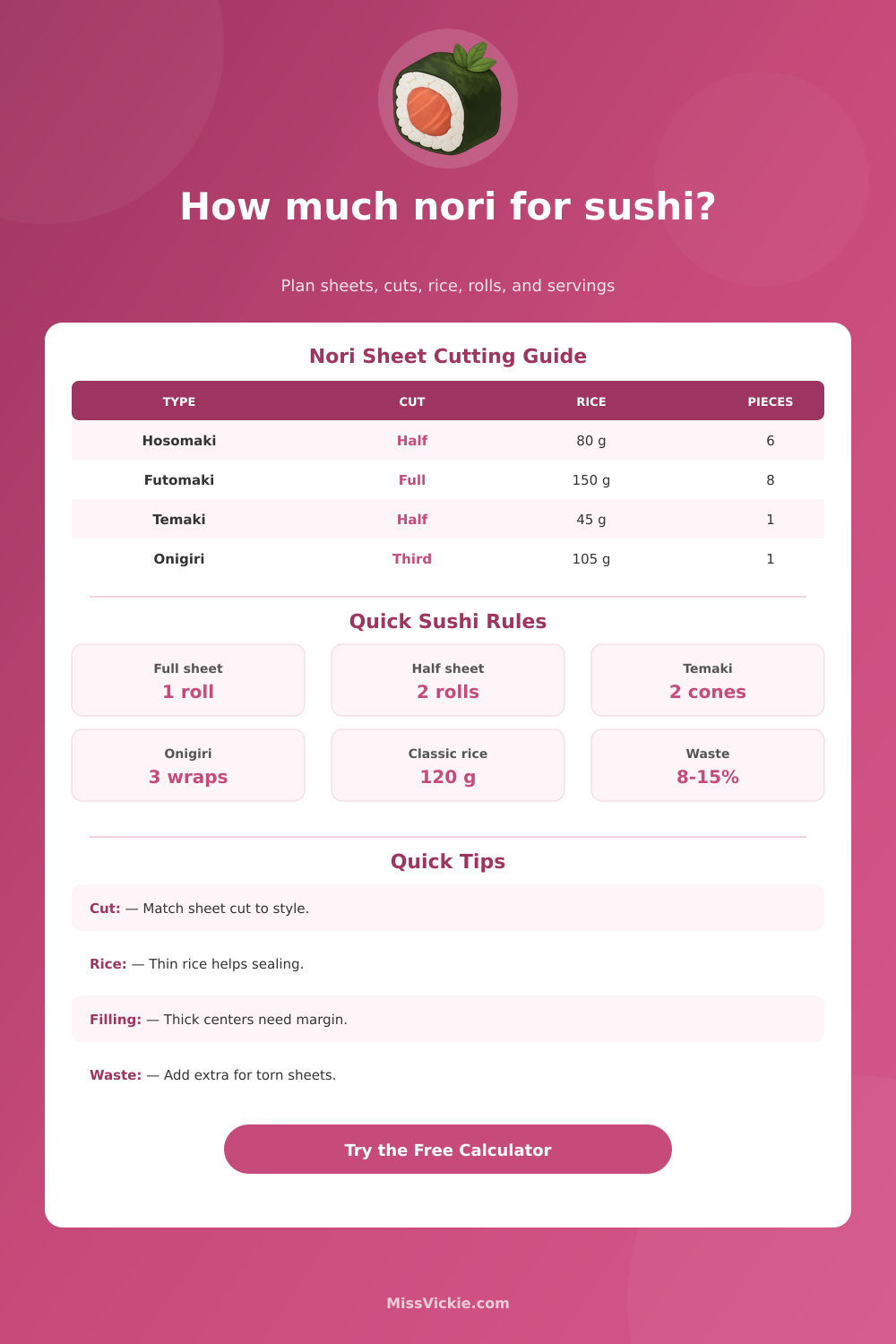
To determine the amount of nori you need for sushi, you first must decide what types of sushi you are preparing. The amount of nori needed for sushi rolls depend on the type of sushi and the size of the nori sheet that you use in each style. For example, hosomaki sushi rolls use a thin layer of rice and one type of filling; for these sushi rolls, a half sheet of nori is sufficient.
Futomaki sushi rolls use a thick layer of rice and include several type of fillings; thus, a full sheet of nori are needed for futomaki sushi rolls. Temaki sushi uses a half sheet of nori that is cut diagonally to create the cone shape for the sushi. Onigiri use a sheet of nori that covers the rice ball but doesnt use too much of the nori sheets.
How Much Nori You Need for Sushi
The rice and nori sheets need to be prepared in a specific order due to the reaction of the nori sheets to the moisture from the sushi rice. Once the rice touch the nori sheet, the nori sheet becomes soft. Once the rice makes the nori sheet damp, the nori sheet remains soft and damp.
To prevent soggy nori sheets, you must make your sushi rolls and cuts before applying the rice to the sheet of nori. If you prepare your sushi in bulk, you will need to open more sheets of nori then the number of sushi rolls that you will make. This is because if the edge of the nori sheets tear or the corners of the sheet become damp from the rice, you will have wasted sheets of nori.
The amount of rice and thickness of the fillings for your sushi rolls also affect the amount of nori that you use for each roll. Using more rice will allow the rice to adhere to the edge of the sheet of nori. However, using too much rice may cause the sushi rolls to split when they are removed from the sheet of nori.
Using thicker fillings require more space on the dry edge of the nori sheet to allow the roll to close properly. If the thickness of the fillings for your sushi rolls increases, the sushi rolls may become floppier or may not close with the sheet of nori. Another consideration in determining how much nori sheet to purchase for sushi preparation is the waste of the sheets of nori.
Some waste of the nori sheet occur when the sheets tear when rolling the sushi. Other waste occurs when you use some sheets of nori to make practice rolls for quality control. Still more waste of the sheets occur when a piece of the nori sheet sticks to the bamboo mat.
Eight to fifteen percent of the sheets of nori should be allowed for waste. This percentage of waste for preparation of sushi in bulk are necessary to account for the mistakes made in preparing sushi rolls. The larger the batch of sushi that is to be prepared, the more higher the percentage of waste of the sheets of nori.
Including a percentage for waste in your calculation for the amount of sheet of nori to purchase will ensure that you do not run out of nori before preparing all of the sushi rolls. The number of servings that you prepare for your sushi rolls will change the number of piece of sushi that each person will receive. For example, if you cut one sushi roll into six pieces, it can feed one person.
If you cut one sushi roll into eight pieces, it will feed two individuals who are sharing the sushi. The number of servings will change the total amount of rice and sheet of nori that is required for the sushi rolls. If you determine the number of servings for your sushi, you can plan the amount of rice and sheet of nori needed to feed each individual.
If you plan the rice and sheet of nori correctly, you will have the correct amount of ingredient for your sushi and the number of guest that you are preparing for.