How Much Mozzarella Cheese for Pizza Calculator
Calculate mozzarella for pizza by covered area, pizza style, fresh or low-moisture format, drain level, bake heat, topping moisture, cups, grams, and per-slice melt.
Pick a real pizza setup, then adjust the mozzarella format, drainage, rim width, bake style, and extra allowance for your dough and oven.
Mozzarella Breakdown
Best for New York slices, party pies, and home ovens because it browns without flooding the center.
Use less by weight, drain well, and leave open sauce gaps for Neapolitan and margherita pizzas.
Melts creamier than part-skim and can oil off if the layer is too heavy in a hot oven.
Useful for big batches because it sheds less oil and keeps a slightly firmer bite.
Detroit and grandma styles can handle more mozzarella because cheese crisps against the pan.
Fresh tomato, mushrooms, spinach, and undrained mozzarella all add water to the bake.
Fast bakes need smaller pieces or thinner slices so mozzarella melts before the crust finishes.
Deep dish mozzarella is not just a topping, so the calculator uses a heavier style factor.
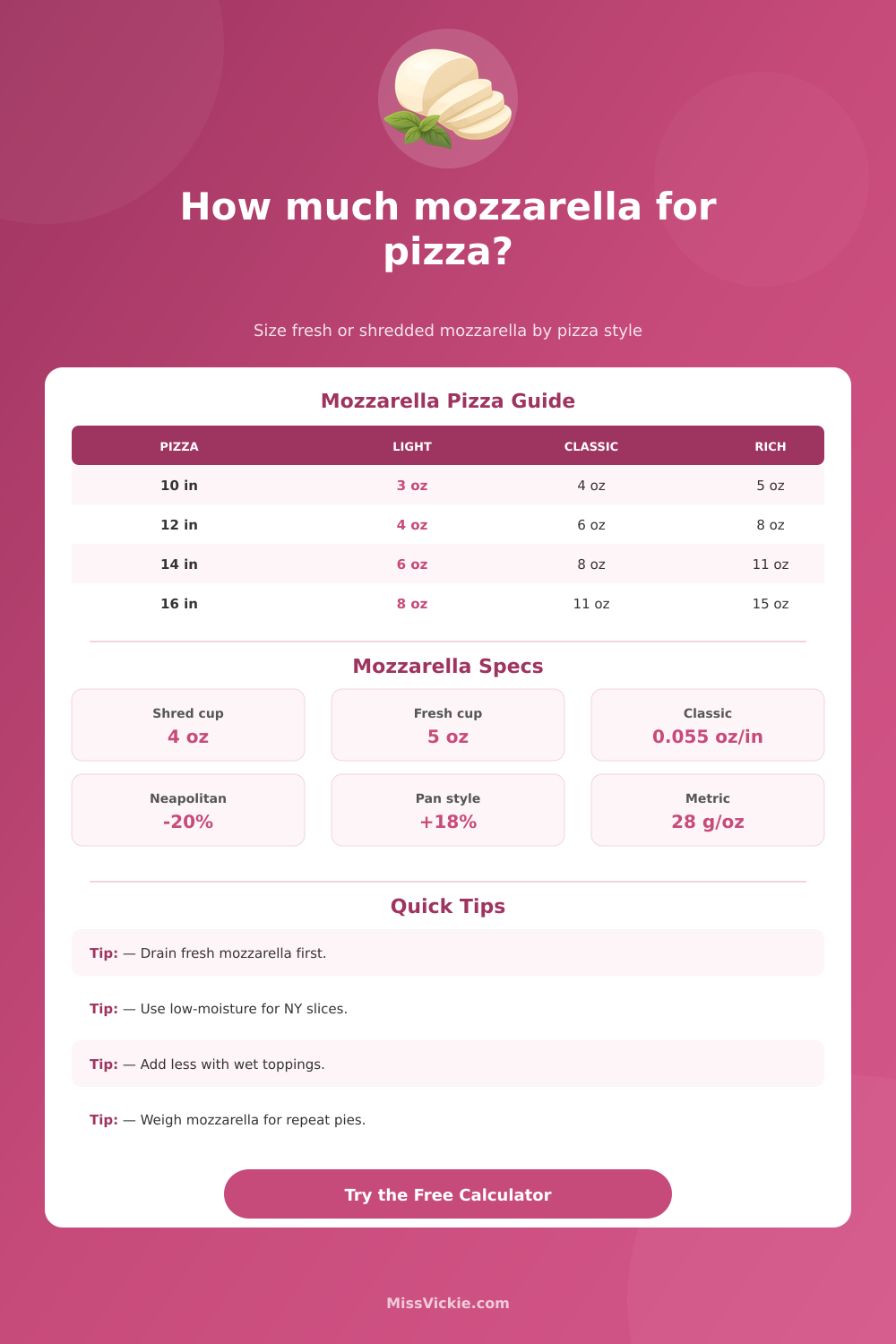
| Pizza Size | Covered Area | Classic Mozzarella | Fresh Mozzarella Cue |
|---|---|---|---|
| 8 inch personal | About 38 sq in | 2 to 3 oz | 2 oz, sliced thin and drained |
| 10 inch round | About 64 sq in | 3.5 to 4.5 oz | 3 oz in small pieces |
| 12 inch round | About 95 sq in | 5.5 to 6.5 oz | 4 to 5 oz for margherita |
| 14 inch round | About 133 sq in | 7.5 to 8.5 oz | 6 to 7 oz if well drained |
| 16 inch round | About 177 sq in | 10 to 12 oz | 8 to 10 oz, avoid wet pools |
| 18 inch round | About 227 sq in | 13 to 15 oz | 10 to 12 oz in thin slices |
| Mozzarella Format | Approx Cup Weight | Moisture Behavior | Best Pizza Use |
|---|---|---|---|
| Part-skim low-moisture shreds | 4 oz or 113 g per cup | Dry, stable, modest oil | Large batches and repeatable home pizza |
| Whole milk low-moisture shreds | 4.1 oz or 116 g per cup | Creamier melt, more oil | New York, classic cheese, pepperoni |
| Hand-grated block mozzarella | 4.2 oz or 119 g per cup | Less powdery, melts cleanly | Best all-purpose homemade pizza choice |
| Fresh mozzarella ball | 5 oz or 142 g per cup pieces | High water unless drained | Margherita and high-heat pizza |
| Fresh mozzarella pearls | 5.2 oz or 147 g per cup | Water hides between pearls | Small pizzas and quick dot placement |
| Buffalo mozzarella | 5.1 oz or 145 g per cup | Very tender and wet | Use sparingly after strong draining |
| Bake or Topping Choice | Mozzarella Adjustment | Moisture Cue | Practical Result |
|---|---|---|---|
| Thin or tavern crust | Reduce 10% | Low dough cushion | A lighter layer keeps the crust crisp. |
| Classic hand tossed | Baseline | Balanced sauce and dough | Works with low-moisture shreds or grated block. |
| Neapolitan spotted cheese | Reduce 22% | Hot, fast, wet cheese | Use islands of fresh mozzarella, not full coverage. |
| Pan or Detroit style | Add 18% | Thick dough, fried edges | Extra mozzarella can crisp against the pan. |
| Wet vegetables or tomatoes | Reduce 8% | More water in the center | Drain toppings or use drier mozzarella. |
| Deep dish or stuffed | Add 45% | Cheese is part of filling | Layered mozzarella needs a heavier target. |
| Batch Plan | Pizza Count | Low-Moisture Mozzarella | Fresh Mozzarella Version |
|---|---|---|---|
| Weeknight pair | Two 12 inch pizzas | 12 to 13 oz | 8 to 10 oz, drained |
| Family pizza night | Three 14 inch pizzas | 24 to 27 oz | 18 to 21 oz, sliced thin |
| Kids mini pizzas | Eight 7 inch pizzas | 18 to 22 oz | 14 to 16 oz, diced small |
| Large slice party | Four 16 inch pizzas | 44 to 50 oz | 34 to 40 oz, well drained |
| Detroit pan dinner | Two 10 by 14 pans | 30 to 36 oz | Not ideal unless mixed with low-moisture |
| Sheet pan service | Two 13 by 18 trays | 42 to 50 oz | Use fresh as a finishing accent |
Using the correct amount of mozzarella on a pizza is important because the amount of mozzarella will ultimately affect the texture of a pizza. Using too little mozzarella will result in a thin and dry center to the pizza. Using too much mozzarella will result in the cheese releasing oil that can slide onto the crust of the pizza.
The excess mozzarella will also make the pizza feel heavy with too much cheese covering the dough and masking the flavor of the pizza dough. The interaction of mozzarella with the other components of the pizza will determine the final result of the pizza. Most people will think about the size of the pizza.
How Much Mozzarella to Use on Pizza
However, the size of the pizza is not the only thing that will affect the amount of mozzarella that should be used on a pizza. Another factor will be the size of the crust. Larger pizzas will require more mozzarella.
However, the amount of mozzarella that will be required will also depend on the style of the crust as well as the moisture of the toppings that is to be added to the pizza. The mozzarella cheese calculator will tell the customer the amount of mozzarella that will be needed once the customer has input the dimensions of the pizza, the style of the crust, and the moisture content of the toppings to be used on the pizza. Using this calculator will eliminate the guesswork for the customer.
Fresh mozzarella and low-moisture mozzarella will behave differently when exposed to heat. Fresh mozzarella will release steam as it melts. This steam can prevent the crust of the pizza from becoming crispy when cooked.
Low-moisture mozzarella shreds will melt steadily and provide a clean pull due to the removal of most of the water during the processing of the cheese. The mozzarella cheese calculator will help determine the type of mozzarella to use with the bake temperature of the pizza and the amount of time the pizza will remain in the oven. Another factor that will impact the amount of mozzarella that is used on a pizza is the drainage of the cheese.
The amount of water that is contained in the mozzarella will impact the crust of the pizza. Using a fresh mozzarella ball that has not been pressed will add several tablespoon of water to the pizza. This will result in the crust becoming soggy due to the steaming of the crust from underneath the mozzarella.
The drain setting will adjust the weight of the mozzarella to account for the water that will be released from the mozzarella cheese prior to baking the pizza. The moisture level of the toppings also affects the amount of mozzarella to be used. Vegetables, fresh tomatoes, and sauce contain moisture.
The more wet toppings that is selected using the cheese calculator will result in a lower target for the amount of mozzarella to be used due to the way in which the water from these ingredients will impact the melting of the mozzarella cheese. Dry toppings like pepperoni will not contain as much water to impact the melting of the mozzarella. Another factor to consider for the amount of mozzarella is the oven in which the pizza will be baked.
The higher the temperature of the oven, the less time it will take for the crust to cook. This means that the mozzarella will have less time to melt than if it were cooked in a lower temperature oven. A very hot oven will finish the crust of the pizza before the mozzarella has a chance to overheat.
Neapolitan pizzas will use less mozzarella because the cooking time in the oven will be short and intense so that the fresh mozzarella will not flood the center of the pizza. A home oven will allow the mozzarella to melt and brown so the mozzarella cheese calculator will provide more mozzarella for those type of ovens. The amount of mozzarella needed will change based on the type of oven in which the pizza will be cooked.
The width of the edge of the pizza and the number of slice into which the pizza is to be divided will also impact the amount of mozzarella to be used. If the crust of the pizza is to be left without mozzarella along the outer rim of the pizza, the crust will not steam underneath the mozzarella when cooked so that the slice of pizza can be held without burning the customer’s fingers. The number of slices that will be used will determine how the total mozzarella weight will be divided equally among each slice.
A pizza that is cut into eight slices will feel different then a pizza that is cut into twelve slices. The cheese calculator will provide the customer with the amount of mozzarella that should be purchased for the pizza. The calculator will indicate the total weight of the mozzarella needed, the weight of the mozzarella per pizza, and the volume in cups of mozzarella that should be purchased.
Additionally, the calculator will show the amount of mozzarella that should be used per slice of pizza so that the customer can decide how large or small the portion of mozzarella should be for each slice. The calculator will not measure the taste of the mozzarella once melted. Whole-milk low-moisture mozzarella shreds will contain a richer flavor and create a longer pull of cheese when shaved compared to part-skim mozzarella shreds.
The issue with using whole-milk low-moisture mozzarella shreds is that it will release more fat than part-skim mozzarella shreds. This fat can make the pizza feel too heavy if the toppings already contain alot of fat. In this situation, the customer should opt for a drier type of mozzarella cheese.
Another factor to consider is the batch size of the pizza that is to be cooked. If several pizzas will be cooked in a row, the first batch will cook to perfection in the oven while the last batch may be cooked under a warmer in the oven. By having an extra amount of mozzarella cheese, the customer will have enough time to grate or slice more mozzarella so that the mozzarella does not run out during the cooking of the pizzas.
This reserve amount will be given to the customer in the calculator so that they dont have to calculate this amount themselves. The calculator is designed to provide the customer with the amount of mozzarella needed, but the customer should also learn the various ways in which the pizza will necessitate the use of mozzarella cheese. A pizza that contains various types of vegetables and fresh tomatoes will require less mozzarella than a plain pizza of the same size.
A pizza cooked in a wood-fired oven will cook faster than one that is cooked in a home oven. After learning of the effect that the various components have upon the amount of mozzarella that should be used, the customer can utilize the calculator to test their instincts against the limitations of their kitchen appliances.