🛖 Moonshine Mash Calculator
Calculate exact grain, sugar, water, and yeast amounts for your mash recipe
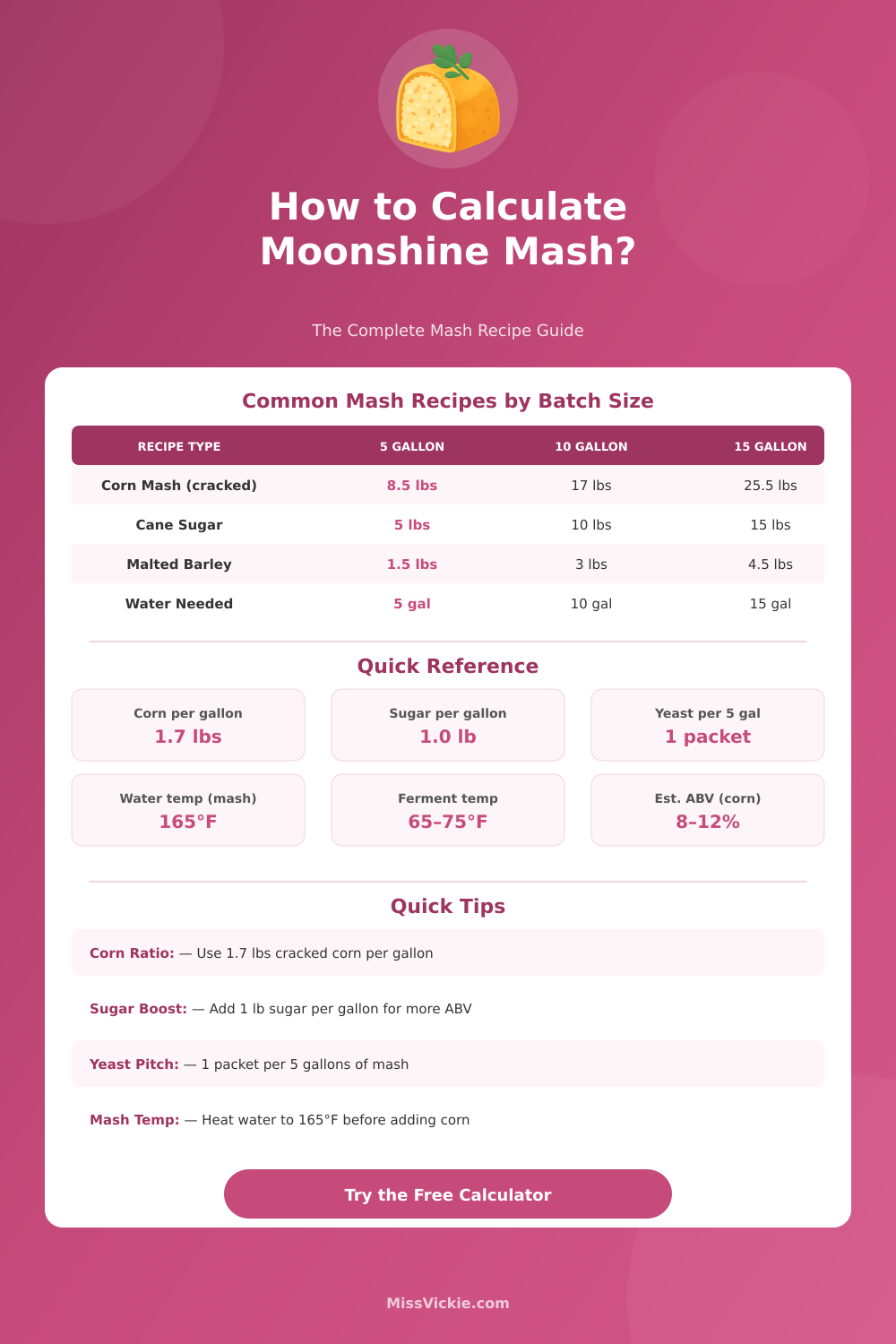
| Grain Type | 5 Gallons | 10 Gallons | 15 Gallons |
|---|---|---|---|
| Cracked Corn | 8.5 lbs | 17 lbs | 25.5 lbs |
| Rye (Cracked) | 7.5 lbs | 15 lbs | 22.5 lbs |
| Wheat (Cracked) | 7.5 lbs | 15 lbs | 22.5 lbs |
| Malted Barley | 7 lbs | 14 lbs | 21 lbs |
| Flaked Oats | 7.5 lbs | 15 lbs | 22.5 lbs |
| Cane Sugar Only | 10 lbs | 20 lbs | 30 lbs |
| Mash Type | Gravity Points / lb / gal | Est. OG (5 gal) | Est. ABV |
|---|---|---|---|
| Cracked Corn (1.7 lbs/gal) | ~28 pts | ~1.048 | ~6% |
| Corn + 1 lb Sugar/gal | ~44 pts | ~1.072 | ~9–10% |
| Corn + 1.5 lb Sugar/gal | ~52 pts | ~1.084 | ~11–12% |
| Sugar Only (2 lbs/gal) | ~46 pts | ~1.076 | ~10% |
| Sugar Only (3 lbs/gal) | ~69 pts | ~1.100 | ~13–14% |
| Rye Mash (1.5 lbs/gal) | ~26 pts | ~1.044 | ~5–6% |
| Step | Temp / Time | Notes |
|---|---|---|
| Heat mash water | 165°F (74°C) | Before adding grain |
| Add corn / grain | Stir well | Temp drops to ~150°F |
| Mash rest | 150°F for 90 min | Enzyme conversion window |
| Add sugar | After mash rest | Stir until dissolved |
| Cool before yeast | Below 80°F (27°C) | Hot wort kills yeast |
| Pitch yeast | 65–75°F (18–24°C) | Ideal range for most distillers yeast |
| Fermentation | 65–75°F for 7–14 days | Until bubbling stops |
| Yeast Type | Attenuation | Temp Range | Best For |
|---|---|---|---|
| EC-1118 (Champagne) | ~90% | 50–95°F | High-gravity sugar shine |
| Turbo Yeast 48hr | ~85% | 65–85°F | Fast ferments |
| Distillers Yeast | ~85% | 60–90°F | Corn / grain mash |
| Red Star DADY | ~82% | 55–95°F | All-purpose grain mash |
| Bread Yeast (emergency) | ~60% | 75–95°F | Sugar wash only |
Making moonshine mash is easy. This is one of those old ways for making homemade alcohol from ingredients you find almost everywhere. You mix cornmeal, sugar, water and yeast, later leave it fermenting until it becomes alcoholic before distilling it to improve the taste.
Really, it is like the making of whiskey, if you think about that. The whole process is a mash… You mix grain with water and heat it right so that the starch breaks into sugar.
How to Make Moonshine Mash
Corn is the grain you like most for moonshine, although that is not a strict rule
What goes into a corn moonshine mash? You need cornmeal, sugar, water, yeast and malt to start. Everything you cast in a big pot, mix well, later move it to a still for fermentation.
For around 5 gallons you usually take about 25 pounds of cornmeal. Add 5 gallons of water, around 3 pounds of sugar and a packet of distiller’s yeast to start the cause. Malted barley is optional, but it adds a special touch to the taste.
Here is a recipe with a 1:1 ratio; so one gallon of water with a pound of sugar and a pound of cornmeal. Even so is the thing: because moonshine you prepared underground for centuries, there never existed official measures. The best recipe for your case usually comes from trials and errors until you find what works.
Other way is sweet feed, that pleases moonshiners, mostly because of the molasses, that gives more sugar to the yeast and character to the final product. You mash the grains, ferment with yeast, later distill it like traditional whiskey. Rye bread whiskey is likewise funny for weird recipes; even dense pumpernickel can serve.
Before distilling you filter the mash to remove dirt and reach a pure spirit.
Before corn farmers preserved whole ears in silos for animal feed and lay big clay pots below to catch the squeezed liquids. In winter those corn squeezings stay in low temperatures and slowly ferment on their own. Arriving spring, you distill the liquid.
You swear that this method gives the most smooth moonshine or the best base for bourbon.
The sour corn mash always was the most traditional way. A hydrometer helps to control the yeast and measure the alcohol while it grows. Fermentation mostly lasts until 2 weeks, more or less, according to temperature and conditions.
Honestly, almost any cheap carb source works, wheat, dark sugars like treacle, potatoes. If you understand how starch turns into sugar, you can ferment and distill almost everything. Even fruits work.
Higher sugar amount gives more alcohol potential, hence apples are good, they do wonderful apple-flavored moonshine if you distill them well.