
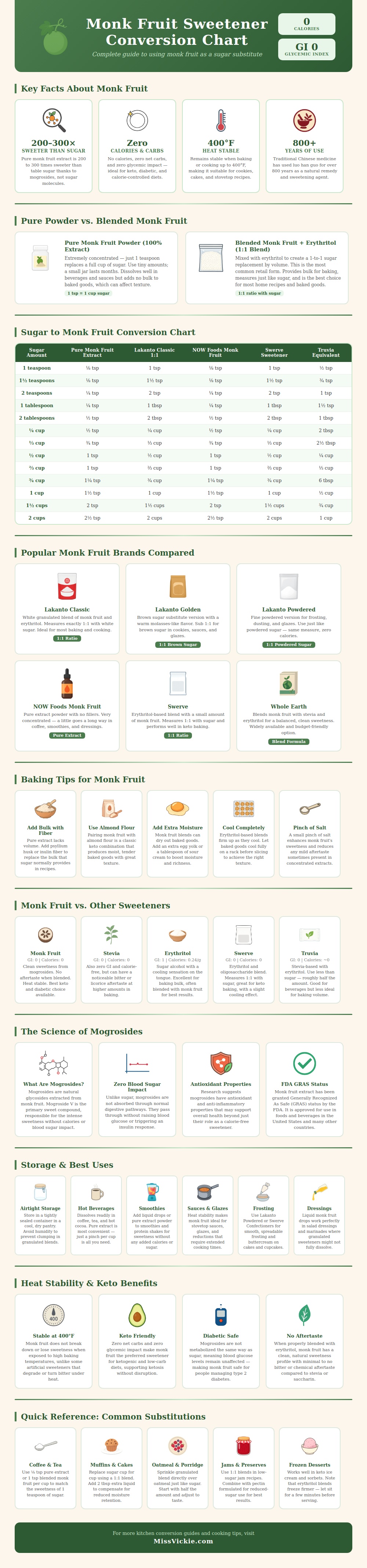
Monk fruit sweetener come in different forms. To use monk fruit sweetener correctly in recipe, you must understand the different forms monk fruit sweetener comes in. One of the forms of monk fruit sweetener is call pure monk fruit extract.
Pure monk fruit extract is highly concentrate. Monk fruit contains mogrosides, which are the compounds that contains the sweetness in monk fruit sweetener and dont contains calories. Because monk fruit extract is so concentrated, it does not provide the same bulk as granulated sugar provide.
How to Use Monk Fruit Sweetener in Recipes
Granulated sugar adds structure and moisture to the baked good it is included in, but pure monk fruit extract does not have the structure or moisture to perform that same function. If you replace granulated sugar with pure monk fruit extract, the baked goods may lack the structure that they needs to properly set and the baked goods may end up flat. Many people chooses to use monk fruit sweetener blends instead of pure monk fruit extract.
Manufacturers create monk fruit sweetener blends to mimic the volume of granulated sugar. Most monk fruit sweetener blends contains erythritol along with monk fruit sweetener. Erythritol is added to monk fruit sweetener blends so they have the same volume as granulated sugar.
Monk fruit sweetener blend can also be use as a 1:1 replacement for granulated sugar. Using monk fruit sweetener blends as a 1:1 replacement allows people to stick to the original recipe for baked goods. The blends may contain erythritol, which will produce a cooling sensation on the individual’s tongue who consumes the monk fruit sweetener blend.
The specific ratio of monk fruit sweetener must be check because monk fruit sweetener is available in different brand. Some brands of monk fruit sweetener are create to be an exact replacement for granulated sugar. Other brands of monk fruit sweetener may require an individual to adjust the amount of monk fruit sweetener they use in the recipes they make.
If people does not check the specifications for the brand of monk fruit sweetener they purchase, they may end up adding too much or to little to the recipes they prepare. Using the wrong amount of monk fruit sweetener can ruin the recipe. Monk fruit sweetener is not the same as granulated sugar.
Monk fruit does not caramalize like granulated sugar does. This mean that the baked goods containing monk fruit sweetener will not turn a golden brown color like those that contains granulated sugar. To compensate for this, extra moisture can be added to recipes that use monk fruit sweetener blends that contains erythritol, as erythritol may dry out the baked goods.
Moisture can be added in the form of ingredients like egg yolk or sour cream. Additionally, salt can also be added to monk fruit recipes to enhance the flavor of the sweetness provided by monk fruit and to hide any aftertaste monk fruit sweetener may leave on the individual’s tongue. Finally, the baked goods containing monk fruit and erythritol need to be allowed to cool to room temperature to complete setting.
Monk fruit sweetener can be used in many different types of recipes. Monk fruit sweetener can be used in the creation of beverage and sauces. Monk fruit sweetener is heat stable up to 400 degrees, so it can be used in coffee or in sauces simmermed to a thick consistency.
For smoothies and salad dressings, liquid monk fruit sweetener can be use. Liquid monk fruit sweetener will dissolve instantly in these recipes and will not leave a grainy texture in the finished recipes. Monk fruit sweetener is a very useful sweetener for many individuals who use it in the kitchen.
Monk fruit sweetener provides the necessary sweetness to recipes without spiking the insulin level in the body. With the knowledge of the ratios and texture of monk fruit sweetener, many types of sugar-free desserts can be create in the kitchens of individuals who choose to use monk fruit sweetener instead of granulated sugar.