Molasses in Chili Calculator
Estimate a balanced molasses dose for chili using pot volume, meat and bean weight, tomato acidity, chile heat, molasses type, sweetness target, simmer time, smoky ingredients, vinegar or lime balance, and serving count.
Load a real chili scenario, then adjust the pot, acidity, smoke, heat, and late acid balance to match your batch.
Chili Balance Breakdown
| Molasses Choice | Flavor Strength | Calculator Factor | Best Chili Use |
|---|---|---|---|
| Light molasses | Mild sweetness with gentle caramel | 1.00x | Family chili, turkey chili, tomato-forward batches |
| Dark molasses | Deeper caramel and slight bitterness | 0.86x | Classic beef chili and medium heat bowls |
| Robust molasses | Strong mineral sweetness | 0.74x | Long simmered chili with cumin, ancho, and meat |
| Blackstrap molasses | Very dark, bitter, mineral-heavy | 0.55x | Small doses in smoky chili, never a full sweetener swap |
| Sorghum syrup | Grassy, round, less bitter | 0.92x | Bean-heavy chili, pork chili, and mild batches |
| Pomegranate molasses | Tart and fruity, not just sweet | 0.80x | Use when the chili needs tang more than dark sugar |
| Chili Condition | Molasses Effect | Adjustment | Kitchen Check |
|---|---|---|---|
| Mild heat | Sweetness is easy to notice | Reduce slightly | Add in smaller spoons and taste with salt |
| Hot chili | Sweetness rounds chile burn | Add 8% to 12% | Keep enough acid so the finish is not syrupy |
| Smoked meat | Molasses reads darker and barbecue-like | Use 4% to 10% | Prefer dark molasses over blackstrap for control |
| Sharp tomatoes | Molasses softens the edge | Add 10% to 18% | Let it simmer before deciding it needs more |
| Vinegar or lime finish | Acid keeps sweetness savory | Hold reserve | Add acid first, then the final molasses spoon |
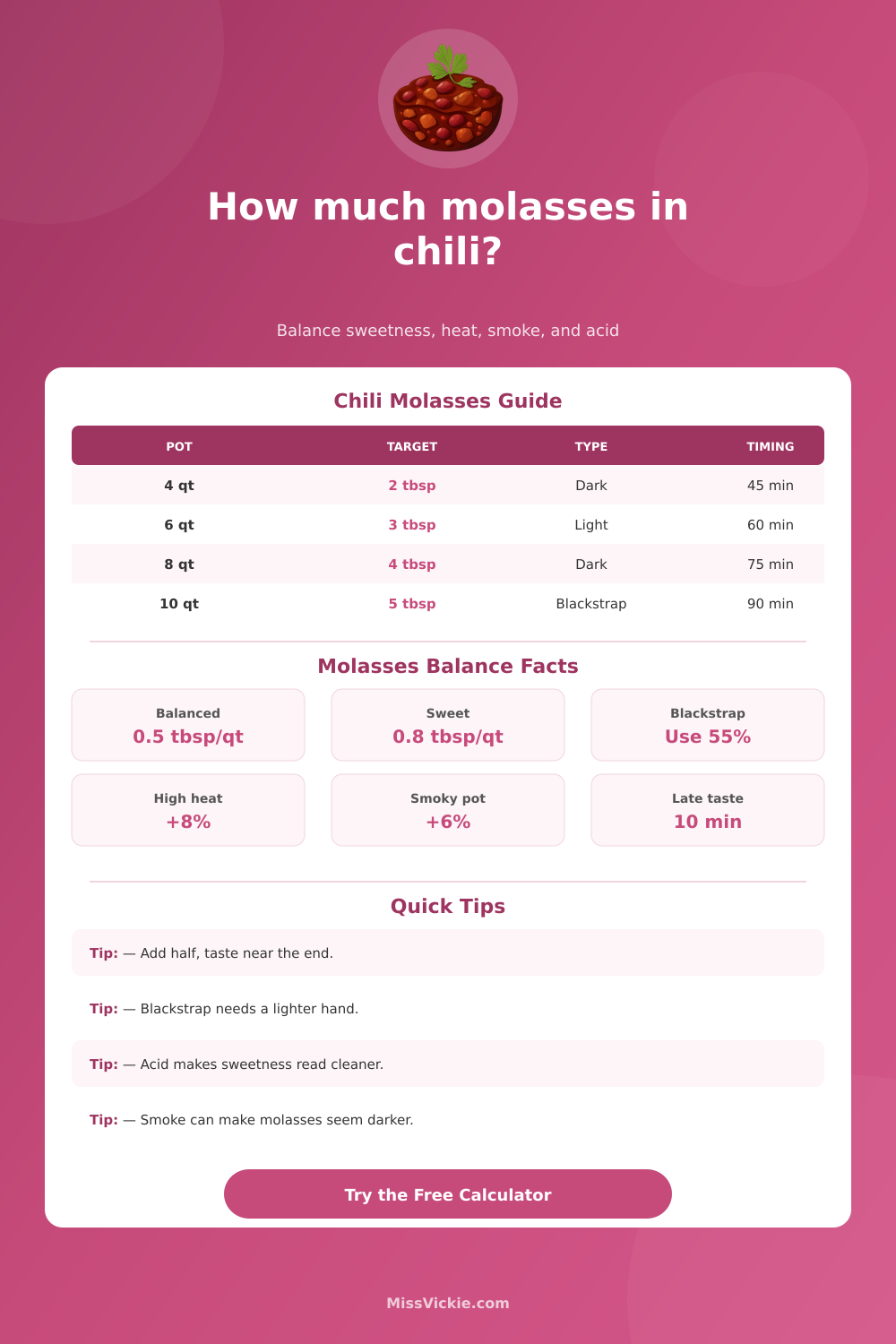
Use 1 to 2 tablespoons for a balanced weeknight chili.
Most batches land near 2.5 to 4 tablespoons.
Start around 4 tablespoons and finish by tasting.
Split the dose so judges taste depth, not sugar.
A dish of chili that’s not right (meaning balanced) isn’t likely missing salt or heat; it’s more likely lacking sweetness. This sweetness could come from tomatoes which tend to be somewhat sour, or from softening chile peppers. It might even be both, with neither being added early enough or at all.
Adding just a few teaspoons of molasses provides that sweetening note, though how much will depend on something different than pot size. The first variable here is what kind of tomatoes are being used: Low acid, like roasted tomatoes, will have a little depth on their own; paste- and bright-crushed types needs help rounding out.
How to Add Molasses to Your Chili
After you choose your tomato base, the calculator does the rest of the work, but do you want that sauce to be sweeter in the direction of barbecue, or more savory? That decision will shape how much molasses there has to shares to hold up all that flavor. Heat and smoke pull in the opposite direction. While heat and smoke bring out the sweetness, they also make a pot of brisket or chipotle look darker. If you’re not careful, that molasses will come through too fast tipping it toward bitter.
While heat and smoke draw out the sweetness, they also darken a pot of brisket or chipotle. If you’re not careful, that molasses will come through to fast, tipping it toward bitter. Pots made milder with just plain chili powder gives the sweet a little more space to reveal itself. Likewise, your finishing acid, whether it’s vinegar or a lime slice, will make whatever sweetness you’re adding taste cleaner. That’s why amount you have in reserve is more important then how much there is altogether.
Another quiet factor is meat and bean weight. A thick pot of browned beef and beans pack more punch than a thin vegetable mix, so the same amount of molasses will hit your taste buds harder. How long it cooks also affects the mix; longer simmering times shrinks the pot’s contents… Deepening the color and flavor, including the molasses. That’s why, at the point when the user adds the initial amount of molasses, the tool wants to know what length of time remains to finish.
Cooks tend to be lazy: Add all the sweetener now. This works for certain sugars, but not molasses. Since short simmers leave less time for the sugars to meld, use half or even two-thirds initially (meaning mix it in and cook with it as part of the tomato and spice mixture), then reserve the remaining amount until ten minutes remain, when you’ve had time to correct salt and any finishing acid. It’s especially worth doing with blackstrap molasses, since that has bitter notes that shows up more quickley than sugary ones.
These are not fixed numbers; they’re only starting points, as the reference tables on the page show. For example, different varieties of molasses has various effects in different sized pots. The same applies to the effects of heat or smoke. What they do is give you an idea of the tradeoffs, so you can use the calculator as a shortcut (rather than guessing) to convert your preferences into a feasible amount.
You are figuring out exactly how sweet the pot can be while still maintaining its savory center. Get this correct and you don’t taste a sweet chili with a touch of savory. Instead, it’s completely savory, through and through.