Molasses in Baked Beans Calculator
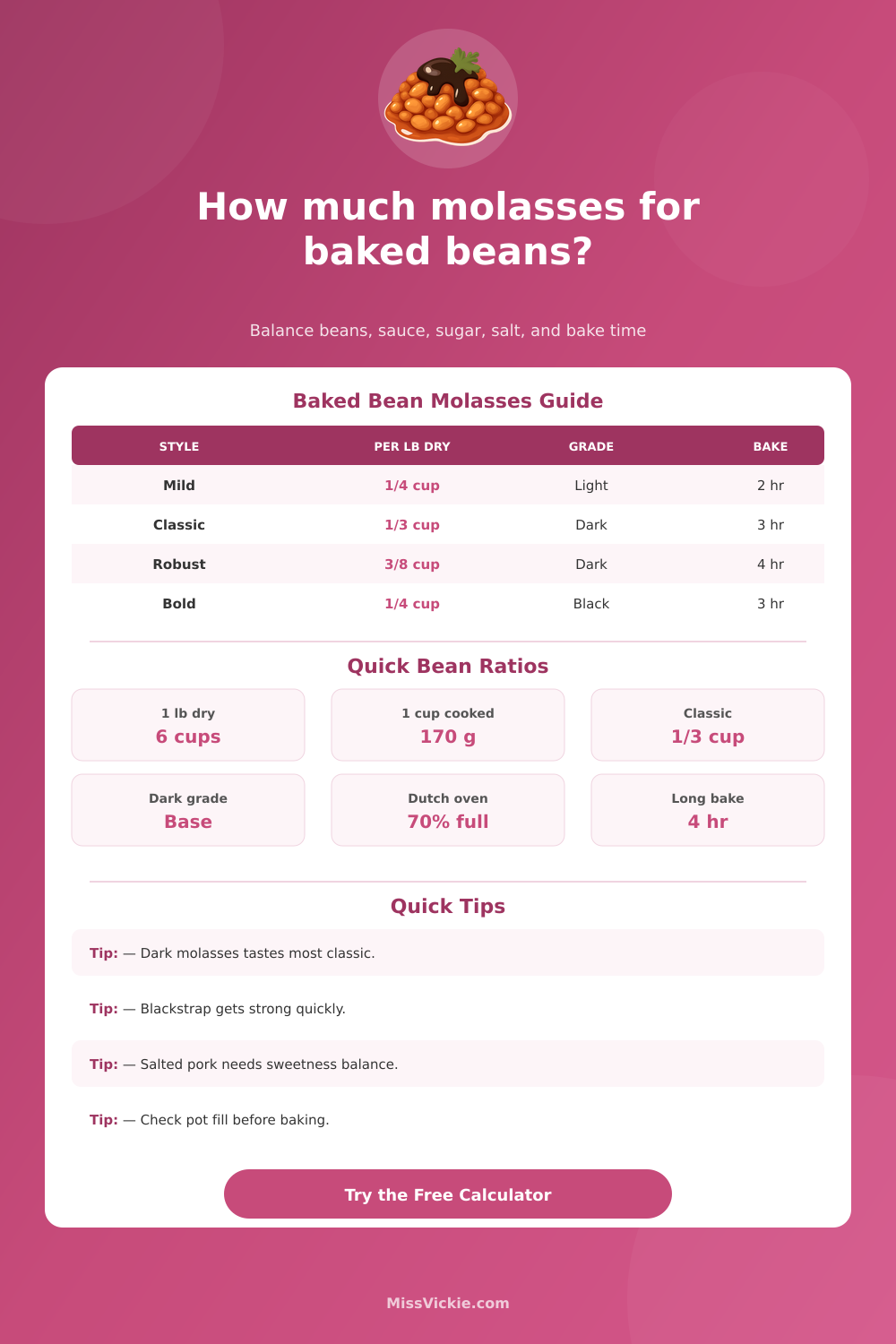
Estimate molasses for baked beans from dry or cooked bean weight, sauce volume, molasses grade, brown sugar already included, pork or bacon saltiness, oven time, tenderness, acidity, sweetness style, and pot size.
Pick a baked bean style, then fine-tune the bean basis, sauce, sugar, salt, bake, acidity, and pot capacity.
Molasses Balance Breakdown
Gentler cane flavor for mild, saucy beans.
Classic baked bean sweetness and color.
Deeper flavor without going bitter.
Strong mineral edge, best in small amounts.
| Bean Batch | Cooked Bean Equivalent | Balanced Dark Molasses | Sweet Style Range |
|---|---|---|---|
| 1/2 lb dry navy beans | About 3 cups cooked | 2 tbsp plus 2 tsp | 3 tbsp to 1/4 cup |
| 1 lb dry beans | About 6 cups cooked | 1/3 cup | 1/4 to 1/2 cup |
| 2 lb dry beans | About 12 cups cooked | 2/3 cup | 1/2 to 1 cup |
| 3 lb dry beans | About 18 cups cooked | 1 cup | 3/4 to 1 1/2 cups |
| 6 cups canned beans | Same as 1 lb dry yield | 1/4 to 1/3 cup | Adjust for canned sweetness |
| Sauce Situation | Molasses Adjustment | Why It Matters | Kitchen Cue |
|---|---|---|---|
| Thick tomato base | Add slightly more | Acidity needs roundness | Glossy, not sharp |
| Lots of bean liquor | Use base amount | Starch and bean flavor support it | Brown sauce clings |
| Brown sugar already heavy | Reduce molasses | Avoid candy-sweet beans | Sweet but not sticky |
| Salty bacon or pork | Nudge upward | Sweetness balances smoke and salt | Salt tastes rounded |
| Long uncovered finish | Reduce slightly | Sauce concentrates as water leaves | Slow spoon trail |
| Bean Tenderness | Best Molasses Timing | Calculator Effect | Texture Cue |
|---|---|---|---|
| Still firm | Add less at first | Small reduction | Beans need more water time |
| Just tender | Add full amount | Base target | Holds shape, creamy center |
| Soft and creamy | Add full amount gently | Slight reduction | Sauce thickens quickly |
| Canned tender beans | Use lower end | Moderate reduction | Short bake, faster glaze |
| Pot Size | Comfortable Filled Volume | Typical Bean Batch | Why Leave Room |
|---|---|---|---|
| 2 quart casserole | 1.4 quart target | 1/2 lb dry beans | Sauce bubbles safely |
| 4 quart Dutch oven | 2.8 quart target | 1 to 1 1/2 lb dry beans | Room for bacon and sauce |
| 6 quart bean pot | 4.2 quart target | 2 lb dry beans | Good long-bake depth |
| 12 quart roaster | 8.4 quart target | 4 to 5 lb dry beans | Stirring without spills |
Baked beans benefit from molasses, which rounds out the acidity while balancing the salty/sweet equation, but more important, it help ensure that a baked bean sauce clings to the beans once long bake is finished. How much is up to you; if you’re starting with canned beans versus dry, how much brown sugar are in your mix, and for how long do you bake the beans? Do it right and pot tastes finished. Do it wrong and the beans might be more sweet then flat. So there’s a lot that goes into making the final amount, each of those options make a difference.
Once you’ve selected your sweetness style, molasses grade, sauce volume and bean weight (since a batch of dry navy bean expands to roughly six cups once cooked), the calculator does the rest. Because it knows what volume you’re starting with, it handles math for you. The addition of sauce will add acidity and liquid, which nudges the molasses amount upward to keep the sauce from tasting too sharp. It also accounts for salty items like ham or bacon, increasing overall amount so that salt doesn’t stand out on its own. Longer bakes means more concentrated sauce; shorter times mean more sweetness remain, so it backs off the total just enough to prevent stickiness.
How to Use the Molasses Calculator
It’s important to notice, though, that type of molasses matter as well. Light molasses will give a subtle hint of cane and won’t clash if you’re already using maple or brown sugar. If it’s dark molasses you’re after (and it usually is with traditional baked beans), it deliver plenty of color and character. More robust or blackstrap varieties adds even more mineral punch, which the calculator adjust downward to avoid bitterness in the beans themselves.
It also depends on how tender your beans are. Firm beans need more time to soak up sweetness, so they can absorbs more. Canned, pre-softened beans need less seasoning, or else everything will thicken up too quickly under heat. When you’re guessing by eye, most people over-sweeten. You add in what feels like a generous amount, only to find out later that it drowns out the salt and smoke.
By calculating each step, the calculator shows not only total molasses but also how much of your pot is filled. Because the beans and sauce will expand and bubble toward end of the bake, that second number; that’s the fill percentage, matters. What looked full when cold might overflow during uncovered finish. But what’s really useful is seeing how the recommendation adjust if you tweak just one variable at a time.
Adding a pinch of salt to make the pork saltier? Yup, that goes up. Holding everything else constant while you double the oven time instead? That pushes overall down slightly. Tossing in some extra tomato sauce? The acidity factor tweaks the overall upward to avoid making the sauce too sharp-tasting. All those little tweaks, that’s what can turn beans that feel like they’re missing something into beans that taste complete.
After using the calculator a couple of times, you begin to learn its reasoning. Even as you’re cooking without measuring, you’ll notice same trade-offs. You should of used it more often.