MissVickie precision oil lab
Olive Oil Converter
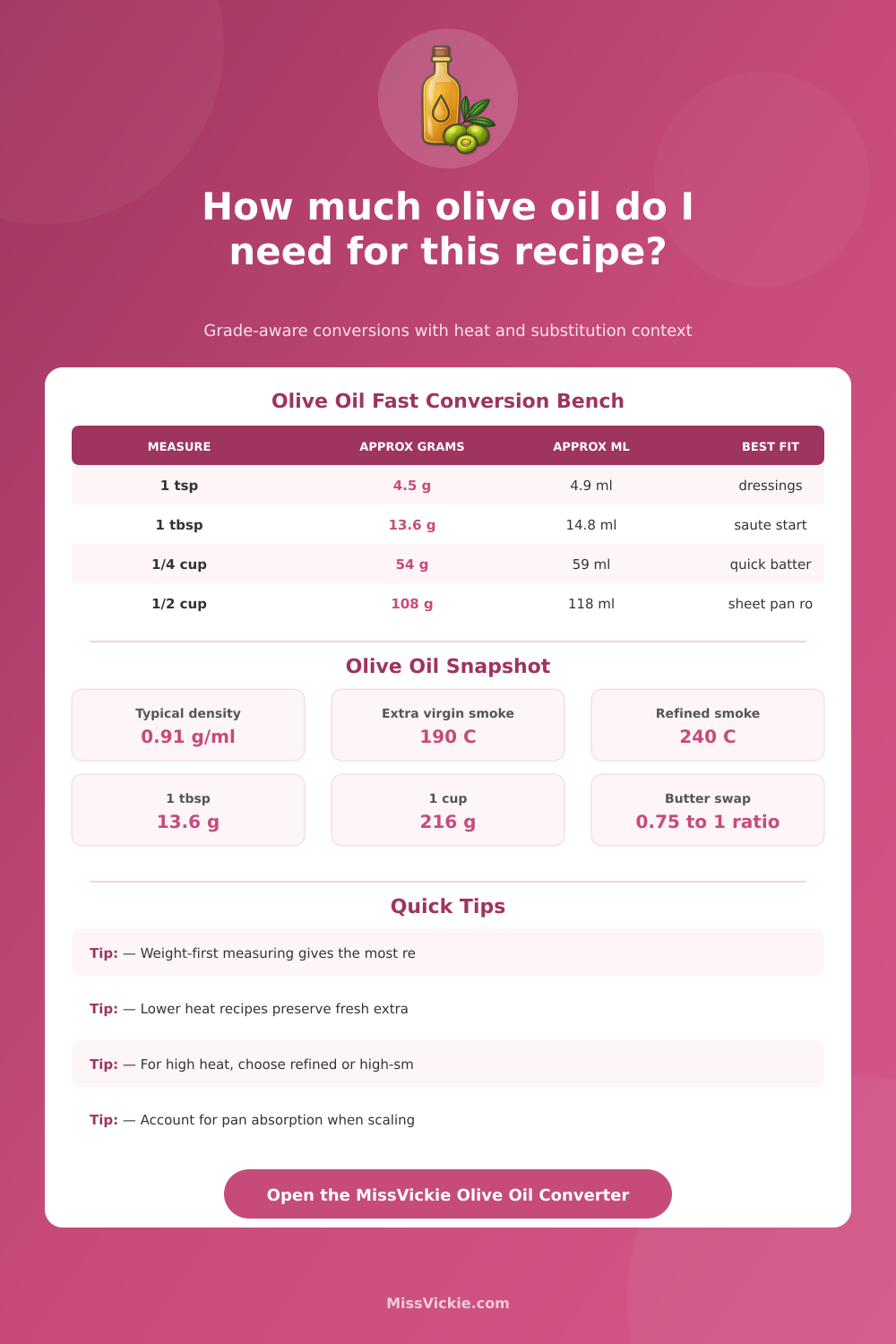
Bridge weight and volume with grade-specific density, heat planning, recipe scaling, and kitchen-friendly rounding so your olive oil prep stays accurate from tasting spoon to production batch.
Each preset sets grade, cooking intent, temperature, conversion direction, serving scale, and expected process loss. Use them as quick starting profiles, then fine tune.
Full Breakdown
Values are practical kitchen planning values that combine published ranges and handling behavior. Density changes are small but meaningful for large-batch scaling.
| Grade | Cool Cellar (g/ml) | Room Temp (g/ml) | Warm (g/ml) | Near Cookline (g/ml) | Flavor Profile |
|---|---|---|---|---|---|
| Extra virgin | 0.921 | 0.916 | 0.911 | 0.905 | peppery, grassy, fruity finish |
| Virgin | 0.920 | 0.915 | 0.910 | 0.904 | fruit-forward with softer bitterness |
| Classic pure | 0.918 | 0.913 | 0.909 | 0.903 | balanced neutral olive tone |
| Light tasting | 0.917 | 0.912 | 0.908 | 0.902 | milder aroma for baking |
| Refined | 0.916 | 0.911 | 0.907 | 0.901 | clean and neutral |
| Pomace | 0.915 | 0.910 | 0.906 | 0.900 | budget high-heat utility |
| Infused | 0.922 | 0.917 | 0.912 | 0.906 | aromatic herb or garlic notes |
| Grade | Approx Smoke Point (C) | Sweet Spot (C) | Best Uses | Avoid Pattern |
|---|---|---|---|---|
| Extra virgin | 190 | 20-180 | finishing, dressings, light saute | prolonged high-heat sear |
| Virgin | 205 | 20-190 | marinades, pan sauces, medium saute | very hot shallow fry |
| Classic pure | 215 | 25-200 | general cooking, roasting | smoke-line wok style heat |
| Light tasting | 220 | 25-205 | baking, mild flavor saute | long smoke exposure |
| Refined | 240 | 25-225 | higher heat saute, shallow fry | none for typical home ranges |
| Pomace | 238 | 25-220 | bulk roasting and line cooking | delicate finishing drizzle |
| Infused | 170 | 20-155 | cold applications and late finish | high heat due to infusion solids |
Use this when converting recipes to olive oil. Ratios are practical starting points, then adjust texture with liquid or flour as needed.
| Original Fat | Olive Oil Ratio | Texture Impact | Compensation Move | Recommended Grade |
|---|---|---|---|---|
| Butter in cake batter | 1 cup butter to 3/4 cup oil | softer crumb, moister center | reduce other liquid by 1 to 2 tbsp | light tasting or classic |
| Butter in muffins | 1:0.8 | more tender bite | add 1 tbsp yogurt if batter seems thin | light tasting |
| Canola in vinaigrette | 1:1 | richer mouthfeel | increase acid 5 percent for brightness | extra virgin |
| Vegetable oil in roasting | 1:1 | similar browning | salt just before roast for less purge | refined or classic |
| Ghee in saute | 1:0.9 | lower buttery notes | finish with butter knob if desired | refined |
| Coconut oil in quick bread | 1:1 by weight | less set firmness when cool | chill loaf fully before slicing | light tasting |
| Sesame oil in marinade | 1:0.7 olive + sesame accent | lighter aroma profile | keep 10-20 percent sesame for identity | virgin |
| Bacon fat in pan potatoes | 1:0.85 | cleaner finish, less smoky | add smoked paprika for character | pomace or refined |
| Dish Type | Portion Count | Typical Finish Per Dish | Total Olive Oil | Grade Direction |
|---|---|---|---|---|
| Soup bowls | 4 | 1 tsp each | 20 ml | extra virgin peppery |
| Caprese plates | 6 | 1.5 tsp each | 45 ml | extra virgin fruity |
| Roast vegetables tray | 8 | 2 tsp each | 80 ml | classic or refined |
| Pasta bowls | 10 | 1 tsp each | 50 ml | virgin or extra virgin |
| Grilled fish plates | 12 | 0.75 tsp each | 45 ml | citrus infused |
| Focaccia squares | 16 | 0.5 tsp each | 40 ml | classic olive oil |
High aroma impact, ideal for dressings and plate finishing where flavor should stay front and center.
Solid middle path for marinades and medium heat work with noticeable olive character.
Useful when high-heat tolerance matters more than signature olive flavor.
Cost-effective for large tray operations, line cook prep, and high-volume roasting workflows.
Olive oil densities and olive oil temperature impact an amount of olive oil to use in a recipe. Many cook use volume measurements to add olive oil to food. However, volume measurements can be inaccurate because the weight of olive oil changes according to it density.
The density of olive oil change depending on its temperature. Cold olive oil is thicker than warm olive oil and is, therefore, more denser. Warm olive oil is thinner than cold olive oil and is, therefore, less dense.
Weigh Olive Oil to Get the Right Amount
Because the density of olive oil changes, a tablespoon of olive oil when cold will weigh more then a tablespoon of warm olive oil. Another factor that impact the performance of olive oil in food is the grade of the olive oil. Extra virgin olive oils contains more natural compounds in the oil than refined olive oils.
These natural compounds makes extra virgin olive oil denser than refined olive oils. Pomace olive oil, which is extracted from the residue of olive presses, is lighter than extra virgin olive oil. Depending on the heat of the food being cooked, you can use a different grade of olive oil.
Extra virgin olive oil has a lower smoking point and is best used in food finishing and low heat cooking. Pomace and refined olive oils will have a higher smoking point and are best used in high heat cooking. The amount of olive oil needed in a recipe will need to be account for when scaling the recipe.
Some of the losses of olive oil in the cooking process need to be accounted for. The cooking pan will absorb olive oil. Olive oil can be wiped off the food with a towel.
These process loss are accounted for when determining the amount of olive oil to use in a recipe when cooking for many people. Olive oil can be substitute for other fat in food. Olive oil can be used for butter in cakes.
Three quarters of the volume of butter is replaced with olive oil to make cakes. Other liquids must be reduced when olive oil is used for butter in baking recipes as olive oil could otherwise make the cake texture too gummy. For roasting recipes, olive oil can be substituted for vegetable oil.
However, olive oil will provide better browning of the food. However, dont use extra virgin olive oil in delicate baked goods as it will overpower the other flavor in the food. Mistakes in adding olive oil to food can be avoided by measuring the weight of the olive oil in grams.
People make mistakes with olive oil when measuring it by volume with tablespoon measurement because the density of the olive oil can change when the oil is colder than room temperature from the refrigerator. People also make mistakes in using olive oil when they do not account for the process losses of the oil. To avoid these mistakes in the kitchen, always weigh olive oil in grams and convert the weight to tablespoons only if you need to tell others how much olive oil to use in a recipe.
Using the weight measurement in grams will ensure the correct amount of olive oil regardless of the temperature or grade of olive oil used in the cooking recipe.