Mini Meatloaf Cooking Time Calculator
Estimate mini meatloaf bake time from mini count, weight per loaf, muffin tin or freeform setup, meat blend, loaf height, oven heat, glaze timing, starting temperature, target center temperature, and rest carryover.
🍲Mini meatloaf presets
Choose a common mini meatloaf setup, then adjust count, per-mini weight, height, pan style, glaze timing, and target temperature.
⚖Units
🥩Mini loaf batch and shape
🔥Oven, glaze, target, and rest
Mini meatloaf timing estimate
A lower, lighter mini cooks faster than a tall dense cup.
Calculation breakdown
📊Mini meatloaf size guide
Small cup or slider-style mini; check early.
Classic individual portion for family dinners.
Hearty oval mini with more center depth.
Small loaf-pan size; closer to a short loaf.
🌡Reference temperatures and timing
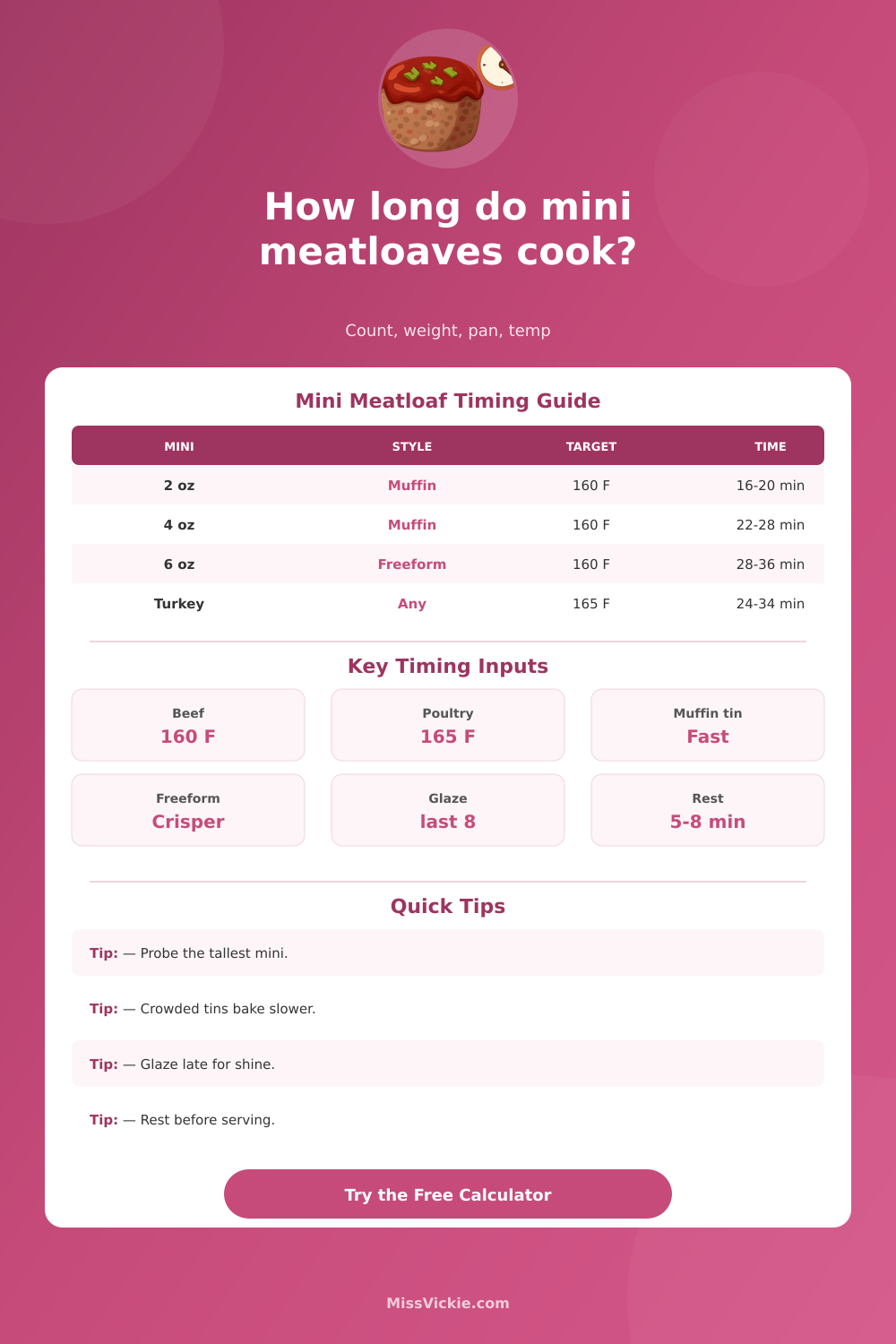
| Mini meatloaf setup | Typical weight | Oven | First check | Expected range |
|---|---|---|---|---|
| Small muffin tin beef minis | 2 to 3 oz each | 375°F | 14 to 16 min | 16 to 22 min |
| Standard muffin tin meatloaves | 4 oz each | 375°F | 18 to 22 min | 22 to 30 min |
| Freeform oval minis on sheet pan | 5 to 6 oz each | 375°F | 24 to 28 min | 28 to 38 min |
| Mini loaf pan cavities | 6 to 8 oz each | 350°F | 30 to 34 min | 34 to 46 min |
| Ground turkey or chicken minis | 3 to 5 oz each | 375°F | 20 to 24 min | 24 to 34 min |
🍽Blend, glaze, and rest notes
| Input | Mini meatloaf effect | Safe or practical target | Cooking note |
|---|---|---|---|
| Ground beef or beef-pork | Moderate heat transfer | 160°F center | Rest 5 to 8 minutes so juices settle. |
| Ground turkey or chicken | Often leaner and firmer | 165°F center | A panade helps keep small loaves moist. |
| Early sweet glaze | Adds surface browning | Watch after 10 minutes | Use a thin coat early if the oven is hot. |
| Final glaze brush | Glossy finish | Last 8 to 12 minutes | Best timing for ketchup, brown sugar, or BBQ glaze. |
| Carryover cooking | Small but useful | About 2 to 5°F | Taller or heavier minis carry over more. |
💡Mini meatloaf cooking tips
Probe the right mini: Check the tallest or most crowded mini first. Edge cavities and smaller freeform loaves usually finish before the dense center pieces.
Glaze with timing: For shiny glaze without scorching, brush most sweet glazes on during the final 8 to 12 minutes, then bake until the center reaches the target temperature.
The dilemma with regular meatloaves is that they are cooked all together, and you’d prefer to have separate servings that cook quick, brown, and stay moist inside. With mini ones, each is its own height and surface area so some might be done while others aren’t even halfway there.
It’s not as much of a matter of time as it is how everything are arranged on pan, and how things is shaped. Bigger is also better. When it’s time to get that burger hot in the middle, there’s less distance between outer crust and the interior of your patty, which is why a two-ouncer cooks about as quickly than a burger does when it gets its first bite. With a six-ounce oval, you’ve got even further for the center to travel before it reach temperature; just put those numbers into the calculator above and let it handle the math, you don’t want to be guessing about what one additional ounce will add to cooking time.
Easy Tips for Cooking Meatloaf
Height functions similar. Flat-out burgers on sheet are getting cooked through from all directions simultaneously, whereas taller ones retains their heat longer. How the metal conducts heat changes result: The pan matters. Crowded tins and silicone slow it all. Freeform loaves on an open sheet will brown sooner on top. However, they risk drying out at edges if you time them alone. Choose exact set-up from the list, and that initial temp check will work. From there, just monitor rest with a probe.
Another level: Meat blend. Blends of beef and pork has more fat and will be safe when finished to 160 degrees. Chicken and turkey require 165. When you remove tray from heat, the variation becomes apparent with carryover cooking. Leaner mixes reach doneness just a few minutes earlier, but offer fewer seconds of buffer time should of you step away.
Apply a glaze during the last minute or two; not only does it give some extra color without charring, it provides a bit more buffer time due to layer of sugar on top. Many of us don’t realize how interaction between starting temperature and oven heat works. It takes fridge cold mix longer to get there then one that’s been out on the counter for twenty minutes. Baking two trays at same time will extend your time versus baking them one by one, but 350 degrees yields more control than 375 does. These factors is folded into the calculator. That means that output isn’t any one minute mark, but rather a practical range and a recommended first check.
With minis, rest time after baking isn’t as important as with a full loaf, but it still help the texture. Let juices settle five to eight minutes before serving or slicing. The thermometer in the highest mini is your real protection. Center temp tells you that dinner is actualy ready; timing you has just a window.