
Before popping something into the microwave, make sure to know its capabilities. For most of us, the microwave is just a random box that somehow warms our food. That’s wrong. The microwave are an exact machine and needs to be used that way.
How it’s arranged, what level of power it’s running at, and how long it cooks for determines if it will cook the food evenly or not. Don’t leave it up to chance.
Simple Microwave Cooking Tips
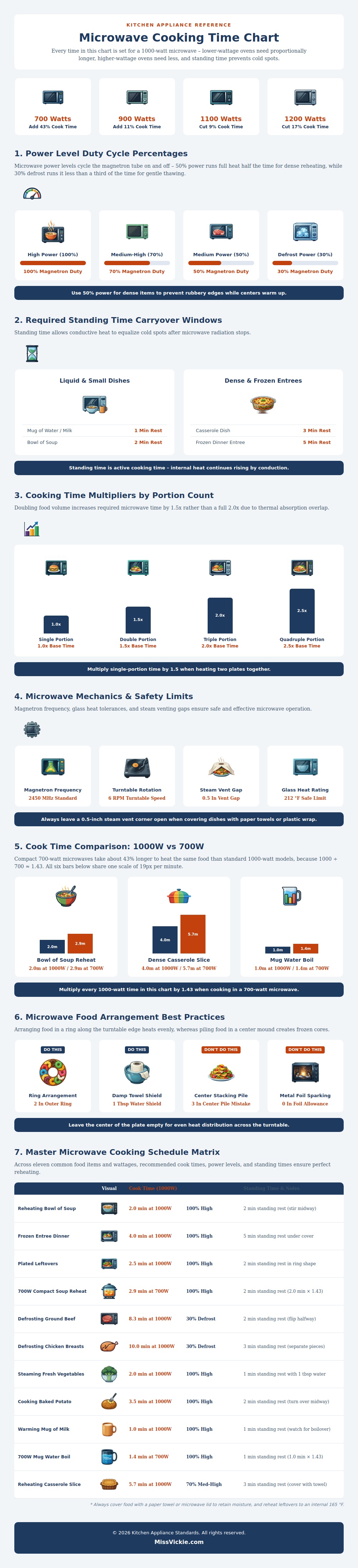
How does wattage affect cooking time? The average microwave operate at one thousand watts. Small microwaves and older models typically operates at seven hundred watts.
What does that mean for you? That means if you have a lower-wattage model, it puts out less power. To reach the desired outcome, simply add approximately forty-three percent to the cooking time.
Why? Because it’s working more slowly. Don’t worry. You don’t have to be good at math to do this. Just get to know how much power your appliance gives off.
That means the microwave put out less power. To reach the goal, simply add approximately forty-three percent to the cooking time. Why? Because it’s working more slowly. Don’t worry, you don’t have to be good at math to do this. Just familiarize yourself with how much power your appliance gives off.
A microwave doesn’t distribute energy evenly. It’s not as if your whole microwave cavity get heated all at once. Rather, it pulses energy as the turntable rotates the food.
Because of that rhythm, how you arrange your food can make a difference. If it’s in a dense mound in the center, it won’t reach into the middle. By spreading out your food in a ring, however, you give the energy something bigger to work on, more surface area to heat. That small adjustment will result in a better-looking meal in the end. You’re just making a more efficient pathway for heat to travel through the food.
You have to let it stand. Microwaves require standing time in order to complete the re-heating process. Once the microwave turns off, there’s still some cooking occurring. The radiation has stopped, but the heat move through the food, removing cold spots and evening out the temperature.
If you skip the standing time, it messes with the texture of your meal. It throws off the momentum of the heating process.
Soup? Two minutes. A frozen entree? Five minutes. During that time, the inside warms up so that there’s no explosion or toughening of the dish. You should of let it stand more.
Speed isn’t everything: Power controls are better than speed settings. Not all foods need high power. If you’re defrosting something dense, like a whole chicken, you’ll want to run it around 30% so that it gets all of the way through without cooking the outer edges before the inside has heated up enough.
Are you thawing something partially frozen? Again. Use lower power, like 30%, so that the outer portion can gradualy spread its warmth into the still-frozen interior. You don’t want your chicken defrosted on the outside but uncooked in the center.
Warming Food: Cover It Up
The better you cover your food, the better it’ll be when you reheat. Cover your dish with either a microwave-safe lid or a damp paper towel. This retains moisture and creates a nice little cloud of steaming goodness that warms your dinner more gentle.
Note: Always leave a tiny bit of an opening so steam can release! That way you don’t end up with soggy or dry food.
Respecting the physics of heating food with your appliance is respecting them with intention. Take into account wattage, plan for standing time, arrange the food in a ring, and you’ve got yourself a reliable appliance that delivers evenly warmed food, no cold spots here. All good food deserves proper reheating. It’s actualy important to respect the moddern machines.
You should of known how much power the microwave can absorbs. Making sure you dont make mistakes is better then rushing through it with furnitures in the way. Based off this info, everything will be more comfortabley cooked.