Meatloaf Cooking Time Calculator
Estimate meatloaf oven time from meat weight, loaf dimensions, meat blend, binder moisture, oven temperature, pan or freeform shape, glaze timing, starting temperature, target internal temperature, and rest time.
🍲Meatloaf timing presets
Start with a real meatloaf setup, then adjust the weight, dimensions, blend, glaze, and target temperature for your pan.
⚖Units
🥩Loaf size, shape, and meat mix
🧂Moisture, glaze, oven, and finish
Meatloaf baking estimate
Timing breakdown
Wider, taller loaves need more time because the center heats more slowly.
📌Meatloaf quick reference
Minimum reference for ground beef, pork, veal, and lamb meatloaf.
Use this for turkey, chicken, or any mixed loaf containing poultry.
A standard loaf pan usually fits about 2 pounds of mixture.
Rest helps slices hold together and allows carryover to finish.
🌡Safe temperature and timing table
| Meatloaf style | Typical size | Safe internal reference | Estimated 350°F time | When to glaze |
|---|---|---|---|---|
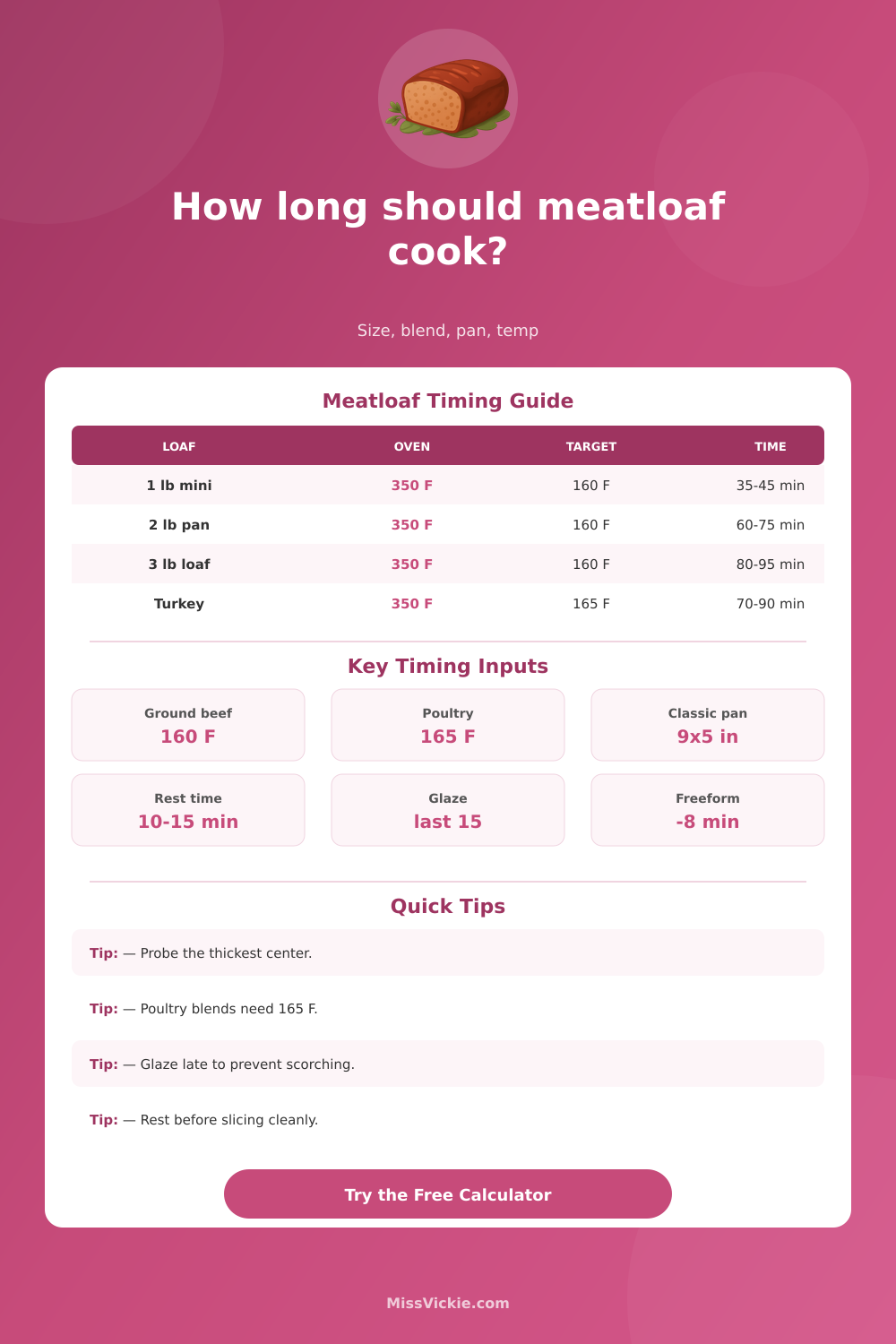
| Classic ground beef loaf | 2 lb, 9×5 in pan | 160°F center | 60 to 75 minutes | Final 15 minutes |
| Beef, pork, and veal blend | 2 to 2.5 lb loaf | 160°F center | 65 to 80 minutes | Halfway or final 15 |
| Ground turkey or chicken loaf | 2 lb, moist binder | 165°F center | 70 to 90 minutes | Final 15 minutes |
| Freeform sheet-pan loaf | 2 lb, lower profile | 160°F or blend minimum | 50 to 65 minutes | Final 10 to 15 minutes |
| Mini meatloaves | 4 to 6 small loaves | 160°F or blend minimum | 25 to 40 minutes | Final 8 to 12 minutes |
| Stuffed or cheese-center loaf | 2.5 lb deep loaf | 160°F or 165°F with poultry | 75 to 100 minutes | Late glaze after center warms |
📏Shape and pan effect table
| Setup | Heat path | Timing effect | Best probe spot | Notes |
|---|---|---|---|---|
| Metal loaf pan | Bottom and sides | Baseline | Middle from top | Classic browned edges and steady timing. |
| Glass or ceramic pan | Slower side heat | Add 5 to 10 minutes | Center, avoiding pan | May brown sides after center catches up. |
| Freeform sheet loaf | More exposed surface | Subtract 5 to 12 minutes | Thickest center ridge | Lower shapes cook faster than tall pans. |
| Muffin tin meatloaves | Small cavities | Much faster | Center of one muffin | Check early because carryover is small. |
| Deep crowded pan | Insulated center | Add 10 to 20 minutes | Deepest middle point | A tall dense center needs patience. |
💡Meatloaf timing tips
Thermometer rule: Insert the probe into the thickest center of the loaf, away from the pan wall or any cheese pocket, and keep baking until the safe reference for the blend is reached.
Glaze rule: Sugary ketchup, barbecue sauce, or brown sugar glaze usually behaves best in the final 10 to 20 minutes, after the loaf has set.
The trick to getting your timing correct isn’t necessarily adhering to one rule but knowing which variable actualy affects cooking time. For example, a two-pound loaf cooked in regular-sized pan will cook different than the same amount of dough shaped freeform on a sheet pan. Adding glaze or binder moisture can also make a difference; a turkey blend has different safety and moisture needs then an 80/20 ground beef combination. If you begin adjusting your starting temp and pan type… well, it all starts to add up fast.
When you plug in your real-world values, however, the math is done for you (there’s no more guessing what each change does). This include how your pan holds heat, the density and shape of the loaf, the desired final internal temp of whatever blend of meat you’re cooking, and whether that glaze will go on early or late in the cook.
Why Use This Cooking Timer Tool
Why do those matter? All of these factors impact how long it takes for inside to reach safe temperatures while keeping the outside from becoming dry and overcooked. A denser, taller loaf in a deep dish take longer to bake than a flat freeform version of equal mass. The app knows this and adjust its timing estimate to match instead of making every recipe fit within the same window.
Everyone relies too much on time and not enough on their thermometer. It’s great. But then the mixture changes, the pan changes, or the oven runs a bit warm (or cold). Then it can be done 15 or 20 minutes sooner or later for the same weight of meat. The calculator accounts for this reality and allow you to input the type of binder, the starting temperature, and the oven setting so the estimate is tied to your specific setup based off some generic average.
Small choices make big differences, such as timing of glazes. If you glaze too early, your sugar might burn… Or at least darken, before the inside finish cooking. Too late, and the loaf will have already begun to set, making it less likely to get scorched on top. The tool allow you to choose whether you intend to glaze midway through. It incorporates variables like expected temperature of the glazed surface and how long it will take for the remaining interior to cook through (and vice versa).
There’s even an option to include some resting time between bake and consumption, important not only for final temperature but for carrying over cooking time and improved textural development. Short rests give juices time to redistribute and can increase your final internal temp by several degrees without any more oven exposure.
Practically speaking, the largest differences most home cooks will experience is caused by shape and pan type: metal conducts heat better than ceramic or glass; muffin tins cook much quicker than a single large loaf of meatloaf; and freeform shapes gives more surface exposure. The calculator uses these factors to estimate when a recipe will be done, helping you avoid surprises caused by your pan setup. On the other hand, it shows how far your entered number is from the safe minimum for that blend. This helps avoid undercooking if someone enter a lower number than what the blend really needs.
But again, value of a timing tool lies in translating all those variables (the amount of binder moisture; the oven temperature; the size of the object) into one actionable window, instead of having to juggle them all in your head. You should of known that using this makes it easier. You begin to learn what’s important in your particular kitchen; the impact of height, or temperature, or binder moisture, and then you can do it again with the next piece of meatloaf (or whatever), whether it’s a different recipe or not.
You’ll find that most moddern kitchens need this tool.