Meatloaf Cooking Time Per Pound Calculator
Estimate meatloaf oven time from pounds of meat, minutes per pound, loaf height, oven temperature, beef, turkey, and pork mix, pan material, loaf format, glaze delay, target temperature, and carryover.
🍴Meatloaf timing presets
Pick a common loaf shape, then adjust the actual meat weight, height, pan, glaze delay, and target internal temperature.
⚖Units
🥩Meat, loaf size, and per-pound baseline
🔥Oven, pan material, loaf format, glaze, and target
Meatloaf cooking time estimate
Timing breakdown
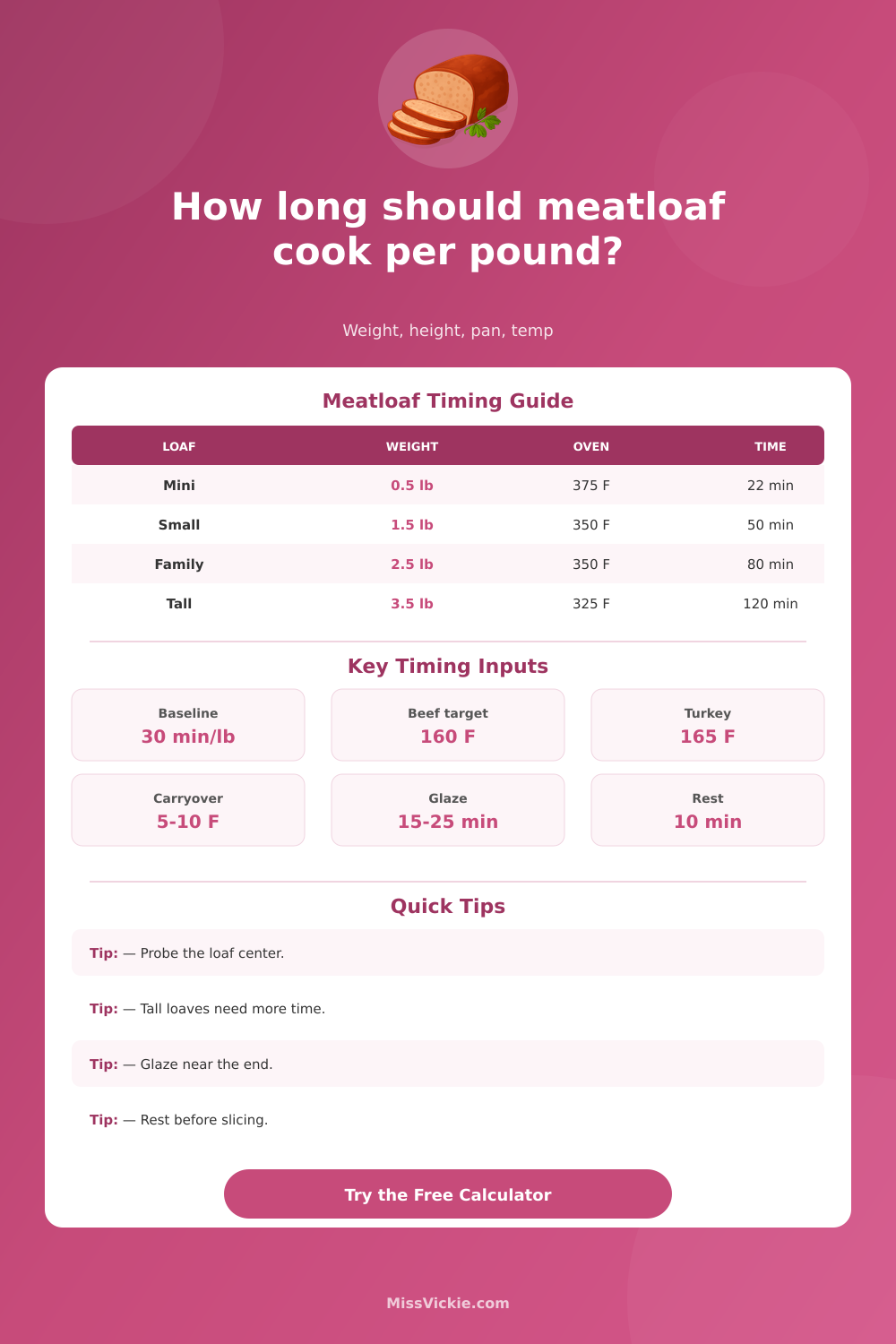
📊Meatloaf per-pound timing reference
Low, wide beef loaf at 350°F.
Standard 9x5 beef or pork mix.
Tall, dense, glass, or turkey loaf.
Typical rise after removing from the oven.
📋Target temperature and shape table
| Meatloaf setup | Typical weight | Target final | Starting estimate |
|---|---|---|---|
| Mini loaves or muffin tin meatloaf | 0.25 to 0.75 lb each | 160°F beef or pork, 165°F poultry | 18 to 28 minutes at 375°F |
| Small freeform beef loaf | 1 to 1.5 lb | 160°F final, pull lower for carryover | 35 to 55 minutes at 350°F |
| Standard 9x5 beef and pork loaf | 2 to 2.5 lb | 160°F final after resting | 65 to 90 minutes at 350°F |
| Lean turkey or chicken meatloaf | 1.5 to 3 lb | 165°F final after resting | 60 to 100 minutes at 350°F |
| Tall family loaf in glass or ceramic | 3 to 4.5 lb | 160°F to 165°F by meat mix | 95 to 150 minutes at 325°F to 350°F |
🥘Pan and glaze adjustment table
| Input | Faster or slower | Calculator effect | Thermometer note |
|---|---|---|---|
| Sheet pan freeform loaf | Faster | More surface area, less side insulation | Probe from the side into the thickest center |
| Glass or ceramic loaf pan | Slower center, strong side heat | Adds time for dense loaves | Check the center, not the browned edge |
| Dark metal or cast iron | Faster browning | May shorten oven time slightly | Shield or glaze later if top darkens early |
| Glaze delayed 15 to 25 minutes before finish | Balanced | Protects sugar from overbrowning | Start checking temperature before glazing |
| Stuffed or cheese filled loaf | Slower and less predictable | Adds a density and safety margin | Probe both meat and filling zone |
💡Meatloaf timing notes
Use time as a checking window. Meatloaf timing per pound changes with height, pan material, and oven accuracy, so the center thermometer reading decides doneness.
Glaze after the loaf is mostly cooked. A sweet glaze usually works best in the last 15 to 25 minutes, when the center is close enough to finish without burning the topping.
Unless you’re going to use one of the fancy meatloaves featured on my site (which I’ll get to later), meatloaf looks like a no-brainer…until you realize that the challenge lie in getting the center to hit a safe temperature while the edges stay moist. It’s a very small margin when you try to trust a one-size-fits-all formula. A good estimate is cooking by the pound, but this seldom factors into the actual oven action once you’ve got your loaf place inside.
Height, though, tends to be the largest variable. Even if you have a big loaf and another that’s short but wide (so they’re roughly equally heavy), the heat will travel through the wider loaf more quicklier than it does through the taller, narrower one. You’ll see this in the interior far sooner than the exterior where two similarly weighted meatloaves can cook up visibly differently on either end.
Why Weight Is Not Enough for Cooking Meatloaf
Once you know the true height along with the weight, the math take over, and the calculator above handles it so that you don’t have to guess what effect shape has on the timeline. The same is true of oven temperature. Hotter temperatures means shorter cooking times overall, but create a bigger difference between the center and outer edges. Cooler temperatures extend the total cook time, but allow heat to reach the center more evenly. Rather than having to memorize two sets of instructions (one for “high” and one for “low”), the tool provides a way to tweak for this tradeoff directly.
One final twist is pan itself. Different materials conduct heat differently. Glass retains heat longer around the edges. Metal transfers heat quickly. A sheet pan with a freeform loaf loses heat from more exposed surfaces at the same time. These all shift the rate at which center will catch up.
The meat blend changes your goal. Beef and pork blends can finishes a little lower than poultry-based loaves, not only for food safety reasons but because of different expectations on the post-pan carryover rise. That’s something the calculator always reminds you of, that pulling to whatever temp you set really reflects what’s in the pan, not some arbitrary number.
But not many people realize that moisture and binder is as important here. The bread-and-milk panade makes for a moist but still-tender loaf while vegetable-rich ones have the same effect: All that additional water takes longer to heat through. Such information isn’t usually included on a simple-per-pound chart, but it helps you understand why two similarly sized loaves can behave different.
Similarly, there are other real-world decisions that can affect glaze time and do not depend purely off weight. Many cooks adds their sugar after a brief period of baking so it doesn’t burn. You can specify that wait time here; it shows when the loaf is close to finishing without over-browning the surface.
A timing tool is only as good as its ability to reduce several variables into a single do-able window. The actual temperature reading confirm the sweet spot in the middle, but knowing where it falls helps narrow your focus. If you eventually match the number to the loaf you baked then the guessing gets less wild and your meatloaf becomes incrementally more reliable.
You should of used this tool earlier.