🍯 Mead Stabilizer Calculator
Calculate potassium sorbate, potassium metabisulfite & Campden tablet amounts for any batch
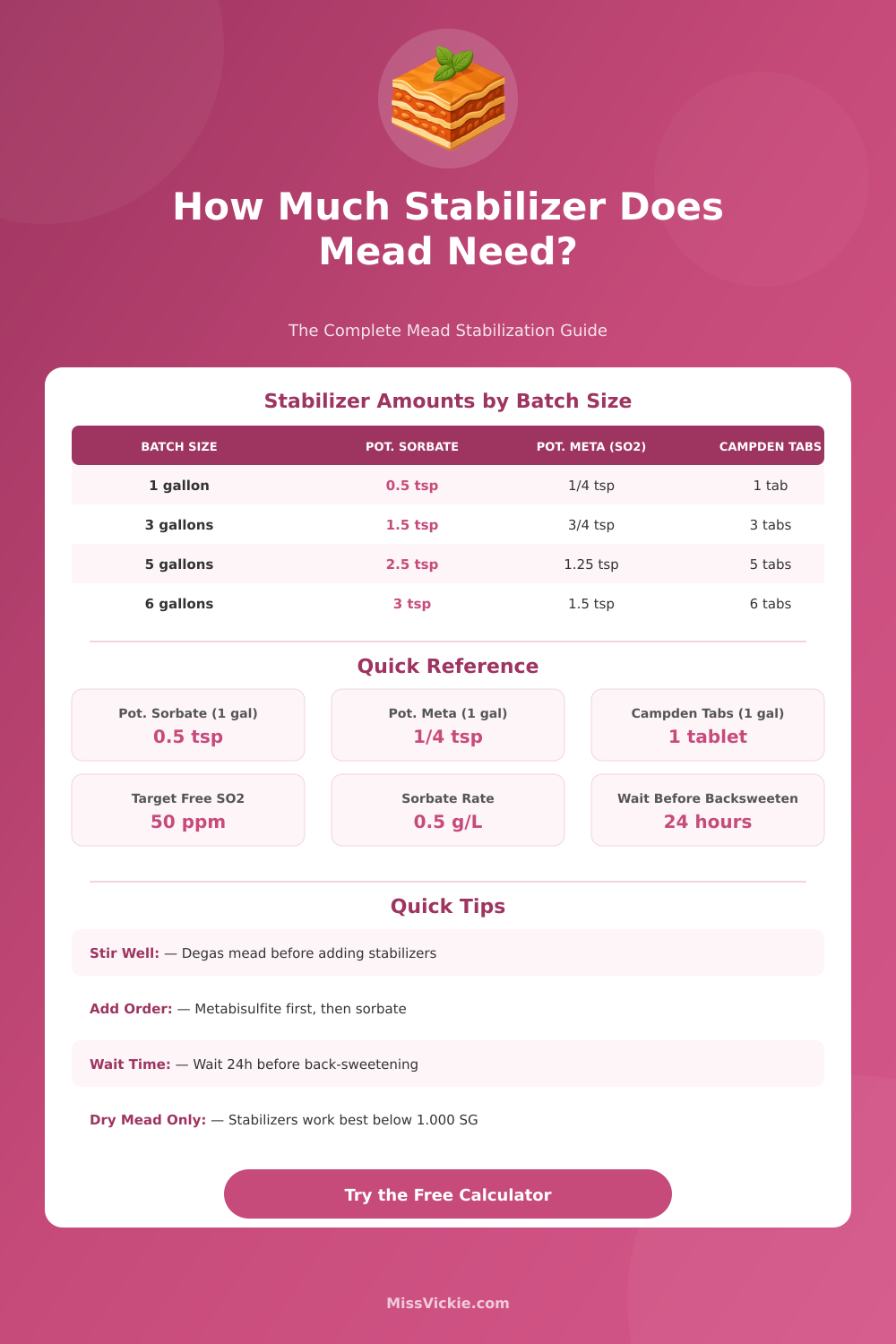
| Batch Size | Pot. Sorbate (tsp) | Pot. Sorbate (g) | Pot. Meta (tsp) | Campden Tabs |
|---|---|---|---|---|
| 1 gallon (3.8 L) | 0.5 tsp | 1.9 g | ¼ tsp | 1 tab |
| 2 gallons (7.6 L) | 1 tsp | 3.8 g | ½ tsp | 2 tabs |
| 3 gallons (11.4 L) | 1.5 tsp | 5.7 g | ¾ tsp | 3 tabs |
| 5 gallons (18.9 L) | 2.5 tsp | 9.5 g | 1¼ tsp | 5 tabs |
| 6 gallons (22.7 L) | 3 tsp | 11.4 g | 1.5 tsp | 6 tabs |
| 10 gallons (37.9 L) | 5 tsp | 18.9 g | 2.5 tsp | 10 tabs |
| 15 liters | 1.97 tsp | 7.5 g | 0.99 tsp | 4 tabs |
| 19 liters (5 gal) | 2.49 tsp | 9.5 g | 1.25 tsp | 5 tabs |
| 23 liters (6 gal) | 3.02 tsp | 11.5 g | 1.51 tsp | 6 tabs |
| Mead pH | Target Free SO2 (ppm) | Pot. Meta per Gal | Notes |
|---|---|---|---|
| 3.0 | 13 ppm | ⅛ tsp | Very acidic, less needed |
| 3.2 | 20 ppm | ¼ tsp | Acidic mead |
| 3.4 | 32 ppm | ¼ tsp | Typical mead range |
| 3.6 | 50 ppm | ⅓ tsp | Slightly less acid |
| 3.8 | 76 ppm | ½ tsp | Higher rate needed |
| 4.0 | 118 ppm | ¾ tsp | Low acid, use more |
- 1Confirm fermentation is completely finished. Gravity should be stable (unchanged) over 2–3 days and ideally at or below your target final gravity.
- 2Degas the mead thoroughly by stirring vigorously or using a degassing wand. CO2 can inhibit stabilizers and cause off-flavors when back-sweetening.
- 3Add potassium metabisulfite (or crushed Campden tablets) first. Dissolve in a small amount of water or mead before adding to the batch. Stir gently.
- 4Wait 10–15 minutes, then add potassium sorbate. Dissolve in a small amount of mead first. Stir gently to incorporate.
- 5Seal the vessel and wait at least 24 hours before back-sweetening. This allows the stabilizers to fully bind and prevents refermentation.
- 6After 24 hours, slowly add your sweetener (honey, sugar, juice) to taste. Take gravity readings to track sweetness level.
- 7Monitor for 1–2 weeks to confirm no renewed fermentation activity before bottling.
Mead, also called honey wine, is an alcoholic beverage made by fermenting honey mixed with water. Sometimes extra ingredients like fruits, spices, grains, or hops are added. The alcohol content ranges from about 3.5% ABV to more than 18%.
On paper, mead is a simple mix of honey, water, and yeast Ferment it, and the result is a golden drink with a sweet honey taste.
What Is Mead
Mead is possibly one of the oldest known alcoholic beverages. Archaeological digs have turned up mead-like beverages in burial chambers, including one linked to King Midas, and evidence suggests it goes back as far as 8,000 years ago. Today it is making a comeback.
Mead is similar to wine, but instead of being made from fruit juice, it is made from honey diluted with water, known as “must.” Undiluted honey is highly dense because of its very high sugar content and will not normally ferment on its own. Mead is fermented from honey, beer is fermented from malted grain, and wine and cider are fermented from fruit juice. The cost of making mead is rather expensive compared to wine, partly because honey is a byproduct of agriculture and its price is not flexible.
Mead can be still, carbonated, or sparkling. It can be dry, semi-sweet, or sweet. Adding fruit in the primary fermentation is a popular way to make fruit meads.
Fruit typically has additional nutrients not found in honey, which helps in fermentation. The amount of sugar is easy to adjust, using one pound of honey per gallon or two pounds per gallon just depends on what the maker pours in. Some producers show the wide range possible in mead by making over a dozen diferent varieties.
Serving size depends on the strength. For mild meads with an ABV equal to beer, the ideal portion size is 12 ounces. Medium meads in the 8% to 15% ABV range should be poured in a wine or whiskey glass.
Four ounces, or about half the glass, makes up one helping. One serving of mead with 12% ABV equals about five fluid ounces. Sparkling meads taste best served at around 45 degrees.
A light, crisp mead pairs well with salty snacks like olives, roasted nuts, seafood, smoked salmon, or goat’s cheese.
Mead is not very tolerant of mistakes during production. When mead turns out bad, it can be really bad. A drink that is just sweetened with honey after the fact is not actually mead.
It can also be used in cooking, for example, as a substitute for white wine when cooking mussels for a pasta dish.itis