Mead Fermentation Time Calculator
Estimate primary fermentation, secondary aging, clearing time, ABV, final gravity direction, nutrient timing, honey load, and yeast stress from a real mead recipe.
🍯 Mead Presets
Choose a practical mead plan, then adjust the batch volume, starting gravity, yeast type, honey weight, temperature, nutrient schedule, target ABV, and aging plan.
🌡 Fermentation Details
Estimated mead timeline
Adjust the batch details above to estimate primary, secondary, clearing, and bottle readiness.
Fermentation Breakdown
Recipe And Aging Fit
Suggested Checkpoints
- Day 0: oxygenate, pitch, record OG.
- Early: add nutrients before the 1/3 sugar break.
- Stable: verify gravity holds for 3 days.
- Clear: rack, age, and bottle only when stable.
⚖ Batch Timing Markers
📋 Mead Primary Fermentation Guide
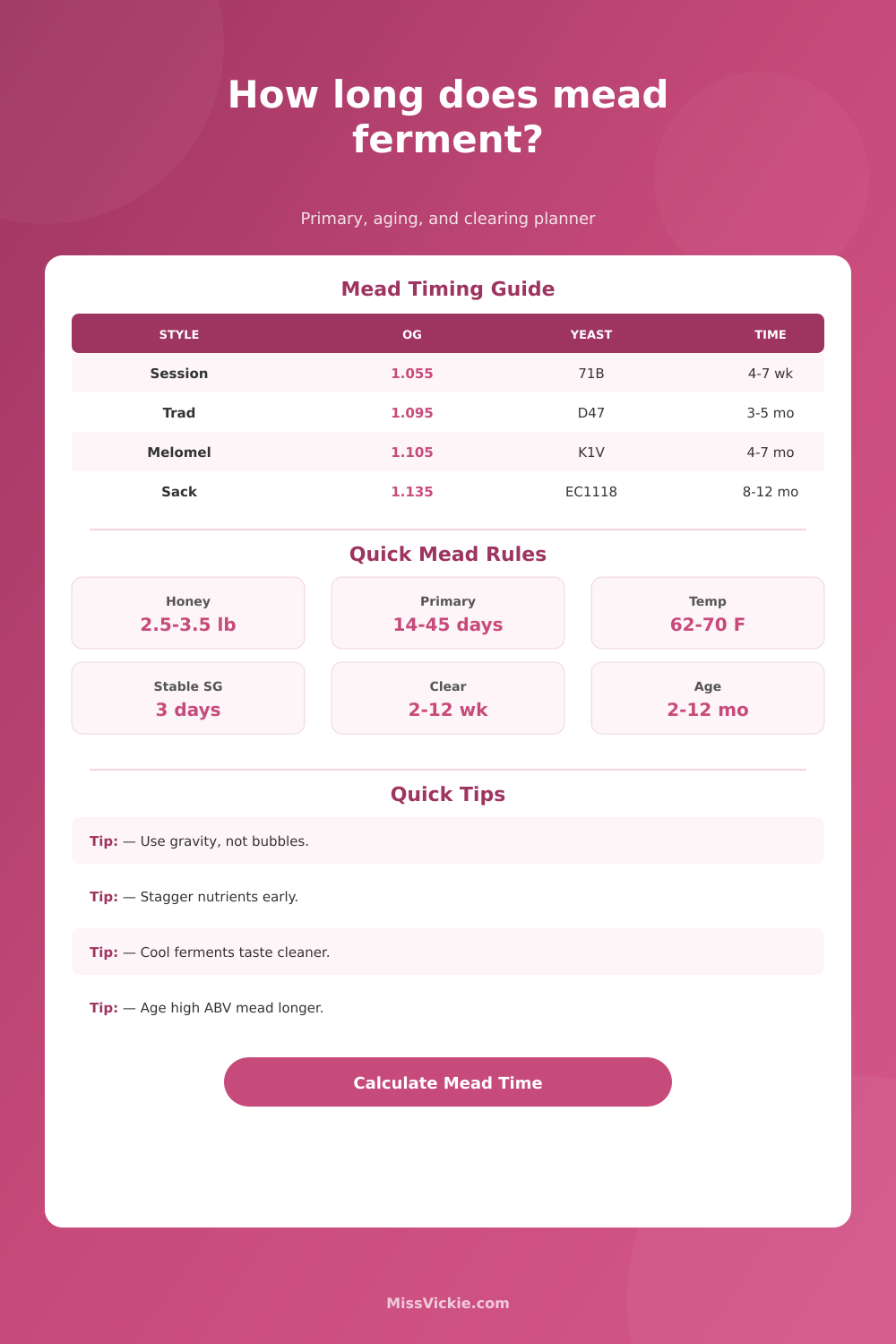
| Mead Strength | Typical OG | Target ABV | Primary Window | Notes |
|---|---|---|---|---|
| Session hydromel | 1.035 to 1.065 | 4% to 8% | 10 to 21 days | Often clears quickly and can be ready young when nutrient support is good. |
| Traditional table mead | 1.080 to 1.110 | 10% to 14% | 21 to 45 days | Most batches need secondary aging even after gravity stabilizes. |
| Melomel or cyser | 1.085 to 1.120 | 10% to 15% | 24 to 55 days | Fruit solids and pectin can add clearing time after primary ends. |
| Sack or dessert mead | 1.120 to 1.160 | 14% to 18% | 45 to 90 days | High osmotic pressure and alcohol stress make aging and patience more important. |
Primary time is an estimate. Always confirm with hydrometer readings rather than airlock activity.
🧫 Yeast And Temperature Reference
| Yeast | ABV Tolerance | Clean Temp Range | Speed | Best Mead Fit |
|---|---|---|---|---|
| Lalvin D47 | About 14% | 59 to 68 F | Moderate | Traditional, floral, rounded meads with good temperature control. |
| Lalvin 71B | About 14% | 59 to 72 F | Moderate-fast | Fruit meads, cysers, and young-drinking semi-sweet batches. |
| EC-1118 | About 18% | 50 to 86 F | Fast | High gravity, dry finishes, restarts, and difficult fermentations. |
| K1V-1116 | About 18% | 59 to 86 F | Fast | High stress meads, fruit additions, and broad temperature swings. |
| QA23 | About 16% | 59 to 72 F | Moderate | Floral white-wine style meads and light traditional batches. |
| Kveik | About 12% | 75 to 95 F | Very fast | Warm, fast, lower-ABV meads where a young profile is acceptable. |
🍯 Honey, Gravity, And ABV Planning
| Honey Per Gallon | Approx OG Range | Potential ABV | Common Style | Timing Impact |
|---|---|---|---|---|
| 1.25 to 1.8 lb | 1.045 to 1.065 | 6% to 8.5% | Session mead | Shorter primary and shorter aging if fermentation is clean. |
| 2.4 to 3.0 lb | 1.085 to 1.110 | 11% to 14% | Traditional mead | Moderate aging smooths acidity, alcohol heat, and honey aroma. |
| 3.2 to 3.8 lb | 1.115 to 1.135 | 14% to 16.5% | Semi-sweet or fruit mead | Needs strong nutrient management and extra clearing time. |
| 4.0 lb and up | 1.140 and up | 16% plus | Sack or dessert mead | Long primary and long aging are normal; yeast tolerance matters. |
📅 Nutrient And Clearing Schedule
| Schedule | When Used | Primary Effect | Clearing Effect | Best Fit |
|---|---|---|---|---|
| No nutrient | Rare for honey-only must | Often slower and more stressed | Can leave stubborn haze | Very low gravity batches only. |
| Single addition | At yeast pitch | Helps early activity | Neutral | Small batches and simple recipes. |
| Two additions | Pitch and early active ferment | Improves reliability | May reduce stress haze | Table meads under 14% ABV. |
| Staggered plan | First few days to 1/3 break | Usually fastest clean option | Cleaner lees and easier aging | Most traditional and fruit meads. |
| High YAN plan | Big or nutrient-hungry must | Reduces stall risk | Can shorten recovery time | High gravity sack mead or fruit mead. |
🔍 Comparison Grid
Lower gravity, warm-friendly yeast, and staggered nutrients can finish primary in about two weeks.
Moderate gravity and cool fermentation give the best mix of reliability, aroma, and aging time.
Fruit pulp, pectin, tannin, and color compounds can keep mead hazy after primary is done.
High ABV mead can be technically finished while still needing months to taste rounded.
💡 Mead Timing Tips
Use sanitized equipment, proper airlocks, food-safe fermenters, and local rules for home alcohol fermentation. Do not bottle cloudy or sweet mead unless fermentation is stable and your process prevents renewed fermentation.
If you look at the airlock and assume the process is complete once all the bubbles has stopped, then this is where you could of gone wrong. The yeast found in honey are tenacious little buggers. They frequently stall out, take a nap, and then spring back to life weeks from now. Bottling prematurely (by eye-only judgment) will result in champagne grenades instead of a nice smooth mead.
Use the calculator above to prevent that fiasco. It’ll estimate when primary should be done, how long the secondary should age, and how long it will take to clear. That way you can plan your batch accordingly so that it matches reality inside carboy… Not what the airlock tells you.
Why You Should Use a Mead Calculator
First add your initial honey weight and gravity. This sets your start point and lets us know what kind of work yeast needs to do. Because honey is well known for being low in nitrogen, even with lots of sugar available, your yeast will starve. Choosing a staggered nutrient schedule is more important then many new mead makers recognize.
If you select a staggered schedule in the tool, the algorithm takes into consideration that regular feeding keep yeast from stopping and starting which causes stress on the yeast itself. Yeast under stress creates funky sulfur notes and harsh fusel alcohols, whereas well fed yeast finishes faster and cleaner. This single variable often makes the difference between meads that smell like rotten eggs versus ones that taste like clean honey wine.
You should also consider temperature control in your timeline. Your yeast may prefer sixty-five degrees, but you might ferment at eighty. Your fermentation would complete in half the time, but the heat and excess esters will compromise the flavor profile. The tool takes into account your selected temperature in the primary window estimate. Rather than a best-case-scenario it offers you a realistic range. Better to wait for quality than to hurry for speed.
Sack style meads and other high gravity meads (above a starting gravity of one point one three five) take even longer. The higher sugar concentration stress the yeast cells directly through osmotic pressure. The test of patience arrives here: clearing time. After fermentation, some fruit meads and cysers stay cloudy for quite a while. These fine solids and even pectins gets into suspension in your beverage.
How long will it be? The results panel will provide a general sense of that (weeks). At this point, you’ll want several weeks before it’s clear enough to rack or even bottle. If you’re patient, it may take months of natural settling, but fining aids or cold crashing can make an enormous difference in speeding this stage along. Do you want to add anything to speed it up? Or do you want to let nature slowly drop out the haze and yeast over time?
So what’s going on? Well, there’s no such thing as just sitting around waiting for secondary aging to occur. That’s an active process of smoothing out any harshness left in the alcohol. Any spices or fruit added will blend into more complex flavors of honey at this point. While many a traditional mead will be technically fermented in a month, it may remain harsh and disconnected for another three or even six months in bulk age before being drinkable.
This is why we included the second part of the timeline above. If you bottle prematurely, then you lock in those immature flavors. Once it’s in the bottle, you can’t do anything about a young, hot mead. All you can do is sit back and let time do its work in the carboy, smoothing everything out through gradual oxidation and chemical balancing.
The final say still comes down to gravity readings versus seeing any bubbling. For example, take three gravity readings over three days. If the hydrometer stick at the same number each time, you’re probably finished. You might see an occasional tiny bubble if a change in temperature releases some dissolved carbon dioxide. Even so, the hydrometer will remain locked in place at that same reading. And that’s good. That tells you it’s done.
It helps chart those milestones for you, and you’ll know when to check and then when to let things sit. Fermentation is part art and part science, but knowing what the numbers are give you confidence. It takes away the worry and you can have a plan in place. This plan includes when to rack, when to add nutrients, and when to bottle.
Respect the timeline. Trust the gravity. Don’t force the mead to do something before it’s ready. People make their best meads when they learn when to get out of the way and give it time.