Marinade Per Pound of Chicken Calculator
Estimate how much chicken marinade to mix per pound using chicken cut, marinade style, oil-acid-salt balance, coverage level, soak time, sugar level, cooking method, sodium target, and discard loss.
🍗Chicken marinade presets
Choose a chicken marinade setup, then fine tune the cut, coverage, acid, oil, salt, sugar, soak time, cooking method, and discard loss.
⚖Units
🥄Chicken batch and marinade style
🧂Oil, acid, salt, sugar, and soak targets
Your chicken marinade estimate
Marinade batch breakdown
Adjust oil, acid, salt, and sugar to match the cut and cooking method.
📌Chicken marinade amount guide
Light coating for wings, tenders, skewers, or vacuum bags.
Standard amount for chicken breasts, thighs, and drumsticks.
Generous dish coverage for bone-in pieces or whole chicken.
Common loss for used marinade left in the bag or dish.
📋Cut, soak time, and coverage reference
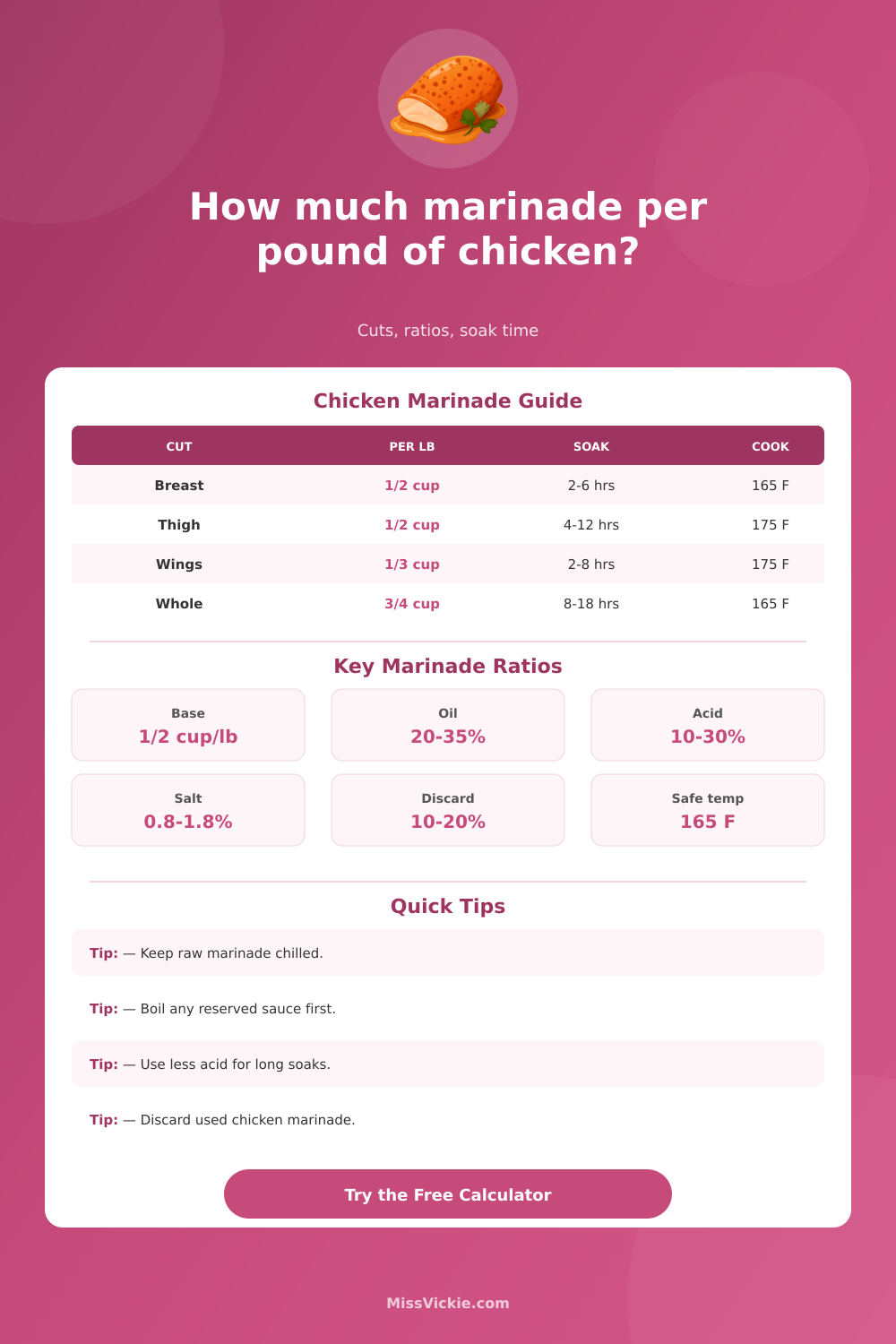
| Chicken cut | Typical marinade per lb | Best soak window | Important note |
|---|---|---|---|
| Thin cutlets or tenders | 1/3 to 1/2 cup | 30 minutes to 3 hours | Fast penetration; keep acid modest so the surface stays tender, not chalky. |
| Boneless breasts | 1/2 cup | 2 to 6 hours | Lean meat benefits from oil and salt balance; avoid very acidic overnight soaks. |
| Boneless thighs | 1/2 cup | 4 to 12 hours | Darker meat handles stronger flavor and longer refrigerated marinating. |
| Bone-in thighs or drumsticks | 1/2 to 2/3 cup | 4 to 14 hours | Turn pieces once or twice because bones and skin create uneven contact. |
| Wings | 1/3 to 1/2 cup | 2 to 8 hours | Pat dry before high heat so the skin browns instead of steaming. |
| Whole or spatchcocked chicken | 2/3 to 3/4 cup | 8 to 18 hours | Use a large bag, rotate the bird, and check breast and thigh doneness separately. |
🧪Oil-acid-salt-sugar ratio guide
| Marinade style | Oil target | Acid target | Salt and sugar note |
|---|---|---|---|
| Balanced herb garlic | 25 to 35 percent | 12 to 22 percent | Use 1.0 to 1.4 percent salt by chicken weight and low to medium sugar. |
| Citrus olive oil | 30 to 40 percent | 20 to 30 percent | Shorter soaks are best; lemon and lime can firm the chicken surface. |
| Soy ginger | 10 to 25 percent | 8 to 18 percent | Reduce added salt because soy sauce brings significant sodium. |
| Yogurt spice | 8 to 20 percent | 10 to 18 percent | Yogurt clings well, so volume can be lower while coverage stays strong. |
| Buttermilk | 0 to 10 percent | 8 to 16 percent | Great for tenderizing; salt it carefully and drain well before cooking. |
| Sweet BBQ or teriyaki | 5 to 20 percent | 5 to 15 percent | High sugar browns fast; reserve clean marinade for late brushing. |
🔥Grill and oven marinade handling
| Method | Best marinade adjustment | Before cooking | Food safety target |
|---|---|---|---|
| Hot direct grill | Use moderate oil, lower sugar, and no heavy wet coating. | Drain and pat the surface so flare-ups stay manageable. | Cook chicken to at least 165 F in the thickest part. |
| Indirect grill finish | Works well with bone-in thighs, drumsticks, and whole chicken. | Start away from flames, then crisp over direct heat near the end. | Dark meat often tastes better closer to 175 F. |
| Oven roast | Generous marinade is fine, but excess liquid can slow browning. | Lift chicken out of marinade and roast on a rack if possible. | Check both breast and thigh areas on mixed pieces. |
| Broiler | Keep sugar low or brush sweet reserved marinade only at the end. | Watch closely because sugar and garlic can scorch quickly. | Do not rely on color; verify internal temperature. |
| Pan sear | Use less watery marinade so the pan sears instead of steams. | Blot chicken dry and add clean oil to the pan as needed. | Rest briefly, then recheck thick pieces if needed. |
💡Chicken marinade tips
Keep raw and clean marinade separate. If you want a basting sauce, reserve that portion before adding chicken. Used marinade should be discarded or boiled thoroughly before any sauce use.
Match acid to time. Lemon, vinegar, wine, yogurt, and buttermilk all count as acid. The longer the soak, the gentler the acid percentage should be.
Salt by chicken weight. Measuring salt as a percent of the chicken is steadier than salting by taste, especially when soy sauce or bottled sauces add sodium.
Dry before high heat. For grill, broiler, air fryer, or skillet cooking, var excess marinade drip off and pat the surface so chicken browns cleanly.
It sounds easy enough to get the right ratio of marinade when making chicken, except there is so many variables: What’s the cut? How long do I marinate it? Is my acid-to-oil ratio correct? Does it make any difference if I’m baking or pan-frying it? Too much marinade is wasteful. Not enough and your chicken will be flavorful only on its exterior, and using leftover marinade as sauce presents a safety hazard.
Why don’t we have a calculator? Recipes written to work with a certain kind of chicken, or marinating by the “eye,” work fine most of the time but vary based off changing conditions. Different cuts absorbs liquid differently (boneless breast vs. Thigh). The width of your container also affect how much goes inside. If you can tell it’s stacked, or that there is some empty space around bones, the calculator will perform the math for you. It saves you trying to guess whether you should of used more liquid.
Why Use a Marinade Calculator?
You should also consider style of marinade itself. Some stick better (like yogurt) while others don’t (thin citrus). You’d never know from cup measurements that they could make such a difference. How much oil do you want to use? More oil will brown more and help the surface stay moister at higher temps.
How acidic? If you use too much vinegar or too much lemon, your meat texture change too fast and leaving it in a marinade like this for too long makes the surface go chalky. There isn’t some magic trick where the tool makes something so complicated when its actualy simple. Most home cooks underestimates the salt.
I’ve found that using salt as a percentage of chicken’s weight ensures you get the same result, no matter how big your batches are. Remember to factor in any sodium in bottled teriyaki base or soy sauce. If you’re trying to cook for someone who watches their salt, you can use the calculator to dial-in amount of added salt and reach your desired sodium level. Also, if you leave the chicken out for hours after, it won’t end up being way too salty.
Another practical detail is waste. Recipes never seem to mention discard. It’s why we toss out the bag, and the liquid stuck to it, for safety. Certain styles gets thrown out more then others. A reserve percentage of clean sauce helps ensure you don’t run low at the grill. Until you learn yourself, such percentages is meaningless. That’s what the tool requests, not what it presumes.
But it’s watching the connections between the parts that’s worth something. Less acid = shorter time before it’s no longer safe to eat. Sweeter marinades requires lower heat or post-brush marinating to avoid burning the sugar. Vacuum bags absorb less overall liquid than a dish, since there’s good contact.
Once you run the numbers a few times based off your normal amount used and cut, the patterns emerge. Then you begin to fiddle around without the calculator. But the trick to great marinades is to pair them with how you’re cooking the meat and what kind of chicken you’ve got. When the time, ratio, and amount match the cut of meat and the heat you use, your results are intentional rather than made-up on the fly. And that intention makes a decent meal feel like something you could make again. No more questions about if you put in too much or not enough.