Maple Syrup Calculator
Convert maple syrup between cups, tablespoons, grams, ounces, Brix-style sugar solids, and recipe sweetness. Use it to replace sugar, honey, brown sugar, corn syrup, agave, molasses, or another syrup while adjusting the liquid in cakes, cookies, sauces, glazes, and breakfast batches.
Each preset fills a realistic maple substitution or maple measurement scenario. You can edit the amount, Brix, grade, and liquid adjustment after choosing one.
Your maple syrup conversion
Maple amount, sugar solids, water contribution, and recipe liquid adjustment will appear here.
Calculation breakdown
Recipe adjustment guide
| Original sweetener | Use this maple amount | Reduce recipe liquid | Kitchen note |
|---|---|---|---|
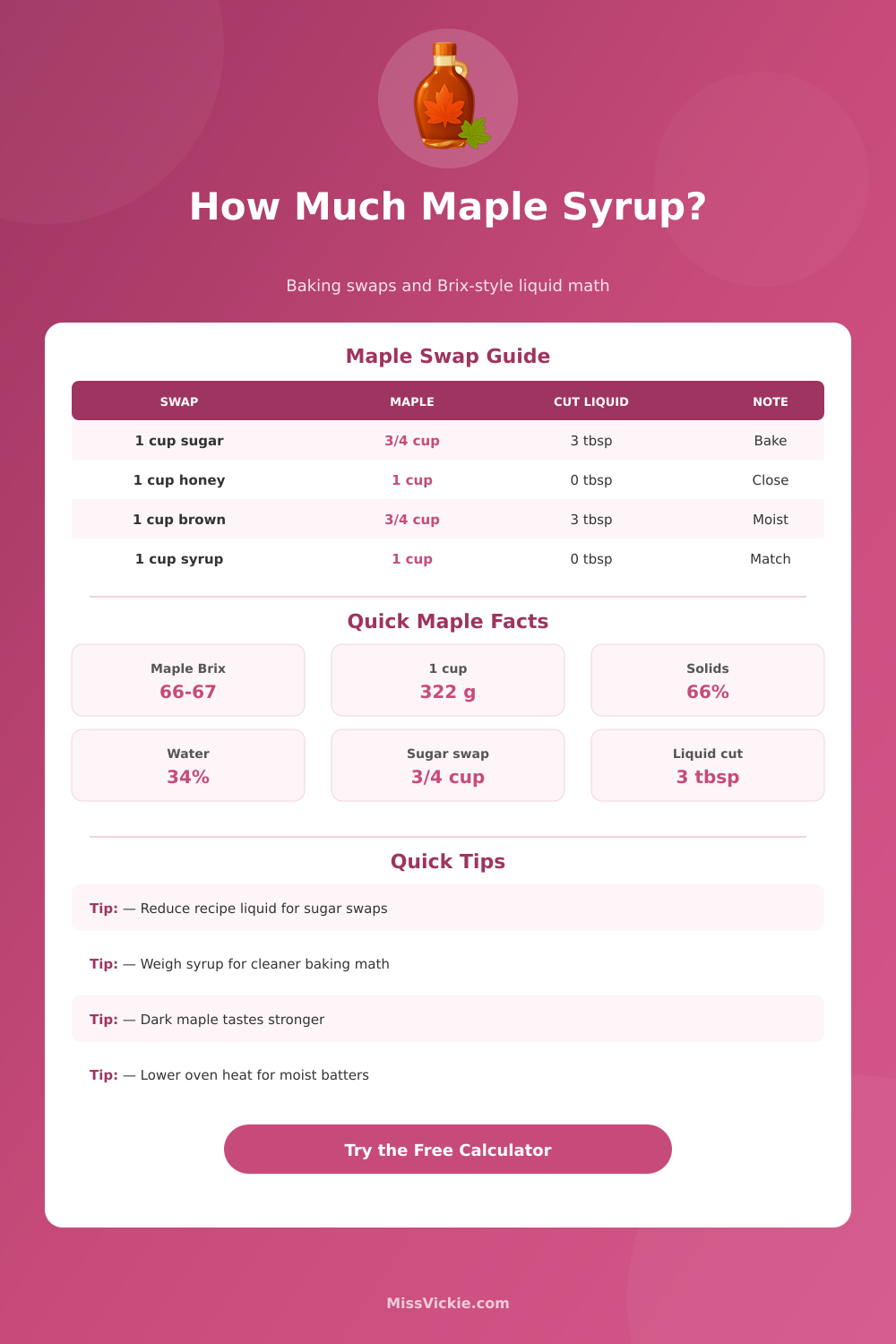
| 1 cup granulated sugar | About 3/4 cup maple syrup | About 3 tablespoons | Maple adds water and browns faster; lower oven heat for tender cakes. |
| 1 cup packed brown sugar | About 3/4 cup maple syrup | 2 to 3 tablespoons | Expect less molasses depth but more maple aroma and a softer crumb. |
| 1 cup honey | About 1 cup maple syrup | Usually none | Maple is thinner and less intensely sweet than honey; flavor will be lighter. |
| 1 cup corn syrup | 1 cup maple syrup for flavor swaps | Usually none | Texture can change in candy or pecan pie because corn syrup resists crystallization. |
| 1 cup molasses | 3/4 to 1 cup dark maple | 0 to 2 tablespoons | Dark maple is milder and less acidic than molasses, so spice balance may change. |
| 1 cup agave nectar | 3/4 to 1 cup maple syrup | Usually none | Agave tastes sweeter; use the target sweetness field to reduce maple if desired. |
| Maple Brix | Sugar solids in 100 g | Water in 100 g | Best use |
|---|---|---|---|
| 60 Brix | 60 g | 40 g | Thin syrups, drink mixing, and quick sauces. |
| 64 Brix | 64 g | 36 g | Light dessert sauces and glazes that will reduce later. |
| 66 to 67 Brix | 66 to 67 g | 33 to 34 g | Typical finished maple syrup and most baking substitutions. |
| 70 Brix | 70 g | 30 g | Thicker reductions, candy starts, and concentrated glazes. |
| Maple measure | Approx weight | Sugar solids at 66.5 Brix | Water added |
|---|---|---|---|
| 1 teaspoon | 6.7 g | 4.5 g | 2.2 g |
| 1 tablespoon | 20 g | 13 g | 7 g |
| 1/4 cup | 81 g | 54 g | 27 g |
| 1/2 cup | 161 g | 107 g | 54 g |
| 3/4 cup | 242 g | 161 g | 81 g |
| 1 cup | 322 g | 214 g | 108 g |
| Recipe type | Liquid strategy | Texture risk | Practical adjustment |
|---|---|---|---|
| Cakes and quick breads | Reduce milk, water, coffee, or juice | Too much moisture can make a gummy center | Start with auto reduction and lower oven heat slightly. |
| Cookies and bars | Use strict or firm reduction | Extra syrup can make spreading and browning stronger | Chill dough, reduce liquid, or add a little extra flour only after testing. |
| Granola and snack bars | Usually keep liquid unchanged | Maple helps bind but can brown quickly | Bake lower and stir more often near the end. |
| Sauces and glazes | Reduce by simmering instead of subtracting | Thin sauce if not cooked long enough | Use Brix and weight results to decide whether to reduce or dilute. |
These cards compare common recipe sweeteners by approximate water, solids, and practical substitution behavior.
Kitchen note: maple syrup density varies slightly with temperature and exact Brix. For repeatable baking, weigh the syrup and log your recipe result.
Maple syrups contains sugar, moisture, and flavor. When using maple syrup to replace granulated sugar or honey, you must manage the sugar content, moisture content, and the behavior of the maple syrup to brown in comparison to granulated sugar. If you dont manage these components proper, the baked goods may have too much density or too much browning then desired.
This maple syrup calculator will help you manage the mathematics of replacing granulated sugar or honey with maple syrup. All you have to do is enter the information about the ingredient that you are replacing, the amount of that ingredient, and the type of recipe you are creating. Based on this information, the calculator will determine for you the amount of maple syrup you should use in the recipe to maintain the same level of sweetness from your recipe, and to indicate to you the amount of liquid you must remove from the recipe to prevent it from becoming too moist due to the moisture content of the maple syrup.
How to Use Maple Syrup Instead of Sugar or Honey
Furthermore, the calculator will also indicate to you if the grade of maple syrup you are using will contribute the correct amount of flavor to your baked good. Many people uses maple syrup because of its flavor. However, many do not realize that maple syrup isnt a direct replacement to granulated sugar.
Because maple syrup contains only approximately 2/3 of the sugar solids of granulated sugar, a cup of maple syrup does not contain the same amount of sugar as a cup of granulated sugar. Therefore, to account for this difference in sweetness, someone created the maple syrup calculator to help people maintain the same percentage of sweetness when substituting maple syrup for granulated sugar or honey. Thus, you can use this calculator to maintain the same level of sweetness from the recipe, or you can use it to lower the sweetness levels should your recipe contain other sweet ingredient already.
Additionally, maple syrup contains moisture. Each tablespoon of maple syrup contains water; this moisture can make baked goods like cakes or quick breads too moist if you add maple syrup without also removing some of the recipe’s liquid ingredient. Therefore, the maple syrup calculator can determine how much liquid your maple syrup will add to your recipe, as well as provide you an indication of how much milk, coffee, or other liquid ingredients you should remove from the recipe.
This measurement of the amount of liquid you must remove, however, will depend upon the type of recipe that you are creating (cookies, muffins, or glaze), so you must ensure that you are using the correct setting on the calculator to reflect your type of recipe. Another component of maple syrup that affects the recipe is the grade of the syrup. Maple syrups come in a variety of grade; light golden, golden, amber, dark, and very dark.
Each of these grades has a different level of flavor. For instance, golden maple syrup has a very light flavor, so it is typically used in recipes like frostings or cakes that must have a very light flavor of maple syrup. Similarly, amber maple syrup contains a more present flavor of maple syrup, so it is used in a variety of recipes.
Dark and very dark maple syrup has a deep flavor of maple syrup with notes of caramel and minerals, so it is typically only used in recipes that also contain ingredients like molasses or barbecue sauce. The calculator will not change the calculations of the amount of maple syrup that is required for your recipe if you change the grade of maple syrup that you use, but the calculator will provide you with a note about the flavor of maple syrup that matches the flavor that you would like to contribute to your batter. Another component of maple syrup is the Brix value of the syrup.
Brix value is a measurement of the amount of sugar solids contained within a given amount of syrup. Maple syrup typically contains 66-67% sugar solids. If the syrup that you are using has a different Brix reading than maple syrup, you should change the Brix value within the recipe calculator to reflect the difference in the amount of sugar solids that will be added to your recipe.
Because the amount of sugar solids impact the level of sweetness of the recipe, the calculator uses this value to determine the amount of maple syrup that should be used within the recipe to maintain the same level of sweetness. Finally, maple syrup has a tendency to brown at a faster rate than granulated sugar. If you bake items like cookies or bread with maple syrup, the surface of these items may brown too quickly if the temperature of the oven is too high.
To prevent excessive browning of these items, you can lower the temperature of the oven by 15 or 25 degree. While the maple syrup calculator will provide you with a start to your recipe, there are a variety of other variable within the kitchen that may impact the outcome of your baked goods. For instance, the humidity within the kitchen where you are baking the items will impact how much the dough from items like cookies will spread.
Additionally, the materials of the baking pan in which you cook your items will impact how the items cook. Additionally, using an extra-large egg will add extra liquid to your recipe. Finally, using the scale to weigh the maple syrup will help ensure that you are adding the correct amount of syrup to your recipe; using the calculator to measure the volume of the maple syrup may create slight inaccuracy.
Keep note about any changes you make to the recipe so that you can cook these items again in the future with the same success.