Maple Syrup Per Pancake Calculator
Estimate real maple syrup for pancakes by count, diameter, stack size, pour style, guest mix, bottle ounces, toppings, warm syrup loss, and brunch buffer.
Pick a brunch setup, then adjust pancake count, diameter, adult and kid stacks, pour style, bottle size, topping reduction, warm loss, and buffer.
Maple Syrup Plan
Your pancake syrup estimate will appear here.
Pancake Breakdown
Syrup Breakdown
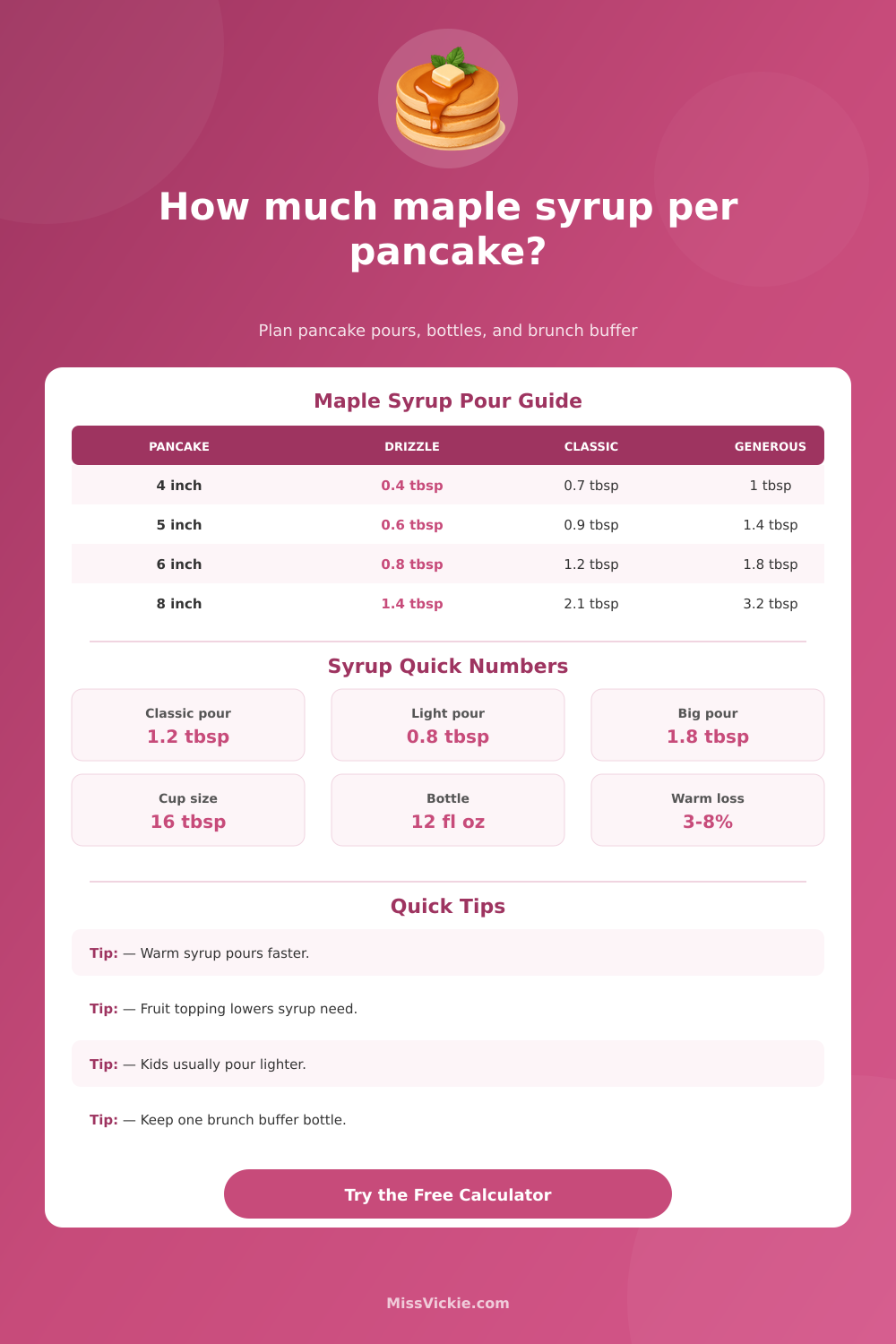
The calculator scales these 6 inch pours by pancake area, then applies toppings, warm pour loss, and buffer.
| Diameter | Area Factor | Classic Pour | Typical Use |
|---|---|---|---|
| 3 inch silver dollar | 0.25x | 0.3 tbsp | Kids plates, samplers |
| 4 inch small pancake | 0.44x | 0.5 tbsp | Brunch buffet trays |
| 5 inch home pancake | 0.69x | 0.8 tbsp | Light family stacks |
| 6 inch standard pancake | 1.00x | 1.2 tbsp | Classic breakfast serving |
| 7 inch diner pancake | 1.36x | 1.6 tbsp | Large skillet pancakes |
| 8 inch plate pancake | 1.78x | 2.1 tbsp | Oversized brunch plates |
| Group | Adult Stack | Kid Portion | Syrup Note |
|---|---|---|---|
| Breakfast for 2 | 3 pancakes | 60 percent | One small pitcher is enough |
| Family of 5 | 3 pancakes | 60 percent | Add buffer for seconds |
| Brunch for 10 | 2.5 pancakes | 75 percent | Use a labeled refill bottle |
| Buffet for 24 | 2 pancakes | 60 percent | Split syrup into warm pitchers |
| Topping Setup | Reduction | Why It Changes | Best Buffer |
|---|---|---|---|
| Plain pancakes | 0 percent | Syrup carries the stack | 10 percent |
| Butter only | 8 percent | Butter spreads syrup flavor | 10 percent |
| Fruit topping | 14 percent | Fruit adds moisture | 12 percent |
| Butter and fruit | 20 percent | Rich and juicy toppings | 12 percent |
| Cream fruit bar | 28 percent | Several sweet toppings | 15 percent |
| Bottle Size | Tablespoons | Classic 6 Inch Pancakes | Metric Volume |
|---|---|---|---|
| 8 fl oz | 16 tbsp | About 13 pancakes | 237 ml |
| 12 fl oz | 24 tbsp | About 20 pancakes | 355 ml |
| 16 fl oz | 32 tbsp | About 27 pancakes | 473 ml |
| 32 fl oz | 64 tbsp | About 53 pancakes | 946 ml |
For buttered pancakes, toddlers, or tasting flights.
Enough syrup to flavor a stack without pooling.
The usual table pour for a 6 inch pancake.
Diner-style syrup that reaches the plate edge.
Who among us hasn’t panicked during a brunch party, watching the bottle of syrup dwindle to nothing just moments before final pancake reaches the plate? It happens sooner then you realize, unless you don’t notice it until everyone want more. Maple syrup, you see, is a finite resource; but most of us treat it like an infinite one. Buying a bottle and hoping it’ll be enough. And most of us treat it like an infinite resource, buying a bottle and hoping it’ll be enough. Except then there is still hungry mouths to feed, and that plan doesn’t work.
What is the solution? You should of plan. How much syrup will you need before you start pouring? Here are those numbers, generated by calculator, but it’s helpful to know how they got there so that we can trust them.
How to Plan Your Maple Syrup Amount
When you pour a bunch of syrup onto your pancakes, it doesn’t just spread evenly regardless of how many or what size cake you made. A 4 inch pancake will contain less syrup than an 8 inch one. And the more pancake surface area, the more syrup will sticks to your stack rather than slide right off. So diameter matter greatly for getting good estimates, and the calculator takes all this geometry into account when adjusting the syrup amount. Additionally, it factors in how your stack is put together. Smaller stacks has more edge exposure and need extra syrup. Big stacks take up more volume with fewer pancake, so they have less overall surface area. That way you don’t have to guess.
However, that math shifts completely depending off the guest list. Typically, kids are more inclined to dip or drizzle rather than douse the whole pile; grown-ups tend to fill all available crevices. If you don’t account for this difference in your planning, you’ll end up wasting syrup because you assumed everyone would pour a lot. To address this, our calculator lets you split people into adult and child categories, assigning them a smaller syrup amount (i.e., less syrup for little ones). It’s not a huge tweak but it does come into play when you’re serving a crowd.
Syrup thickness is another factor that will impact usage. If it’s cold, then it’ll be thick and start clumping onto the initial pancakes. The bottle will appear completely full, but each guest will gets far less than what they think. If it’s warm, it pours easy, which sounds good at first, but soon you find yourself pouring double the desired quantity. Be sure to plan for warm loss. A little bit of syrup will go into the pitcher, a little bit will drip down the sides and a little bit will evaporate if left sitting too long. If you plan for a few percent to be wasted like this, you won’t have to scramble during service for additional servings.
It’s also about toppings. If you are serving fresh berries, whipped cream, or heavy butter, people instinctively pour less syrup because they know the plate already has enough richness and moisture; the maple becomes an accent rather than the main event. In situations like this, cutting back on what you think you’ll need helps prevent overbuying. It’s more about balancing the flavors on the plate then filling up the bottle with syrup.
The last line of defense is a buffer. Brunch doesn’t always go according to plan. A guest might want another round of pancakes. They might ask for more. Syrup gets spilled. By adding a small buffer in percentages, you cover yourself from any variances, but not so much that you buy too much of anything. It’s peace of mind instead of panic planning.
Ultimately, it’s about the ounces. But it’s also about providing a smooth experience for everyone involved. Is there enough syrup? No one requests additional syrup. Does the pitcher lack enough syrup? Conversation halts as someone goes to refill in the cupboard. By planning ahead, the flow continues, leaving you to enjoy your coffee rather than monitor the decreasing level in the pitcher. What could be a mishap becomes another routine part of the morning.