Macaron Calculator
Scale macaron shells and filling by finished sandwich count, shell diameter, almond flour ratio, sugar balance, egg white age, meringue method, color powder, drying time, oven temperature, and expected yield loss.
Choose a real bake plan to load shell count, diameter, meringue style, ratios, color powder, filling, drying, temperature, and loss assumptions.
Macaron Batch Breakdown
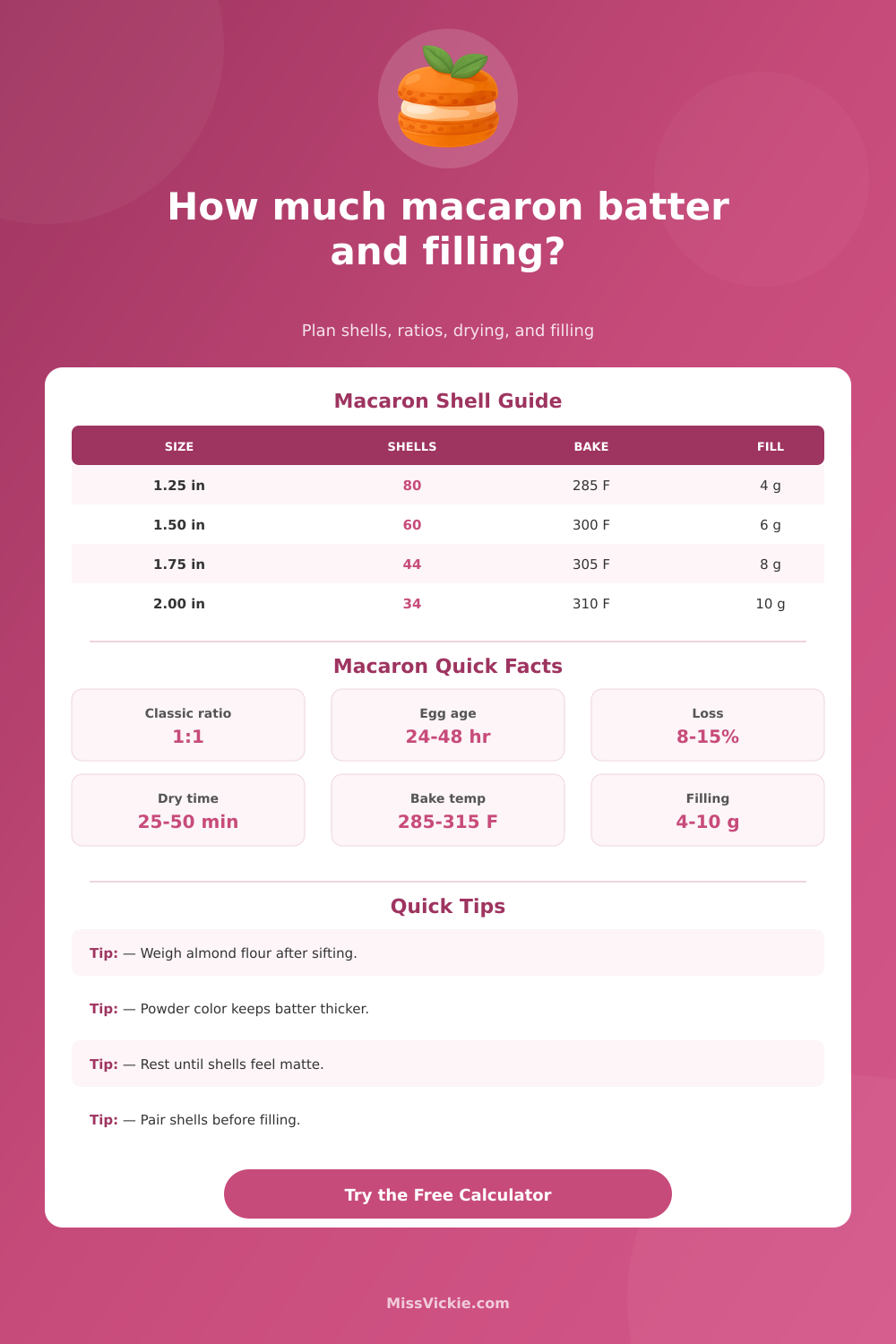
| Shell Diameter | Typical Shells From Base Batch | Filling Per Sandwich | Best Use |
|---|---|---|---|
| 1.25 in / 3.2 cm | About 80 shells | 3 to 4 g filling | Mini boxes, tasting flights, and dessert boards |
| 1.50 in / 3.8 cm | About 60 shells | 5 to 7 g filling | Classic bakery macarons and party platters |
| 1.75 in / 4.4 cm | About 44 shells | 7 to 9 g filling | Gift boxes, plated desserts, and bolder fillings |
| 2.00 in / 5.1 cm | About 34 shells | 9 to 12 g filling | Larger favors, ice cream style shells, and show pieces |
| Meringue Method | Shell Behavior | Sugar Handling | When to Choose It |
|---|---|---|---|
| French meringue | Light texture, faster mixing, more sensitive to overfolding | Granulated sugar whips directly into egg whites | Small batches, classic home baking, quick color tests |
| Swiss meringue | Stable foam with a smooth finish and even feet | Whites and sugar are warmed before whipping | Humid kitchens, medium batches, and reliable pastel shells |
| Italian meringue | Most stable batter, good for larger batches and bold colors | Hot syrup needs water and a controlled pour | Bakery trays, deep colors, and event quantities |
| Carton whites adjustment | Can whip softer and may need more resting patience | Works best with Swiss or Italian stability | Use when separated whites are unavailable |
| Ratio Choice | Calculator Meaning | Shell Effect | Watch Point |
|---|---|---|---|
| Almond flour 0.92x | Lower almond share against the base scale | Lighter bite with a slightly sweeter profile | Sift well so low almond batches do not look patchy |
| Almond flour 1.15x | Higher almond share against the base scale | Nutty, sturdy shells that tolerate fuller fillings | Macaronage may need a few more folds |
| Powdered sugar 1.08x | Extra confectioners sugar in the dry mix | Smoother tops and a slightly firmer shell | Can make shells sweeter and more prone to browning |
| Granulated sugar 1.12x | More sugar relative to egg whites | Stronger meringue for color and humidity | Avoid under-whipping or the batter can stay grainy |
| Condition | Drying Target | Oven Range | Macaron Signal |
|---|---|---|---|
| Dry room | 18 to 30 minutes | 285 to 300°F | Shells turn matte quickly and may need lower heat |
| Normal room | 25 to 45 minutes | 295 to 310°F | Dry to a light touch before baking |
| Humid room | 45 to 70 minutes | 300 to 315°F | Use a fan or dehumidified spot if tops stay tacky |
| Deep color powder | Add 5 to 15 minutes | Lower if browning appears | Powder color thickens batter but dark shells brown faster |
When you begin making a batch, you’re reminded that every little decision builds up: the size of shell impacts how many can fit on a tray. Freshness of egg whites affects the meringue. Room humidity determines if it’ll take you twenty minutes or an hour for drying. These variables don’t work alone. They all interact with one another.
There is macaron calculator to account for that, because guessing typicaly means wasting both ingredients and time. But here’s where it gets good, not at piping but at all the math before you even do any piping.
Why Use a Macaron Calculator
First, determine how many final macaron sandwich you’re really after. Then double that figure, since each sandwich will have both a top and a bottom. Next, account for cracked shells, hollowed-out shells, and ones that just won’t cooperate to be an exact match; the math do this part. Enter these two figures into calculator above, and it will take care of all the guessing for you when it comes to how much additional batter to make.
Most bakers don’t realize that shell diameter makes a big difference. Even though amount of ganache or buttercream needed per sandwich changes with size, a 1/4 inch variation in diameter alters available surface area by a lot, which now result in more or less shells from the exact same batch. This affects how much larger ganache/buttercream you will be making (and how much filling goes into each bigger sandwich). It’s all there in reference table on the page, so you can get a sense of how it all plays together without having to do individual calculations for every shell size.
The last option impacts nearly all others: the type of meringue. You can choose French meringue, which is light and quick but require a steadier hand at macaronage. Alternatively, you can use Italian meringue, which adds heat through hot syrup and water. This requires more careful attention to your totals, but it is great for deeper colors or larger batches. Switching between types allows you to toggle directly from one ingredient type to the next. This avoids the need to memorize two different recipes and allow the sugar/egg whites amounts to update to match.
The age of egg whites is there but hidden in the back. Too young and whites whip up fast then fall apart. Twenty-four- to forty-eight-hour-old whites stands up better, with more even-feeling feet. If you use carton egg whites, they tend to prefer being stabilized by Swiss or Italian meringues. Know when yours is old enough to go: Your drying time will be longer or shorter as you pick the correct age from the tool.
Neither humidity nor color powder are mentioned in simple recipes, but each affect the batter. Powder makes the mix a bit thicker, perhaps causing browning more rapidy on the shells. Humidity slows down skin formation; consequently the calculator lengthens the suggested rest time and moves the suggested oven temp up to help you avoid the all-too-familiar annoyance of shiny undried-on-top results.
Once the results pop up, it’s up to you to decide how they apply in your kitchen. Is the recommended dry time longer than you’re comfortabley with? Turn on a small fan (or move the trays to another room) to decrease humidity. Is the oven range high relative to your equipment? Try running just one tray at the low-end of that range, and if it works, commit the entire batch. You have a plan from the tool, but your room and your oven are the ultimate constraints.
Perfect math isn’t even the goal. It’s a process of repeating it with respect for the factors out of your control. All that’s required after the calculator displays your clear path from finished count to tray count is to pay attention as shells rest and bake.