
Imagine this scenario, your having dinner with your friend. But halfway through the meal, you feel pain in your abdomen. You find yourself needing to rush to teh bathroom.
This is the life of someone with irritable bowel syndrome (IBS). However, IBS are not a solitary illness. Up to 15% of people suffers from IBS symptoms.
Low FODMAP Diet for People with IBS
For some individual, it’s the consumption of certain carbohydrates (carbs) that cause there IBS symptoms. The low FODMAP diet help many with IBS regulate their digestive system and control their symptoms by reducing the amount of fermentable sugars in there diets. FODMAP stands for fermentable oligosaccharides, disaccharides, monosaccharides, and polyols.
These type of carbohydrates is often consumed by the bacteria in the digestive system, causing gas and watery stool. For those with IBS, this type of intestinal activity can cause discomfort. The low FODMAP diet was developed by researcher at Monash University.
This diet helps individuals with IBS by reducing there consumption of the types of carbohydrate that exacerbate their symptoms. Studies show that over 70% of individuals with IBS has a reduction of their symptoms after implementing the low FODMAP diet. The low FODMAP diet begins with a period of strict dieting.
After a few weeks on this diet, IBS symptoms begins to subside. Then, over several weeks, foods are gradually reintroduced into a person’s diet in moderation. The portion size of the foods that are reintroduced matter.
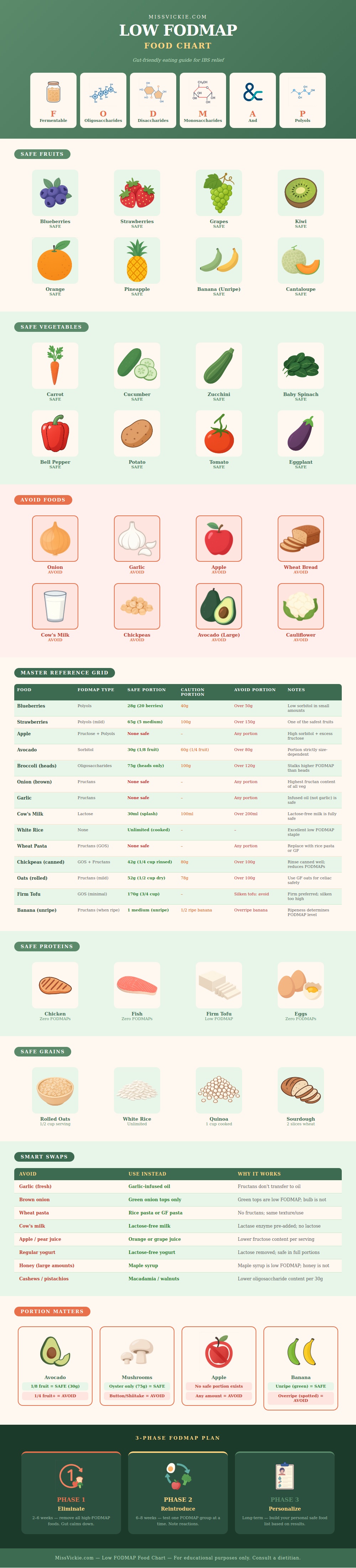
Foods such as berries and citrus fruit has low FODMAP levels and can be consumed in moderate amount. Vegetables like carrots and zucchini contains low amounts of FODMAP and are safe for individual to consume. Proteins such as chicken, fish, eggs, and firm tofu contains zero FODMAP and can be consumed in large amounts.
Foods such as white rice and quinoa is high in carbohydrates and low in FODMAP. Rolled oats also contains low FODMAPs and can be included in the diet in moderate portions. These foods are the foundation of the low FODMAP diet.
However, not all foods contains zero FODMAPs. Foods like apples and avocados contains high amounts of fructose, a type of polyol. Foods like onion and garlic contains fructans.
Additionally, foods like wheat bread and cow’s milk are high in both fructans and lactose. Reducing the consumption of these food can provide relief for those suffering from IBS symptoms. Foods that is high in FODMAP can be replaced by low FODMAP alternatives.
Fresh garlic can be replaced by infused oil. Green onion can be used instead of the bulb portion of the green onion. Rice pasta can be used instead of wheat pasta.
Lactose-free dairy product can be used in place of cow’s milk. Maple syrup can be used in place of honey. Macadamias can be used as an alternative to cashews.
A detailed table can be used to illustrate which food are safe to consume, those to use caution with, and those to avoid with IBS. Foods like canned chickpeas can be rinsed to reduce the FODMAP content in the food. Garlic-infused oil contains lower amount of FODMAPs than fresh garlic.
Foods with lower FODMAP content include blueberries, which can be consumed in moderate amounts in lactose-free yogurt. These detailed food guides can aid individuals in creating a proper low-FODMAP diet that work for there bodies. The low-FODMAP diet has three phase.
The first phase consist of eliminating all foods high in FODMAP for a few weeks. This allows the digestive system to return to its normal function and IBS symptoms to subside. During the second phase, foods is reintroduced into the diet in moderate amounts.
Each food group are reintroduced over a few weeks to determine what food an individual can consume. If an individual can consume these food without experiencing IBS symptoms, it is safe for them to include these foods into there diets. The third phase is creating a personalized diet that incorporate the foods that an individual can consume without causing IBS symptoms.
Some mistake that individuals make with the low-FODMAP diet include consuming too many high-FODMAP foods in the first phase of the diet. Another error is the ignorance of high-FODMAP foods in processed foods. Many people ignore the importance of variety in the diet.
However, foods like zucchini, bell peppers, and chicken with garlic oil are high in protein and low in FODMAP. Blueberries in lactose-free yogurt and rice noodles with eggplant and firm tofu is also high in protein and low in FODMAPs. Hydration and fiber is another aspect of the diet to consider.
Since high-FODMAP foods contains fiber, individuals following the diet must limit there intake of fiber from safe food groups like vegetables and oats. Taking a walk after consuming meals can aid an individual’s digestion. Additionally, some studies has shown that high levels of stress can trigger the symptoms of IBS.
Therefore, incorporating stress relief into an individual’s routine can aid the benefits of the low-FODMAP diet. Those who follow a vegetarian diet can meet there protein need by incorporating firm tofu and eggs into there diets. Vegans can meet there protein needs by consuming products like quinoa and rice.
Some friends has found success with the diet by eliminating all fruits from there diets until they can identify which fruit contains low FODMAPs. Strawberries are one such fruit. Some other individuals has found that eliminating the consumption of dairy products and replacing them with lactose-free alternatives have also provided symptom relief for IBS.
Those who follow the diet will notice a significant improvement in there symptom over time. There digestive system will thank them. Use the detailed food chart that illustrates the safe foods, caution foods, and avoid foods for IBS.
Print it and place it somewhere visible to guide them in there eating habits. You can do it (one meal at a time).