Lobster Tail Cooking Time Calculator
Estimate lobster tail cook time from tail ounces, count, shell prep, method, starting temperature, broil distance, butter basting, target internal temperature, rest time, and overcook risk.
🦞Lobster tail presets
Pick a common tail size and cooking setup, then adjust the weight, shell prep, thermometer target, and basting plan for your pan or oven.
⚖Units
🌡Tail size, prep, and temperature
🔥Cooking method, broil distance, and butter basting
Lobster tail cooking estimate
Calculation breakdown
Lobster tail meat tightens quickly after the ideal window, so start checking before the estimated finish time.
📌Lobster tail quick references
Common serving range for just-cooked lobster tail texture.
FDA minimum internal temperature reference for finfish and shellfish.
Typical rise for hot lobster tails during a short rest.
Common distance that browns butterflied tails without scorching.
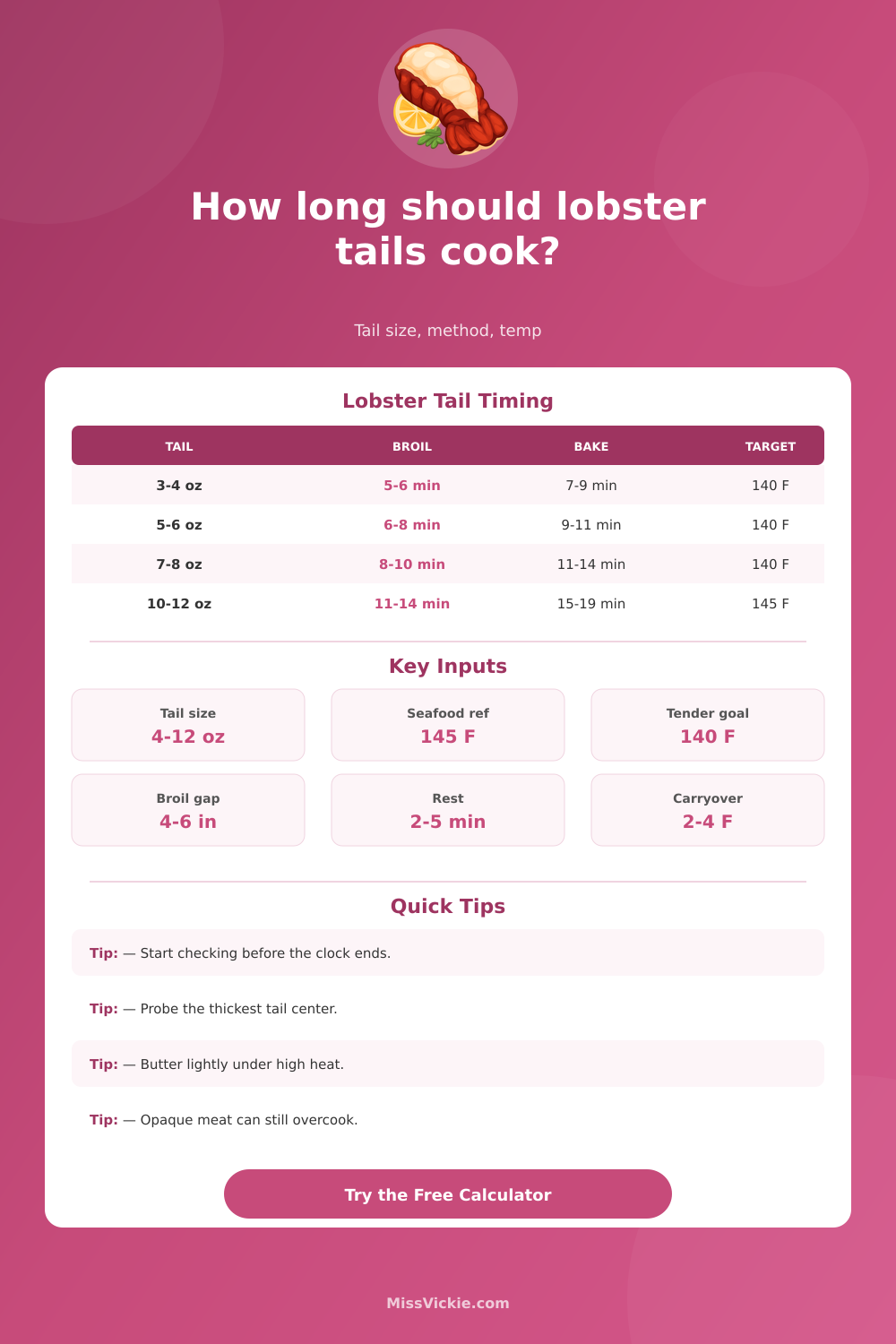
📋Cooking time by tail size
| Shell-on tail size | Broil, butterflied | Bake, 425°F | Steam, shell-on | First temp check |
|---|---|---|---|---|
| 3 to 4 oz per tail | 5 to 6 minutes, 4 to 6 inches from heat | 7 to 9 minutes | 6 to 8 minutes | At 4 minutes for broil, 6 minutes for bake or steam |
| 5 to 6 oz per tail | 6 to 8 minutes, depending on distance | 9 to 11 minutes | 8 to 10 minutes | At 5 minutes for broil, 8 minutes for bake or steam |
| 7 to 8 oz per tail | 8 to 10 minutes, watch the top surface | 11 to 14 minutes | 10 to 13 minutes | At 7 minutes for broil, 10 minutes for bake or steam |
| 10 to 12 oz per tail | 11 to 14 minutes with lower rack position | 15 to 19 minutes | 14 to 17 minutes | At 10 minutes for broil, 13 minutes for bake or steam |
🌡Seafood temperature references
| Reference | Internal temperature | Best use | Texture note |
|---|---|---|---|
| Tender lobster serving goal | 135 to 140°F after rest | Fresh, fully thawed lobster tails served immediately | Moist and just firm; verify with a clean probe |
| Balanced lobster serving goal | 140 to 145°F after rest | Mixed sizes, family trays, or cautious serving | Firm, opaque, and still tender when not held too long |
| FDA seafood minimum reference | 145°F internal temperature | General seafood safety reference for home cooking | Can be slightly firmer for small lobster tails |
| Stuffed or reheated seafood reference | 165°F for stuffing or leftovers | Stuffed shells, casseroles, or reheated cooked lobster | Use gentle heat so lobster meat does not toughen |
🧈Butter, broiler, and method adjustments
| Adjustment | Timing effect | Risk effect | Cooking note |
|---|---|---|---|
| Butter every 2 minutes | Little extra clock time, but more top heat absorption | Raises surface overcook and browning risk | Best for broiled or grilled butterflied tails only |
| Broiler 2 to 3 inches away | Shortens broil time by about 10 to 18 percent | High scorch risk, especially with garlic butter | Use only for small tails and watch constantly |
| Partially frozen center | Adds about 18 to 28 percent cooking time | Raises uneven-cooking risk | Thaw first when possible for better texture |
| Butter poach at 160 to 180°F | Longer, gentler timing | Lower overcook risk if butter stays below a simmer | Ideal for removed meat or small tails |
💡Lobster tail timing notes
Probe placement: Insert the thermometer into the thickest meat from the side, avoiding shell and hot butter pools.
Visual check: The shell should turn red and the meat should turn opaque, but temperature decides the finish.
Broil distance: Move large or heavily buttered tails farther from the element so the surface does not brown before the center catches up.
Rest timing: A short rest evens the heat; a long hold can push delicate lobster meat from tender to rubbery.
To cook lobster tails correctly is to know the brief point where tender turns into tough in the delicate flesh. Just a degree or two and a few minutes can be different than a juicy morsel and one that’s rubbery. Why do most people screw it up? They use clock time as their only guide and forget about actual variables that affects the flow of heat from meat to shell.
The size of the tail make a difference, more than many cooks are aware of. An eleven ounce tail doesn’t act like a four ounce one when put next to same heat source. Because of its larger size, it take the center longer to come up to temp, allowing outside to cook past its perfect point before inside has time to match. Your real-world tail size also affects the scale, but the calculator above does that math for you…you don’t need to guess.
Why Lobster Tails Get Tough
Also factoring into equation is how you prepare the shells. Whole shell-on tails insulate the center and can prevents it from getting too dry before rest of it is cooked through. Butterflied tails increase amount of exposed meat to heat, but will cook faster then a whole tail.
There’s one other variable here: starting temperature. Tails fresh out of fridge will behave differently than tails left on counter for 20 minutes, or tails that are half-frozen inside. It might not seem like much on paper, but you can see the difference in finished product. Having a cold spot at center means longer cooking times, which increases risk of drying out outer layers. The tool factors starting temperature into its estimate.
The biggest variation is how long it takes to cook, which depend most heavily on the cooking method. High-heat methods like broiling will brown fast with little room for error. Moderately warm oven provide more even heat throughout when baking. Steamy pots and pans deliver gentle heat from below, such as when poaching or steaming, which means there is less risk of over-browning on top. Another variable is the butter basting, which carries heat faster than water or air. Under high heat, frequent basting can speeds up browning on top while the interior has yet to catch up. You’ll be able to choose between your butter basting strategy (or no basting) and let calculator adjust the timing accordingly.
It’s also influenced by your choice of target temperature. Do you like your lobsters more tender (closer to low end of the scale)? Or do you want them slightly firmer with some wiggle room (higher on the scale)? With this tool you can select your desired target temp, and it will tell you what temp you need to pull ’em to, which takes into account any carryover during their resting time.
And resting is important; those tails continue to warm up inside even after they’ve been removed from heat source. If you’re not patient enough, you’ll have an undercooked center; if you wait too long, you’ll overdo the meat and push it out of its ideal window. Those reference tables on the page are there as an example of how all those variables comes together for different cooking methods and tail sizes.
But the idea is not to take them as a substitute for using a thermometer. There are visual clues (opaque meat, red shell) which will get you close but don’t cut it alone. It’s the temperature reading in thickest portion of the meat which is the go/no-go number. After resting, if you’re at or below your targeted temp, the tails is done. All other factors include basting frequency and tail size. These are data points to help you get there without going past it.
You should of used them for best results. The cookings process requires being careful with luxurios lobster meat. Actually, one must watch closely so nothing dissapears into a rubbery mess.