Lemons for Lemonade Calculator
Estimate lemons, juice, sugar, cold water, ice melt, concentrate swaps, pulp strain loss, and final pitcher volume for small glasses, gallon jugs, picnic coolers, and party dispensers.
🍋Lemonade Batch Presets
Choose a pitcher, jug, stand, or dispenser scenario, then adjust the lemon size, tartness, sugar, dilution, ice, and pulp choices.
⚖Lemonade Inputs
Classic lemonade plan
Enter a batch size to estimate lemons, juice, sugar, water, and ice.
Batch Breakdown
Flavor Breakdown
Mixing Steps
- Juice lemons.
- Make syrup.
- Add water.
- Chill and taste.
📊Serving Size Grid
🍋Lemon Yield Table
| Lemon Type | Juice Per Lemon | Best Use | Batch Note |
|---|---|---|---|
| Small lemon | 2 tbsp / 30 ml | Small pitcher | Buy extra for safety. |
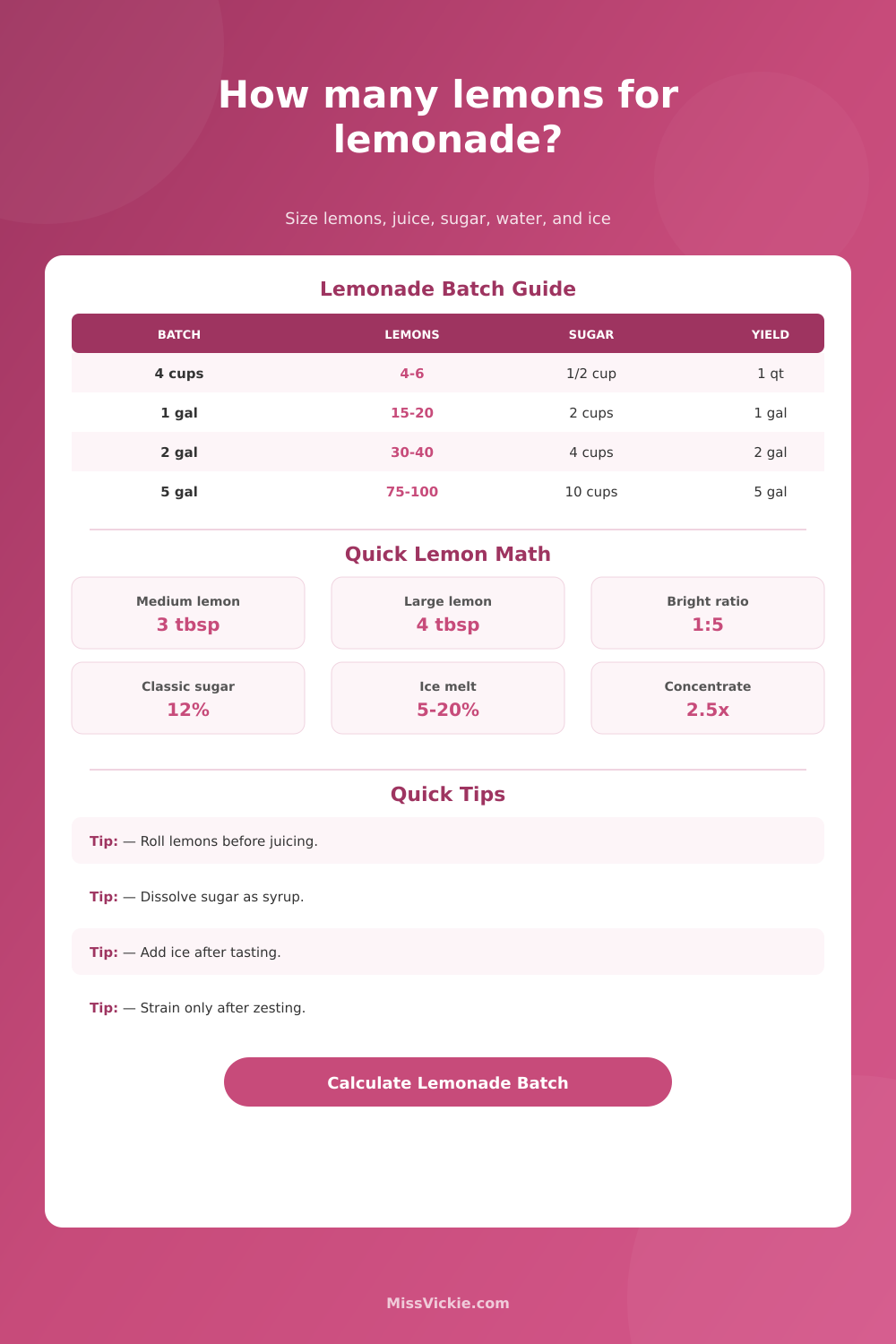
| Medium lemon | 3 tbsp / 45 ml | Everyday lemonade | Most home recipes assume this. |
| Large lemon | 4 tbsp / 60 ml | Gallon jug | Good for fast juicing. |
| Jumbo lemon | 5 tbsp / 75 ml | Large cooler | Check peel thickness first. |
| Meyer lemon | 3 tbsp / 45 ml | Softer lemonade | Needs less sugar and less water. |
| Sweetness Style | Sugar Per Cup Juice | Flavor Result | Good Pairing |
|---|---|---|---|
| Half sugar | 0.45 cup | Tart and crisp | Very cold service |
| Light | 0.60 cup | Bright fresh lemon | Lunch or brunch |
| Classic | 0.75 cup | Balanced | Family pitcher |
| Sweet picnic | 0.90 cup | Sweeter finish | Ice-heavy cooler |
| Stand style | 1.05 cup | Bold and sweet | Outdoor stand |
| Final Batch | Classic Juice | Medium Lemons | Classic Sugar |
|---|---|---|---|
| 1 quart / 0.95 L | 2/3 cup | 4 to 5 | 1/2 cup |
| 1/2 gallon / 1.9 L | 1 1/3 cups | 7 to 9 | 1 cup |
| 1 gallon / 3.8 L | 2 2/3 cups | 15 to 18 | 2 cups |
| 2 gallons / 7.6 L | 5 1/3 cups | 29 to 36 | 4 cups |
| 5 gallons / 18.9 L | 13 1/3 cups | 72 to 90 | 10 cups |
| Adjustment | Calculator Effect | Why It Matters | Practical Cue |
|---|---|---|---|
| Light ice | Removes 5% water | Ice adds water as it melts | Taste after 10 minutes. |
| Heavy ice | Removes 20% water | Outdoor coolers dilute faster | Keep extra juice nearby. |
| Strained smooth | Adds 6% juice need | Pulp traps a little juice | Press the strainer gently. |
| Concentrate | Uses strength factor | Not the same as fresh juice volume | Dilute after measuring. |
| Zest steep | Adds aroma | Peel oils boost lemon flavor | Remove bitter white pith. |
⚖Lemonade Comparison Grid
Balanced lemon and water for most family meals and fridge pitchers.
More juice and sugar for a punchier cup that survives melting ice.
Water is held back so the batch stays lively after sitting outside.
Frozen base is counted by lemon strength before final water is added.
💡Lemonade Tips
Lemon yield changes with variety, age, storage, and juicing method. Buy a few extra lemons for garnish, final acidity tweaks, and dry fruit surprises.
Making a batch of lemonade need exact amounts of sugar and of course, lemon juice, which is why this calculator can help you plan ahead. Knowing how much to make in one go, and knowing just how sweet you like it will ensure that your end result isn’t too thick or than too sour. It does all the maths for you, but first you should of had an idea about what the numbers mean for you.
The most crucial part is the lemon. Lemons vary dramaticly in their natural juice content. On average, a medium-sized lemon contain about three tablespoons of liquid, but that depends heavily on how long it’s been stored (and where). And there’s no need to wring a juicy lemon; just give it a firm roll on the countertop and those internal membranes will break open, releasing even more juice with minimal effort. If yours are dry and/or small, you might have to purchase some more furnitures. With the tool, you can also change number of expected tablespoons of juice per lemon to avoid running out mid-prep. Why? Generic recipes rarely consider exactly what produce you have in hand.
How to Make Great Lemonade
Another problem is that granulated sugar doesn’t dissolve easy in an acid solution like cold lemonade. A batch of this are best made using a simple syrup (equal parts sugar and water, heated till dissolved) before mixing with the rest of your ingredients. That way you get the same sweet taste in every sip without any grit settling to the bottom of the pitcher.
The calculator take an estimate of how much sugar will be required based off your desired level of sweetness (tart to sweet). For an outdoor event, err on the sweeter side; otherwise, as ice melts the beverage will become increasingly watered down. Most of us forget about this one until it’s too late, dilution from ice. When those ice cubes melt, they becomes water and dilute the concentrated flavor in your pitcher. If you’re serving highly iced beverage on a hot day, you’ll lose up to twenty percent volume due to just melting. To counteract, you can adjust for ice melt by entering an allowance when you add your ice, holding back some of that cool water at the beginning. This helps keep the taste right even after it has been sitting in the heat for hours.
Don’t just follow the recipe blindly. You’re engineering a survivalist drink. The intensity and mouthfeel of a drink are also affected by the fruit’s texture, particularly its pulp. Juice strained through a fine mesh sieve is less cloudy, but it also removes some of the flavorful oils and pectin. Leaving pulp in create a brighter, fresher lemonade with more of a homemade feel. Adding peel zest before squeezing out juice put aromatic notes into the drink without increasing any acidity. This calculator will let you tweak those decisions. You can estimate how much pulp gets lost or decide if the zest should be simmered first to get desired result.
This ensures the drink tastes intentional, not like an accident. The math handles the ratios; your taste buds handle the flavor. Dilute, sweeten and acidify according to what works for you in your setting and among your crowd. Take the calculated starting point, taste as-is, then tweak accordingly. Before long, you’ll have a pitcher worthy of the fruit you shelled out big bucks for.