Lemonade Ratio Calculator
Scale fresh lemonade by servings, cup size, lemon juice acidity, sweetness target, syrup strength, still or sparkling water, pitcher capacity, ice melt, garnish loss, and tartness score.
Pick a real lemonade plan to load servings, cup size, acidity, sweetness, syrup strength, ice dilution, carbonation choice, pitcher volume, and garnish allowance.
Lemonade Ratio Breakdown
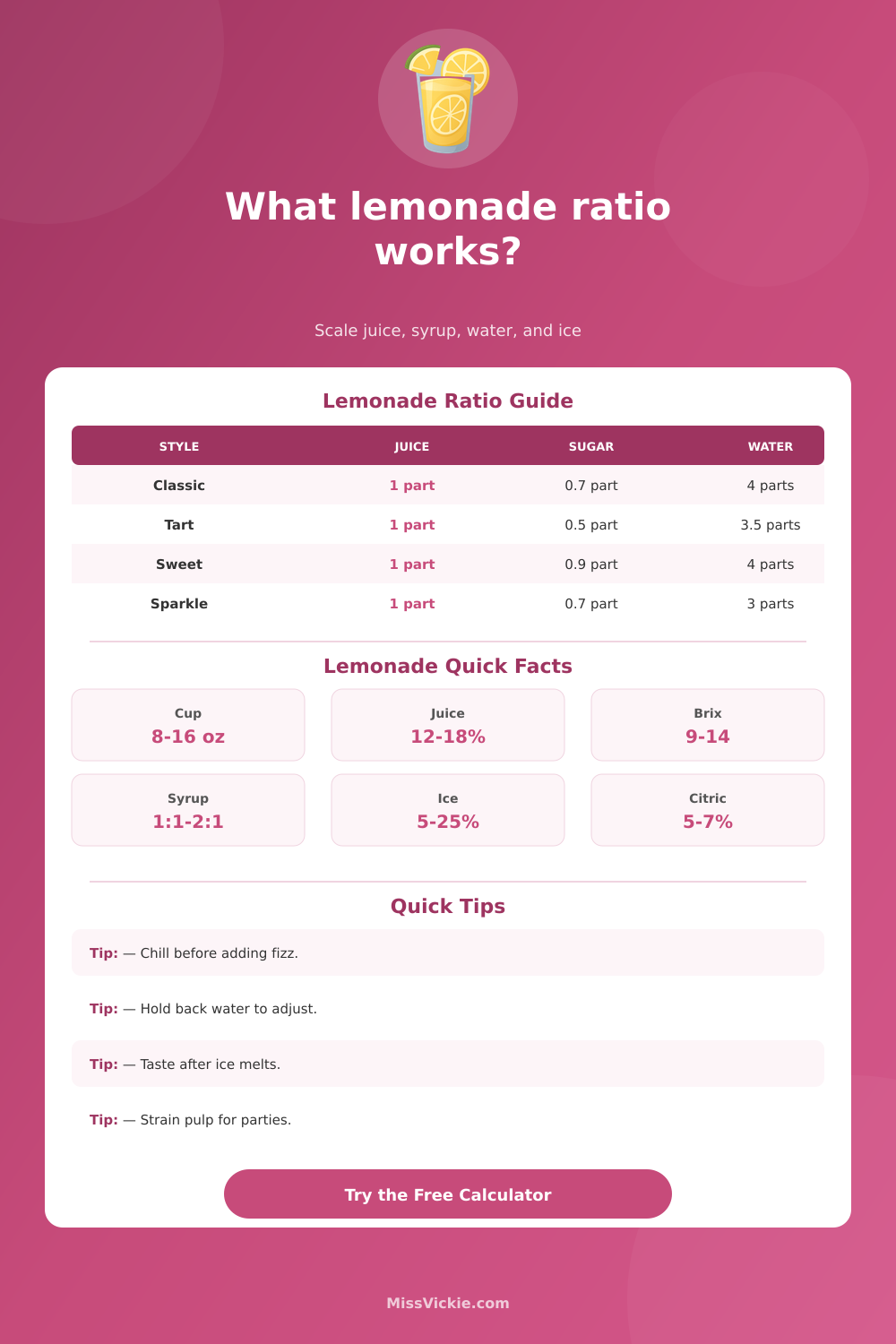
| Style | Lemon Juice Share | Sweetness Target | Service Notes |
|---|---|---|---|
| Classic pitcher | 14-18% of final drink | 10-12 Brix | Balanced for everyday lemonade, especially when served over moderate ice. |
| Tart fresh-squeezed | 18-24% of final drink | 8-10 Brix | Sharper lemon finish; best when the syrup can be adjusted at the table. |
| Sweet fair-style | 12-16% of final drink | 12-15 Brix | Soft acidity and higher sugar; add lemon wheels for aroma without more juice. |
| Sparkling lemonade | 13-17% of final drink | 10-13 Brix | Mix lemon and syrup first, chill, then add sparkling water right before serving. |
| Adjustment | What It Changes | Common Range | Practical Check |
|---|---|---|---|
| Lemon juice acidity | Higher acidity raises the tartness score even at the same juice volume. | 5-7% citric acid | If lemons taste mild, raise juice share or lower water slightly. |
| Sweetness target | Raises sugar grams, syrup volume, body, and perceived roundness. | 9-14 Brix | Most party lemonade lands near 11-12 Brix after ice melts. |
| Syrup strength | Changes syrup volume while keeping the same sugar target. | 50-66% sugar | Rich syrup saves pitcher space but needs careful stirring. |
| Ice dilution | Subtracts make-up water so melting ice finishes the ratio. | 5-25% | Use higher dilution for cups packed with ice or outdoor service. |
| Garnish loss | Adds liquid for lemon wheels, pulp straining, herbs, and tasting. | 2-8% | Raise it for pitchers with lots of mint, berries, or lemon slices. |
| Service Situation | Cup Size | Ice Dilution | Pitcher Tip |
|---|---|---|---|
| Small lunch pitcher | 8 oz | 5-10% | Make the full batch at once and chill before pouring. |
| Backyard cookout | 10-12 oz | 12-20% | Keep a concentrate chilled and add cold water as pitchers empty. |
| Sparkling brunch | 6-8 oz | 0-8% | Add sparkling water per pitcher to keep bubbles lively. |
| Cafe or stand service | 12-16 oz | 18-30% | Mix a stronger base because cups usually carry more ice. |
This is why lemonade is such a tricky combination. It’s just two easy-to-find ingredients (lemon juice and sugar) that is hard to mix in the right proportions. Too much lemon juice and it’s medicine-y; too much sugar and it’s like drinking melted candy.
The higher number of servings makes this challenge harder: what pairs well with four won’t pair well with 12. And as ice melts, your drink-to-ingredient ratio shift. How much liquid go into the cup and how much stays behind in the sugar or the fruit depends on several variables, which can interacts to push a batch out of balance.
The Math Behind Good Lemonade
The baseline of tartness is set by amount of lemon juice, but fruit varies quite a bit in its naturaly acidity. The Brix reading we use to target sweetness is the sugar content, though density of your syrup will affect how much space it takes up. And then there’s ice, diluted by meltwater which you may forget about until you notice it’s part of the mix.
Every variable impact every other; a little tweak here or there throws off the whole batch. Because pitchers don’t pour perfectly, you need to allow for both garnish loss and reservation. Liquid lost to taste test, mint sprigs, lemon wheels, and other garnishes are lost to your guests. That’s why we’ve built in a reserve percent to allow for the fact that you may well should of have to make another batch during the event.
By plugging in your desired serving count, cup size, and style, the calculator will run the math and show you trade-offs so you’re not guessing at what to use. There’s also pitcher capacity to consider. Floating lemon slices will takes up some volume, so a recipe that fits on paper can overflow the container. Equally, a large dispenser with a small batch runs empty fast; time to mix up more.
The style guide shows how changing your batch size (on the left side) affects amount of sugar and juice in the recipe. This is not a strict formula, but it is a place to start. Should it be made as a concentrate to add water to later, or should you go all-in with a big batch of lemonade?
Batches of concentrate is easier to transport. You can adjust the sweetness or carbonation when serving, but you must be careful about exactly how much water is left to add. If you’re going sparkling, chill the base liquid beforehand, and then open the bottle(s) just prior to pouring so that bubbles don’t dissipears into the ice. It works either way, but it does call for different kinds of thinking in advance.
In the end, however, consistency is protected by numbers. Once you have decided on the ratio for the sweetness of your fruit, you can use it again without having to taste-test every new batch from scratch. That reliability means making lemonade is no longer a guessing game, but a reliable task… One with a recipe you can stop and start whenever the pitcher is empty.